Across India, thousands of car owners invest in PPF coating every year and still end up frustrated because nobody told them about the mistakes that silently chip away at that investment from day one. The film itself is extraordinary technology. But how you choose it, how it gets installed and how you maintain it afterwards determine everything. Get any one of these wrong and you have essentially paid a premium price for substandard results.
This guide covers the six most damaging PPF coating mistakes that car owners make and how you can avoid them. By the time you finish reading, you will know more about protecting your car PPF investment than most people who have been in the industry for years.
Table of Contents
- Mistake #1: Choosing Cheap PPF Without Checking the Film Quality
- Mistake #2: Selecting PPF Without Considering Car Usage
- Mistake #3: Ignoring the Installer’s Skill Level and Assuming Any Studio Will Do
- Mistake #4: Washing a Car with PPF the Wrong Way
- Mistake #5: Skipping Paint Correction Before PPF Application
- Mistake #6: Neglecting Maintenance Just Because You Have PPF
- Why Aegis Paint Protection Film Is the Best Paint Protection Film in India
- Conclusion
- Frequently Asked Questions About PPF Coating
Mistake #1: Choosing Cheap PPF Without Checking the Film Quality
We have saved this one for last because it is the most widespread mistake in the Indian market and it is the one that quietly undoes every other good decision you made. You picked the right installer, you did paint correction, you follow the correct wash routine and yet your PPF starts yellowing at 18 months. The culprit, almost every time, is the film itself.
India’s PPF market has grown at a pace that has outrun quality control. Walk into any detailing district in any major city and you will find budget PPF being sold under impressive-sounding brand names, with glossy marketing brochures and at prices that feel like a great deal. The problem is that the film inside those rolls is a completely different product from what premium manufacturers produce and you will not find that out until the damage is already done to your car.
What Cheap PPF Actually Looks Like After 12 to 24 Months
Budget PPF does not fail all at once. It fails gradually, in ways that creep up on you. If you want to understand the full financial damage this causes including removal and reapplication costs, read our breakdown of the hidden costs of cheap PPF coatings on premium cars.
- Yellowing: Low-quality films use inferior UV stabilisers that break down under India’s intense sun. The film turns from crystal-clear to a faint amber, then a visible yellow. This is irreversible. The only fix is full removal and reinstallation.
- Hazing and cloudiness: Budget TPU formulations lose optical clarity as the polymer chains degrade. The film starts to look like slightly frosted glass rather than an invisible layer. Your car stops looking like it has protection and starts looking like it needs a polish.
- Topcoat breakdown: Cheap films either lack a proper topcoat entirely or use one with a very thin, fragile chemistry. Within a year, the hydrophobic properties are completely gone. Water no longer beads. Dirt bonds to the surface. The film that was supposed to make your car easier to maintain is now making it harder.
- Micro-cracking at stress points: Budget films have lower elongation at break values, meaning they cannot stretch properly around curves and body lines without developing microscopic cracks. These cracks are invisible at first but trap moisture over time, leading to delamination from the inside out.
- Adhesive failure: Inferior adhesive layers lose their bond faster, especially in extreme heat. You will start noticing edges lifting, air pockets forming under the film and sections peeling away from the paint surface.
Mistake #2: Selecting PPF Without Considering Car Usage
Walk into almost any detailing studio and ask for PPF and someone will quote you a price. What most people do not ask and what most studios do not explain is which PPF is right for your car.
Here are the things you should be looking at while selecting your PPF
- Material
- Thickness
- Top Coat
This is the foundational mistake that everything else is built on. Because no matter how perfectly the film is installed or how religiously you maintain it, if you choose the wrong PPF to begin with, you will never get the protection you actually need.
Which Material of PPF is Best?
The market is filled with TPH PPF. However, avoid it at all costs. Look for PPFs with Aliphatic TPU. It’s even better if you can afford PPF with TPU & Polycarbonate Blend
How Thick Should Be The PPF?
PPF thickness is measured in microns. A thinner film, say 150 microns, offers decent cosmetic protection for a city car driven mainly on smooth roads. But India is not that country. Between the pothole-riddled arterials of Mumbai, the abrasive dust particles in Rajasthan, the monsoon acid rain in coastal cities and the gravel trucks on national highways, your car faces a level of punishment that requires serious film engineering.
Here is how you should select PPF with the right thickness as per your usage:
| Your Driving Profile | Recommended Thickness | Key Feature to Prioritise |
|---|---|---|
| City driving, mostly slow traffic | 150-190 microns | Hydrophobic topcoat for bird drop protection |
| Mixed city and highway | 190-250 microns | Self-healing + impact resistance |
| Frequent highway/intercity | 250-300 microns | Maximum impact absorption |
| Performance or luxury vehicles | 300+ microns | Lifetime warranty + optical clarity |
| Off-road or rugged terrain | 300-400 microns | Highest tensile strength available |
What Should Be the Topcoat?
Topcoat determines how the film behaves in daily life. Does water slide off effortlessly or sit and stain? Does the surface stay cleaner for longer or attract every speck of dust on the road?
A good topcoat should be hydrophobic enough that water beads up and rolls off on its own, taking dirt and contaminants with it. This means less frequent washing, fewer water spots and a car that looks cleaner for longer between washes.
A weak topcoat does the opposite. Water sits. Dirt bonds. And within a year, the film that was supposed to make your life easier is now adding to your maintenance headache.
Mistake #3: Ignoring the Installer's Skill Level and Assuming Any Detailing Studio Will Do
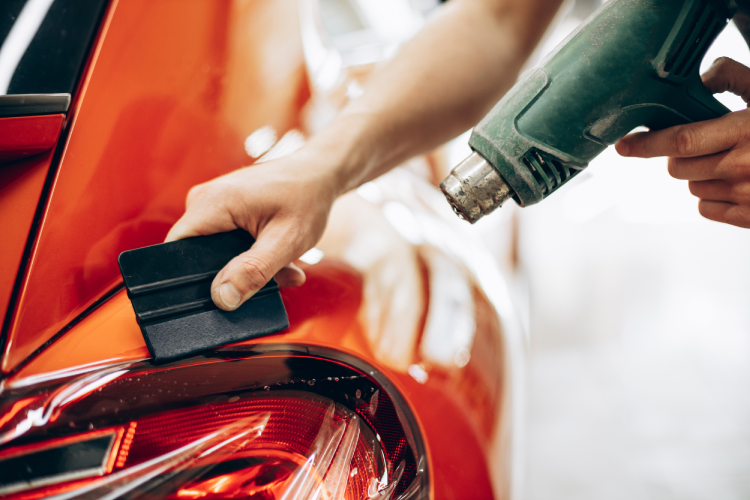
This is the mistake that hurts the most because it is the most expensive to fix. You can buy the best paint protection film in India, but if the installer does not know what they are doing, you are going to end up with a botched job that costs more to remove than the original installation.
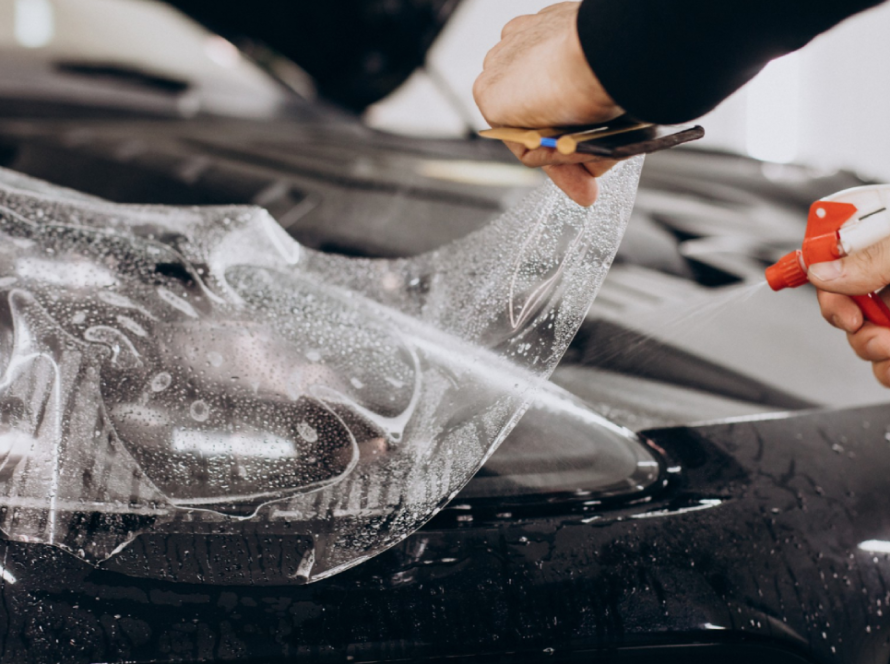
PPF installation is a precision craft. It involves cutting film to match the exact geometry of your car’s panels, stretching it around compound curves without creating tension points and applying it without a single air bubble, dust particle or misaligned edge. This takes thousands of hours of practice to master. And yet, the Indian detailing market is full of technicians who watched a few installation videos and now charge full price for the service.
What a Bad Installation Actually Looks Like
You will not always spot a bad installation immediately. Some defects only show up weeks or months later, once the film has settled and the adhesive has fully cured. Here are the specific warning signs to watch for:
- Edge lifting: Film corners or edges peel away from the surface, usually starting at panel edges, door handles or around headlights. This happens when the installer did not tuck the edges properly or used an incorrect wrap technique.
- Silvering: A silvery, metallic haze appears underneath the film near the edges. This is trapped moisture or contamination that was not properly removed before installation.
- Orange peel texture: The film surface looks like the skin of an orange rather than a smooth, glassy finish. This is a sign of incorrect squeegee technique during installation or using a film with poor optical clarity.
- Visible seams: On large panels like the bonnet or roof, you should not see seam lines unless the car specifically requires two-piece coverage. Visible, uneven seams indicate poor pattern cutting.
- Bubbles that do not disappear: Small water bubbles immediately after installation are normal and will evaporate within a week. Persistent bubbles that remain beyond two weeks indicate contamination trapped under the film.
Mistake #4: Washing a Car with PPF the Wrong Way
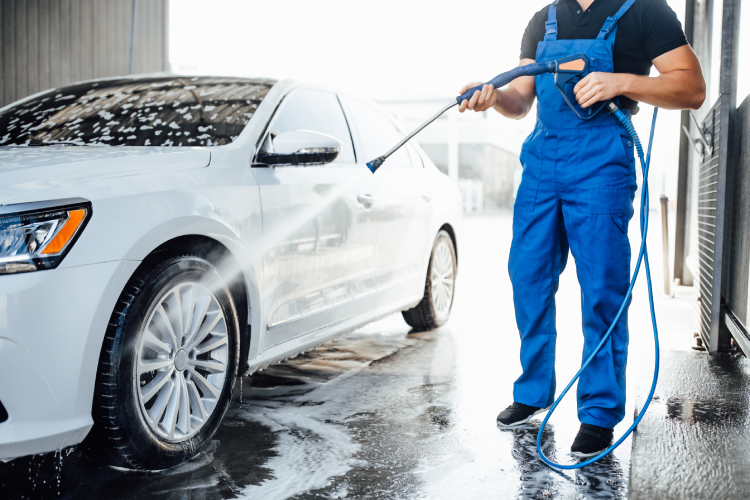
Of all the PPF installation mistakes car owners make after the film is on, improper washing is by far the most common and the most preventable. The irony is that car owners who invested heavily in PPF often end up damaging it themselves because nobody told them that washing a car with PPF requires a different approach than washing an unprotected car.
PPF is tough, but its topcoat is a precision-engineered surface. The wrong wash chemicals or techniques can degrade the hydrophobic properties, scratch the coating and eventually cloud the film’s optical clarity.
The Washing Protocol for PPF-Coated Cars
Follow these rules consistently and your film will maintain its appearance for the full duration of its warranty period:
- Wait at least 7 days after installation before the first wash. The adhesive needs this curing period to fully bond to the paint. Washing too early can cause edge lifting.
- Always use a pH-neutral car shampoo. Alkaline or acidic cleaners break down the topcoat chemistry over time. Check the label. If it does not specify pH-neutral, do not use it.
- Use the two-bucket wash method. One bucket with soapy water for washing, one bucket of clean water for rinsing your mitt. This prevents dirt particles from going back onto the car and scratching the film.
- Use microfibre wash mitts only. Sponges and traditional wash cloths trap grit against the film surface and create micro-scratches. Microfibre lifts dirt away from the surface.
- Wash in straight lines, not circles. Circular motions create swirl marks in the topcoat. Straight back-and-forth motions along the panel length are far less damaging.
- Avoid high-pressure nozzles directed at film edges. Strong water jets at close range and sharp angles can lift film edges over time, especially at panel corners and door handles.
- Dry with a clean microfibre drying towel, not a chamois. A chamois creates friction that can disturb the topcoat. A soft, plush microfibre drying towel glides across the surface and picks up water without dragging.
What About Automatic Car Washes?
This question comes up constantly and the answer is: avoid them, especially in the first 30 days. Brush-based automatic car washes use stiff nylon bristles that create swirl marks on the film surface at a rate that would horrify any PPF installer. Touchless automatic washes are a safer option but still tend to use high-alkalinity chemicals that attack the hydrophobic topcoat over time.
The reality is that hand washing is the only reliable way to maintain PPF correctly. If you cannot do it yourself, find a detailing studio that offers hand wash services and brief them specifically on the fact that your car has PPF coating.
Mistake #5: Skipping Paint Correction Before PPF Application
Paint protection film does exactly what its name suggests. It protects your paint. But it does not fix your paint. Whatever condition your paint is in on the day the film goes on, it will be locked under that film for the next 5, 10 or in some cases 15-plus years. Every swirl mark, every micro-scratch, every water spot etching, every buffer trail from a previous polish job will be preserved in perfect condition directly underneath a transparent, magnifying layer of film.
In fact, clear PPF film can actually amplify the appearance of paint defects by acting as a lens. A faint swirl mark that was barely visible in direct sunlight can become clearly visible through film under certain lighting conditions. This is because the film’s high-gloss surface creates a contrast with the imperfect surface beneath it.
Paint correction is the process of mechanically levelling the paint surface using a machine polisher and cutting compounds. A skilled paint correction technician removes the top layer of clear coat to below the depth of the scratches, leaving a defect-free surface. This process can take anywhere from 4 to 20 hours, depending on the condition of the paint and the number of stages required.
The Paint Correction Checklist Pre-PPF
Before any paint protection film goes on your car, the preparation process should include:
- A full decontamination wash using an iron remover and clay bar to strip all embedded bonded contamination from the paint surface.
- A paint depth gauge reading to confirm there is sufficient clear coat remaining for correction without burning through to the base coat.
- Single-stage correction at minimum for cars with light swirling or multi-stage correction for cars with heavy scratches, buffer trails or oxidation.
- A panel wipe-down with an IPA (isopropyl alcohol) solution to strip all polishing oils and residues before the film goes on. Oil residue is one of the top causes of poor film adhesion.
- A final inspection under high-intensity LED lighting to confirm the surface is flawless before the first piece of film is cut.
Mistake #6: Neglecting Maintenance Just Because You Have PPF
Most car PPF guides stop at washing. But washing is the reactive part of maintenance. The proactive part, the maintenance you do between washes, is what actually determines how long your film’s protective properties remain at peak performance.
PPF maintenance tips that experienced owners know but almost never get shared with newcomers involve treating the film itself as a living surface that requires periodic conditioning, not just regular cleaning.
Here are the mistakes that can cost you big time :
Leaving bird droppings on the film for more than 24 hours.
Bird droppings are acidic. Fresh droppings have a pH of around 3.5 to 4.5, which is acidic enough to begin etching into the PPF topcoat within hours in hot weather. This does not destroy the film immediately, but repeated etching incidents degrade the hydrophobic topcoat layer over months. The fix is simple: carry a dedicated PPF spot-cleaning spray in your car and remove bird droppings within a few hours of noticing them.
Never topping up the protective layer.
PPF topcoats are durable, but they are not eternal. Depending on your driving conditions and washing frequency, the hydrophobic properties of the topcoat will gradually diminish. A PPF-specific maintenance spray or detailer, applied after every wash, restores and reinforces these properties and extends the useful life of the topcoat significantly.
Using the wrong products on top of the film.
This one catches a lot of car owners off guard. Many popular car wax products contain petroleum solvents and silicones that are incompatible with certain PPF topcoat chemistries. Applying an incompatible wax can cloud the film, create a greasy surface that traps dirt faster or interfere with the self-healing mechanism of the topcoat. Always check that any product you apply on top of PPF is specifically labelled as PPF-compatible or consult your installer.
Parking under trees without concern.
Tree sap is one of the most damaging substances for PPF. Unlike bird droppings, tree sap bonds to the surface as it dries and becomes increasingly difficult to remove without the right solvent. If you cannot avoid parking under trees, wash your car more frequently during the months when trees are actively producing sap and remove any deposits you notice as soon as possible.
Why Aegis Paint Protection Film Is the Best Paint Protection Film in India
Every point in this guide leads to the same conclusion: the quality of your PPF, the quality of the installation and the robustness of the warranty are the three pillars that determine whether your investment was worth it. Aegis Films was built around all three and the reason it stands apart from everything else on the Indian market comes down to a series of engineering decisions that most brands have not made and cannot match.
Engineered For Extreme Heat
Most PPF brands you encounter in India are designed for moderate Western climates and imported with minimal adaptation. Aegis Films was designed from the ground up to handle extreme heat conditions, the aggressive monsoon acid rain of the Western coast, the abrasive road dust of the Deccan plateau and the relentless UV intensity that causes ordinary films to yellow within months.
The Technology That Sets Aegis Apart
Aegis Films holds several technical distinctions that no other brand in India currently matches:
- Triple Extrusion Technology: A three-stage molecular purification process that eliminates microscopic impurities from the TPU base, delivering unmatched optical clarity and even thickness across every square centimetre of film. This eliminates the haziness and uneven texture that plague cheaper films.
- Polycarbonate-Enhanced TPU Construction: The Aegis XG Series blends Thermoplastic Polyurethane with Polycarbonate, combining TPU’s flexibility with PC’s extraordinary impact resistance. This creates a film that conforms perfectly to complex curves while absorbing deeper impacts from stones, gravel and debris.
- 300% Elongation at Break with 30 MPa Tensile Strength: It represents the film’s ability to stretch around compound curves without thinning or stress-cracking and to absorb direct impacts without tearing. Most competitor films do not publish these figures because theirs do not compare.
- Hydrophobicity Above 140 Degrees Water Contact Angle: The DuroFlex topcoat on Aegis films repels water at contact angles above 140 degrees. At this level, water forms near-spherical droplets on the surface and rolls off, taking road grime and contamination with it. Maintenance becomes dramatically easier and the film stays cleaner between washes.
- Industry-Leading Thickness Range: From 190-micron entry-level protection all the way to the Eternal 400 at 400 microns, which is the thickest production PPF available in India. No other domestic brand offers this range or this upper limit.
The Range Built for Every Car and Every Need
| Product | Thickness | Warranty | Best For |
|---|---|---|---|
| Eternal 400 | 400 microns | Lifetime | High-performance, luxury, off-road vehicles |
| Eternal 300 | 300 microns | Lifetime | Premium sedans, SUVs with frequent highway use |
| Ultra 250 | 250 microns | 12 years pan-India | Mixed city/highway use, luxury daily drivers |
| Xceed | 225 microns | 10 years pan-India | Daily city use, value-conscious owners |
| Armor | 190 microns | 5 years pan-India | Daily city use, value-conscious owners |
Strong Studio Network for Warranty
A warranty is only as good as the infrastructure behind it. Aegis Films draws its service network from CarzSpa Detailing Studios, a company that has been operating since 2007 and today runs over 125 franchises across India and Nepal. This means that if you buy Aegis PPF in Ahmedabad and move to Bangalore, your warranty claim can be serviced locally. If your car needs attention in Pune, Chennai or Hyderabad, there is an authorised Aegis studio there.
This pan-India warranty network is something that most competing brands simply cannot offer. A film with a 10-year warranty serviced by a single studio in one city is functionally a much weaker product than a film with a 10-year warranty backed by 125 service locations.
When you choose Aegis, you are backed by nearly twenty years of excellence in automotive protection and a legacy that has shaped the Indian detailing industry as a whole.
Conclusion
Every car represents a significant financial investment and in most cases, it represents something more personal than that, too. It is an expression of what you have worked toward. PPF is not just a product for keeping that investment looking good. It is a decision about how seriously you take protecting what matters.
The six mistakes covered in this guide are not rare edge cases. They happen every day to car owners across India who did everything right except these specific things. Now that you know what they are, you can approach your PPF investment with the same clarity and precision that the best films in the market are engineered with.
If you would like to explore the full range of Aegis paint protection film options for your vehicle, speak to an expert at your nearest CarzSpa Detailing Studio or visit aegisfilms.in to understand which grade is the right fit for how and where you drive.
Because protection that is planned correctly from the start is the only kind of protection that actually works.
Frequently Asked Questions About PPF Coating
1. How long does PPF coating last on a car?
In India, a well-maintained premium film will easily last 5-10 years without yellowing, cracking or significant degradation, depending upon its quality and specifications.
2. Can PPF be applied to any car, including older vehicles?
Technically, yes. However, PPF on older vehicles requires significantly more paint preparation work. Paint that is already faded, oxidised or heavily scratched needs to be restored to a clean, stable condition before film application.
3. What happens if my PPF gets damaged?
Minor scratches in the topcoat will self-heal when exposed to heat from sunlight or warm water. Deeper damage that has not reached the paint can often be spot-repaired by an authorised installer. If the damage has fully penetrated the film to the paint, the affected section will need to be removed and replaced.
4. How do I know if my PPF was installed correctly?
Inspect the car 7 to 10 days after installation, by which point the film should have fully cured. Look for edge lifting at panel corners, door handle cutouts and anywhere the film meets a body line. Shine a torch across the surface at a low angle to check for orange peel texture or uneven finish. Check for trapped bubbles that have not cleared.
5. Can I apply PPF myself at home?
DIY PPF installation is not at all recommended. Applying PPF correctly is a professional skill that requires a dust-controlled environment, proper tools and thousands of hours of practice. Given the cost of the film itself and the paint correction required before installation, professional installation from an experienced, authorised studio is always the better investment.