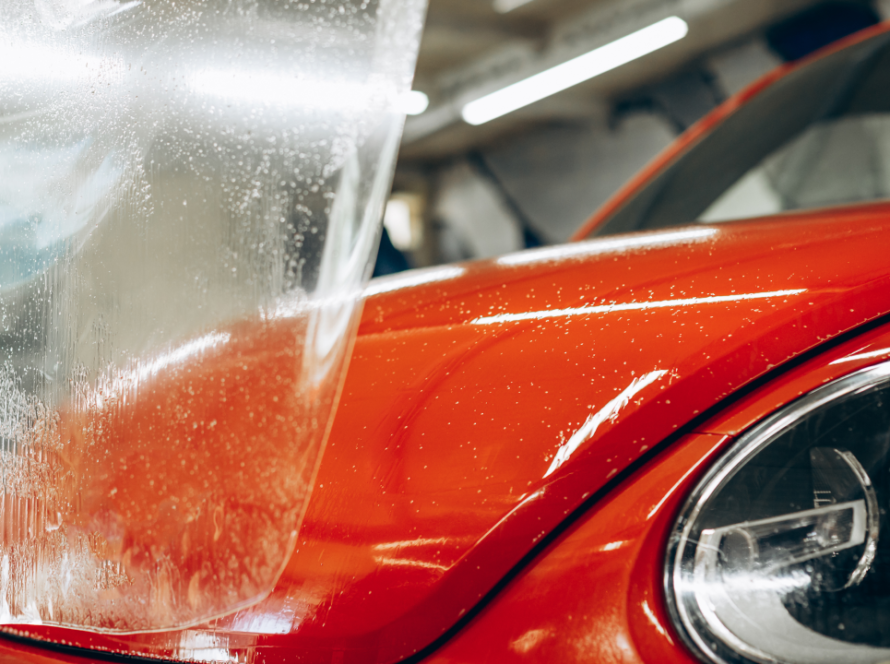
The Indian car market has changed. Buyers are spending more on design, colour and finish. Factory paints are getting thinner due to environmental regulations. High-gloss metallics and deep blacks look stunning in showrooms. But the moment the car hits Indian roads, reality kicks in. Stone chips, tight parking scratches, harsh sun, bird droppings and hard water stains. That showroom gloss starts fighting for survival.
This is exactly where paint protection film enters the conversation. And yet, despite growing awareness, misinformation is everywhere. Most objections people have against PPF are based on half-knowledge. Not facts. Not real-world data. Just myths passed from one car owner to another.
So let’s break them down one by one so that you don’t end up compromising car paint protection because of myths.
Table of Contents
- Myth 1: PPF Is Just an Expensive Plastic Sticker
- Myth 2: Ceramic Coating and PPF Coating Are the Same
- Myth 3: PPF Will Ruin the Car’s Original Paint
- Myth 4: PPF Turns Yellow in Indian Heat
- Myth 5: PPF Is Only for Luxury Cars
- Myth 6: PPF Makes the Car Look Dull
- Myth 7: PPF Is Maintenance-Free
- How to Identify the Best Paint Protection Film in India
- Why Aegis Paint Protection Film Stands Out.
- Final Thoughts
- Frequently Asked Questions
Myth 1: PPF Is Just an Expensive Plastic Sticker
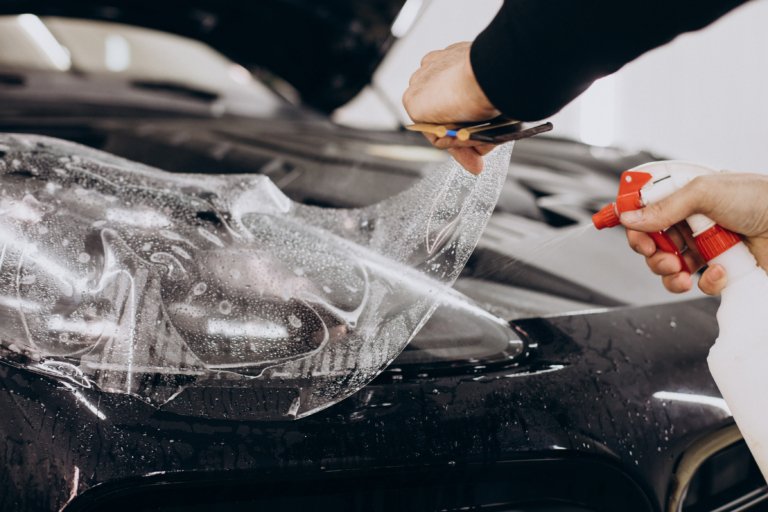
This is the most common myth. And also the most misleading one.
A high-quality car PPF is not a plastic sticker. It is a multi-layer thermoplastic polyurethane film engineered for impact absorption, chemical resistance and self-healing.
Here is what actually goes inside a premium car protection film:
- Top Coat Layer – UV-resistant, stain-resistant, self-healing elastomeric surface
- Polyurethane Core – Flexible, impact-absorbing TPU material
- Adhesive Layer – Pressure-sensitive acrylic adhesive designed for automotive paint
- Release Liner – Removed during installation
Thickness typically ranges between 150 to 200 microns. Compare that with factory clear coat, which is usually around 40–50 microns in modern cars.
Now ask yourself. Does a sticker absorb gravel at 80 kmph? No. TPU does.
The confusion happens because low-grade PVC films exist in the market. They are cheap. They yellow. They crack. They peel. And they give genuine PPF a bad name.
This is where choosing among the best PPF brands matters. Material science is not visible from the outside. But it decides everything.
Myth 2: Ceramic Coating and PPF Coating Are the Same
This confusion is dangerous because it leads to wrong buying decisions.
Ceramic coating is a liquid polymer that bonds chemically with the paint. It adds gloss and hydrophobicity. It does not add impact resistance.
PPF coating for car is a physical barrier. It absorbs stone hits. It resists scratches. It prevents swirl marks.
Let’s simplify this.
| Feature | Ceramic Coating | PPF Coating |
|---|---|---|
| Stone chip protection | ❌ No | ✅ Yes |
| Scratch resistance | Minor | Strong |
| Thickness | Few microns | 150+ microns |
| Self-healing | No | Yes (in premium films) |
| Cost | Lower | Higher |
If you only want shine and are okay with minor scratches here and there, ceramic coating works.
If you use highways or own a dark-coloured car, car paint protection film makes more sense.
Myth 3: PPF Will Ruin the Car’s Original Paint
This myth usually comes from two sources. Bad installation. Or cheap adhesive films.
High-quality paint protection film uses automotive-grade adhesives that are designed to bond without chemically reacting with factory paint.
When installed correctly and removed within the warranty period, it does not pull paint off.
However, here is the truth many brands won’t tell you:
Paint can peel during removal if:
- The car was repainted locally with low-quality paint.
- The film stayed beyond its lifespan and the adhesive degraded.
- Installation was done without surface prep.
This is why installation matters as much as film quality.
Before applying car PPF, professional studios:
- Decontaminate surface
- Remove tar and iron particles
- Perform paint correction
- Use slip solution for positioning
If any studio skips prep, walk away.
Myth 4: PPF Turns Yellow in Indian Heat
India is brutal on cars. UV index is high. Pollution is high. Hard water is common.
Older PVC-based films did turn yellow. Especially on white cars.
But modern TPU films use UV stabilisers in the top coat.
Yellowing today usually happens because of:
- Low-grade imported films
- Lack of UV inhibitors
- Contamination under film
- Exposure beyond warranty life
Premium car protection film is tested for UV stability. Now you can even find anti-yellowing films in the market. If you own a white car and want a PPF that doesn’t yellow, opt for XG series PPF from Aegis Films.
Myth 5: PPF Is Only for Luxury Cars
This was true 10 years ago. Not today.
Earlier, PPF was mostly seen on Porsche, Lamborghini, Ferrari etc. Now, even owners of BMW, Audi, Mercedes etc opt for PPF coating.
Why?
Because repainting a modern panel costs a lot. And repainting reduces resale value.
Even mass-market cars use expensive metallic and pearl paints today. Protecting them makes financial sense.
Let’s break it down:
If you drive:
- On highways regularly
- In a crowded city parking
- In areas with construction dust
Then car PPF is required for paint protection. Simply put, if you own a car above ₹20,00,000 you must get PPF done on your car.
Myth 6: PPF Makes the Car Look Dull
This myth usually comes from early-generation films with an orange peel texture.
Modern premium films have high optical clarity. Gloss-enhancing top coats actually increase depth.
There are three types of finishes available today:
- Clear PPF
- Matte PPF
- Satin or stealth PPF
Clear films enhance clarity. Matte films amplify the matte look of the car without repainting. .
If installed properly with edge wrapping, you cannot even tell a film is applied.
Poor installation causes:
- Silvering
- Visible edges
- Trapped bubbles
- Stretch marks
Again, the film is not the villain. Installation is.
Myth 7: PPF Is Maintenance-Free
Let’s be honest. Nothing on a car is maintenance-free.
Even the best PPF brands require care.
You should:
- Avoid harsh acidic cleaners
- Clean bird droppings quickly
- Avoid dry wiping
- Use pH-neutral shampoo
Self-healing top coats repair minor swirl marks under heat. But deep cuts from sharp objects will not vanish magically.
PPF reduces maintenance stress. It does not eliminate it.
How to Identify the Best Paint Protection Film in India
Before choosing car paint protection film, ask:
- What type of TPU is used? Aliphatic TPU resists yellowing better.
- What is film thickness?
- Is the top coat elastomeric?
- Does it offer edge stability?
- Is there a written warranty against cracking and peeling?
- Is the installation done in a dust-controlled environment?
Also, inspect the sample film physically:
- Bend it. Check flexibility.
- Scratch lightly. Check self-healing.
- Observe clarity under light.
Don’t simply choose a PPF because it low in price. Always look for quality and value for money.
Why Aegis Paint Protection Film Stands Out
The truth is simple. Not all paint protection film is built the same. And not all films are engineered for Indian roads.
Extreme UV. 45°C summers. Hard water. Dust. Highway debris. If a film cannot survive this, it does not deserve to be called the best paint protection film in India.
Aegis paint protection film is built with high-grade aliphatic TPU for superior UV stability. That means better resistance to yellowing. It uses an advanced elastomeric top coat that delivers real self-healing in Indian heat, not just in lab conditions. The adhesive system is strong yet paint-safe, designed to bond securely without risking factory paint during professional removal.
More importantly, Aegis focuses on controlled installation standards because even the best PPF brands fail if installation is careless.
Final Thoughts
Most myths around car paint protection film exist because of outdated information and low-quality films. Modern PPF coating for cars is a serious paint preservation solution. It absorbs impact. It prevents scratches. It protects the factory finish.
The key lies in:
- Understanding material quality
- Choosing among best PPF brands
- Avoiding cheap shortcuts
- Installing through certified professionals
If you care about maintaining original paint, reducing repaint risk and preserving resale value, investing in a high-quality car protection film is a strategic decision.
And if you want performance that matches Indian driving realities, Aegis stands as a technically strong, performance-driven choice.
Because once factory paint is gone, it is gone. Protect it before regret costs more than prevention.
FAQs
- How long does car paint protection film last in India?
Premium films last 5-10 years, depending on usage and maintenance.
- Does PPF coating damage paint during removal?
Not if paint is factory original and film is removed within the warranty period.
- Is PPF better than ceramic coating?
For impact resistance, yes. For gloss enhancement alone, ceramic is sufficient.
- Can PPF be applied to old cars?
Yes, but paint correction is required before installation.
- Does PPF increase resale value?
Indirectly yes. Preserved original paint attracts buyers.