Most car owners compare a PPF coating for a car based only on the price per panel. That is a massive mistake. Think about it. You are investing in a complex, multi-layered chemical system.
The base material, the top coat and the adhesive chemistry decide how the film survives months of Indian heat. Two films might look identical on delivery day but they will perform completely differently after one summer.
While cheap PPF looks fine at first, it’s a “delayed” disaster. Read this blog till the end to know the hidden cost of cheap PPF that nobody talks about.
Table of Contents
- What is PPF Coating?
- What Is The Difference Between Cheap PPF & High-Quality PPF
- Why Is Cheap PPF a Bad Idea?
- The Hidden Cost Of Cheap PPF Removal Cost
- How To Identify Good PPF for Your Car
- Best PPF in India for High-End Cars
- Why Aegis Films is the Best Paint Protection Film in India?
- In Conclusion
- Frequently Asked Questions (FAQs)
What is PPF Coating?
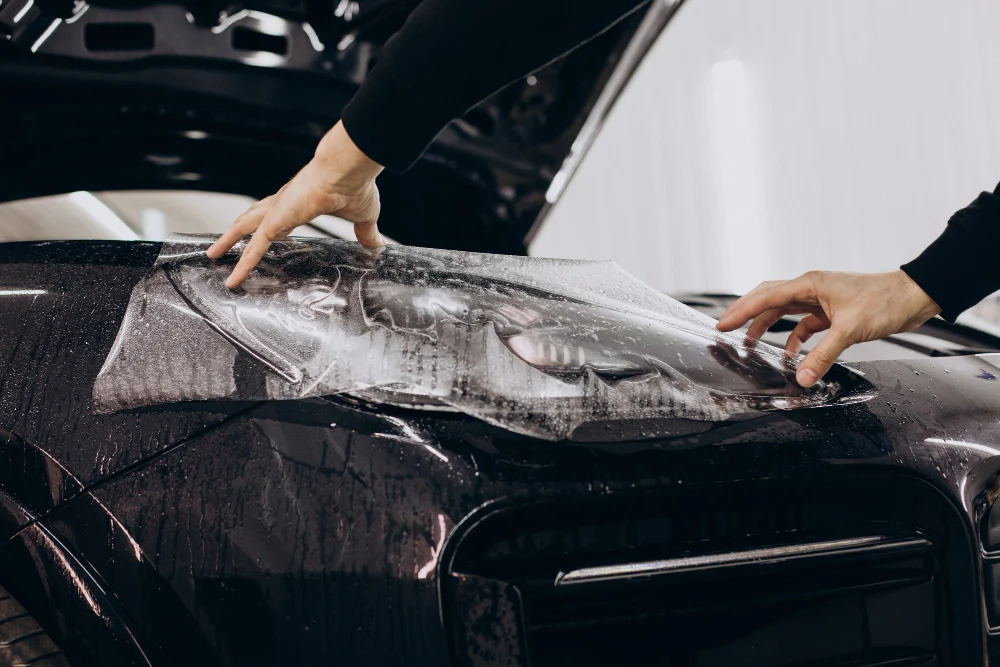
A proper PPF coating is a multi-layer protective system that is engineered to take abuse so your car’s paint doesn’t have to.
Think of it like this.
If your car’s paint is your skin, PPF is like armour that absorbs scratches, heat, stains and minor impacts before they reach the surface.
A good PPF coating has three key layers working together:
- Top coat: This is the outermost layer. It gives that glossy finish and is responsible for self-healing. So when you see light swirl marks disappear with heat, this is the layer doing the job.
- TPU layer (Thermoplastic Polyurethane): This is the core of the film. It provides flexibility, impact resistance and durability. High-quality TPU is what prevents stone chips and absorbs minor scratches.
- Adhesive layer: This is where things get serious. This layer bonds the film to your car’s paint. If this is not engineered properly, it can either fail early or, worse, damage the paint during removal.
What Is The Difference Between Cheap PPF & High-Quality PPF
The difference between a good and bad PPF coating is not visible on the day one.
Both will look shiny. Both will feel smooth.
The real difference shows up after:
- 3 months in Indian heat
- 1 monsoon season
- Or during removal
However, you can identify cheap car PPF by looking at the material type, self-healing properties, UV Resistance and so on. If the brand is transparent, they must provide these details to you.
Difference Between Cheap PPF & High-Quality PPF
| Factor | Cheap PPF Coating | High-Quality PPF Coating |
|---|---|---|
| Material Quality | ⭐ | ⭐⭐⭐⭐⭐ |
| UV Resistance (Anti-Yellowing) | ⭐⭐ | ⭐⭐⭐⭐⭐ |
| Self-Healing Ability | ⭐ | ⭐⭐⭐⭐⭐ |
| Adhesive Safety | ⭐⭐ | ⭐⭐⭐⭐⭐ |
| Clarity & Finish | ⭐⭐ | ⭐⭐⭐⭐⭐ |
| Durability (Lifespan) | ⭐⭐ | ⭐⭐⭐⭐⭐ |
A Good PPF brand will always give 5-10 years of warranty so that you can replace it even if something goes wrong with the PPF.
Why Is Cheap PPF a Bad Idea?
Cheap PPF coating for car is not just a lower-quality version of the same thing. It behaves differently. It fails differently. And most importantly, it creates problems that only show up later, when fixing them becomes expensive.
Here’s what cheap PPF does to your car :
Yellowing That Makes Your Car Look Older Overnight
This is usually the first visible sign.
Your white or light-coloured car slowly starts looking off. Not dirty. Not scratched. Just… dull and slightly yellow.
Why does this happen?
- Cheap films lack strong UV inhibitors
- The top coat oxidises under the sun
- Heat accelerates chemical breakdown
In Indian conditions, this can start as early as 3–6 months. And once it yellows, there is no polishing or coating that can fix it. Your only option is removal.
PPF Paint Damage
This is where things go from cosmetic to serious.
The adhesive layer in cheap PPF is often inconsistent. Over time, it either:
- Bonds too aggressively with the paint
- Or degrades unevenly
When you try to remove it, you may face:
- Clear coat peeling
- Paint lifting from edges
- Patchy damage across panels
This is what we call PPF paint damage.
And this is not rare. It usually happens when:
- The film has aged poorly
- The car has been exposed to heat for long periods
- Or removal is not done professionally
For premium cars, even repainting one panel affects resale value.
PPF Adhesive Residue
Even if your paint survives removal, there’s another problem waiting.
Cheap films often leave behind PPF adhesive residue:
- Sticky glue patches
- Hardened chemical marks
- Uneven surface feel
Removing this is not a simple wipe-off job.
It requires:
- Solvents
- Machine polishing
- Skilled handling
And if done aggressively, it can reduce paint thickness.
So now, instead of protecting your paint, the film has made it more vulnerable.
It Doesn’t Even Protect Properly
Let’s not forget the main purpose.
Protection.
Cheap PPF:
- Scratches easily
- Does not self-heal properly
- Tears under minor impact
- Fails to absorb stone chips
So you end up with:
- A damaged film
- And still damaged paint underneath
This defeats the entire purpose of installing a car paint protection film in the first place.
The Hidden Cost Of Cheap PPF Removal Cost
This is the part no one tells you at the time of installation. You saved money up front. But when things go wrong, removal becomes a separate expense.
Let’s compare cheap PPF and high-quality PPF and you will know the difference.
| Scenario | Cheap PPF Coating | High-Quality PPF Coating |
|---|---|---|
| Initial Cost | ₹15,000 – ₹30,000 | ₹70,000 – ₹2,00,000 |
| Reapplication (2–3 times) | ₹30,000 – ₹90,000 | Not required |
| Removal Cost (1–2 times) | ₹15,000 – ₹40,000 | ₹0 – ₹5,000 |
| Polishing | ₹10,000 – ₹30,000 | Rare / Minimal |
| Repaint | ₹20,000 – ₹80,000+ (per panel) | Highly unlikely |
| Total Cost (3–5 years) | ₹70,000 – ₹2,40,000+ with decreased resale value of the car | ₹70,000 – ₹2,00,000 with resale value preserved |
| Hassle | Removal, Reapplication and difficulty in selling | Peace of mind for 5 years straight |
Disclaimer: These are approximate costs based on industry averages. Actual prices may vary depending on car type, film quality and installer expertise.
How To Identify Good PPF for Your Car
Most people judge PPF based on how it looks on Day 1.
That’s the mistake.
Any film can look glossy right after installation. The real difference shows in material behaviour, adhesive stability and long-term performance.
If you want to avoid a bad decision, here’s exactly what you should check.
1. Confirm the Base Material (TPU vs TPH)
Ask what it’s made of.
- TPU (Thermoplastic Polyurethane) → flexible, impact-resistant, self-healing
- TPH → cheaper, stiffer, prone to yellowing and cracking
If you can find Aliphatic TPU, that would be even better because :
- Aliphatic TPU resists UV breakdown better
- It stays clear longer and doesn’t turn yellow quickly
- It absorbs minor impacts instead of cracking
2. Understand the Adhesive
This is where most PPF paint damage comes from.
Good films use controlled acrylic pressure-sensitive adhesives designed to:
- Bond uniformly
- Release cleanly with heat
- Leave minimal residue
Cheap films often use:
- Inconsistent adhesive coatings
- Over-aggressive bonding
- Adhesives that harden with heat exposure
Take this clarity from your PPF distributor or car detailer.
3. Check Film Thickness and Layer Structure
Thickness is not everything, but it tells you a lot.
- Premium PPF: 190 – 400 micons
- Cheap PPF: Less than 170 microns
Also, look for films with
- Elastomeric clear coat
- Heat-activated self-healing
- Hydrophobic properties
Which is the Best PPF in India for High-End Cars?
For Indian conditions, a good car paint protection film must handle:
- Continuous heat cycles (expansion + contraction)
- High UV exposure
- Dust abrasion
- Chemical exposure (bird droppings, pollution)
The best ppf like Aegis Films, is made to fight all the conditions and protect your car’s paint for years. Here’s what differentiates them :
Why Aegis Films is the Best Paint Protection Film in India?
Good PPF coating for car depends on just three things:
- Material stability
- Adhesive behaviour
- Long-term clarity
And this is exactly where Aegis Films stands out.
1. High-Grade Aliphatic TPU (Core Material)
Aegis uses aliphatic TPU, not blended or low-grade materials.
What this means in real use:
- Better resistance to yellowing under UV
- Higher flexibility → absorbs minor impacts instead of cracking
- Maintains structure even in high heat
This directly impacts how the film looks after 1–2 years.
2. Stable Acrylic Adhesive (Paint-Safe Removal)
The adhesive layer is where most cheap films fail.
Aegis films are built with controlled acrylic pressure-sensitive adhesive, which:
- Bonds evenly across panels
- Doesn’t over-harden with heat exposure
- Softens with controlled heat during removal
Result is :
- Minimal PPF adhesive residue
- Lower risk of PPF paint damage
- Predictable, safe removal even after years
3. Advanced Self Healing Top Coat
Aegis uses an advanced clear coat layer that:
- Self-heals minor scratches with heat
- Resists swirl marks from washing
- Maintains surface smoothness over time
This keeps the car looking freshly polished without constant correction.
In Conclusion
Cheap PPF coating for car doesn’t feel expensive when you install it. It becomes expensive later, when the film starts failing and you’re dealing with yellowing, removal and potential PPF paint damage. That’s the hidden cost most people ignore until it’s too late.
With a high-quality car paint protection film, you’re not just paying more upfront. You’re cutting out repeat installations, avoiding unpredictable, cheap PPF removal costs and protecting your original paint from damage that can’t truly be reversed.
And with premium cars, that difference is big. It’s the difference between maintaining factory finish and paying to fix avoidable mistakes.
So choose wisely.
Frequently Asked Questions (FAQs)
1. Can cheap PPF cause paint damage?
Yes. Low-quality adhesive can harden over time and pull off the clear coat during removal, especially under heat exposure.
2. What is PPF adhesive residue?
It’s leftover adhesive after film removal, often caused by unstable glue formulations. Removing it requires solvents and polishing.
3.What is the typical cheap PPF removal cost?
Between ₹15,000 to ₹40,000, depending on film condition and labour involved.
4. How long does cheap PPF coating last?
Typically 6-18 months before UV damage, yellowing or adhesive issues appear.
5.Is expensive PPF always better?
Not always. But films with aliphatic TPU, stable adhesives and proven UV resistance are significantly more reliable.