
Anyone who owns a car in India knows this moment.
You open your car after it has been parked outside for 30 minutes and suddenly the heat hits you like a wall. The steering wheel feels hot, the seats burn your back and even full AC takes time to cool the cabin.
Naturally, many car owners start looking for a sun control film for cars.
But then confusion begins.
Some people suggest a dark black tint.
Some say ceramic film is best.
Some warn that films are illegal in India.
So what is the truth?
This guide explains everything you need to know about window films, how they work, what is legal in India and how to choose the best heat rejection window film for your car.
Table of Contents
Why Car Interiors Heat So Much in Summers
When sunlight hits your car windows, it enters the cabin in the form of visible light and infrared radiation. The seats, dashboard, steering wheel and interior panels absorb this energy and convert it into heat. Once the heat is trapped inside the cabin, it cannot easily escape through the glass. As a result, the temperature inside the car rises quickly.
Glass plays a big role in this process. Car windows allow a large amount of solar energy to pass through them. In fact, standard automotive glass blocks only a small portion of heat. That means the majority of solar heat still enters the cabin.
Infrared radiation is the biggest contributor here. Sunlight consists of three main components:
- Infrared radiation (around 53%): responsible for heat
- Visible light (around 44%): what we see as brightness
- Ultraviolet radiation (around 3% – 7%): harmful rays that affect skin and materials
Even though UV rays get a lot of attention, infrared rays are actually responsible for most of the heat you feel inside your car.
When your car sits in the sun, infrared energy passes through the glass and heats the interior surfaces. The seats and dashboard then radiate that heat back into the air inside the cabin. This creates a continuous cycle of heat buildup.
What is Sun Control Film for Cars?
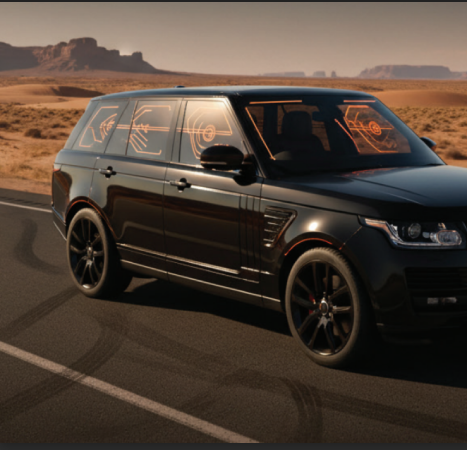
A sun control film for cars is a thin multi-layer film applied on the inside surface of vehicle windows. Its purpose is to control solar energy entering the car.
Unlike ordinary tint films, modern sun control films are designed using advanced optical technologies. These films can reduce heat, block harmful UV rays and improve cabin comfort without necessarily making the glass look very dark.
The structure of a typical window film includes multiple layers that work together to manage sunlight.
These layers may include:
- Polyester layers for durability
• UV-absorbing layers
• Infrared blocking technology
• Scratch-resistant coatings
When installed correctly, the film becomes almost invisible while still improving the overall performance of the glass.
Key Metrics That Define Window Film Performance
When you start researching window films, you will often see technical terms used by manufacturers. Understanding these terms will help you make a better decision.
| Term | Meaning | Why It Matters |
|---|---|---|
| VLT (Visible Light Transmission) | Percentage of visible light passing through the film | Determines how bright or dark the window appears |
| IR Rejection | Percentage of infrared heat blocked | A major factor in cabin cooling |
| UV Rejection | Percentage of UV rays blocked | Protects skin and car interiors |
| TSER (Total Solar Energy Rejected) | Overall solar energy blocked by the film | Indicates total heat performance |
Many car owners believe that darker films block more heat, but that is not always true.
In fact, modern high-performance films can remain fairly clear while still blocking a large portion of infrared heat. This is why advanced UV protection car films and ceramic window films are becoming more popular today.
Types of Car Window Films Available in India
If you visit a car accessory market, you will notice many types of window films being offered. However, not all of them perform the same. Some are purely cosmetic, while others use advanced technology to reject heat.
Understanding the different types will help you choose the right option.
Dyed Window Films
Dyed films are the most basic type of window film available in the market.
They contain a layer of dye that darkens the glass and reduces glare slightly. These films are usually inexpensive and commonly installed by local tint shops.
However, dyed films have several limitations.
They mainly improve the appearance of the glass but offer very limited heat rejection. Over time, exposure to sunlight can cause the dye to fade. This often leads to the well-known tint effect that many older cars show after a few years.
Because of their limited performance, dyed films are not considered ideal for serious heat control.
Metalised Window Films
Metalised films contain tiny metallic particles embedded within the film layers. These particles reflect some portion of solar energy, helping reduce heat entering the cabin.
Compared to dyed films, metalised films offer better durability and improved heat rejection.
However, there is one drawback. Since these films contain metal particles, they may interfere with electronic signals. In some cases, drivers notice issues with GPS signals, mobile connectivity or FASTag scanners.
Due to this reason, many premium car owners prefer non-metallic film technologies.
Carbon Window Films
Carbon films represent a step forward in performance. These films use carbon particles instead of dyes or metals.
The advantage of carbon films is that they offer better heat rejection without signal interference. They also provide a more matte finish that does not fade easily.
Carbon films are generally more durable than dyed films and can maintain their appearance for a longer period.
However, they still cannot match the performance of modern nano ceramic films when it comes to blocking infrared heat.
Ceramic & Nano Ceramic Window Films
Ceramic window films represent one of the biggest upgrades over traditional dyed or metalised films. Instead of dyes or metal particles, these films use ceramic-based microscopic particles that help block solar heat.
Because ceramic materials are stable under high temperatures, these films do not fade, discolour or turn purple over time. They also do not interfere with electronic signals, which makes them a reliable option for modern vehicles that depend on GPS, mobile connectivity and FASTag scanners.
Some of the key advantages of ceramic window films include:
- Better heat rejection compared to dyed films
- No signal interference
- Higher durability
- Stable colour that does not fade easily
However, technology has continued to evolve. This is where nano ceramic films come into the picture.
Nano ceramic films use ultra-fine ceramic nanoparticles that are engineered to target infrared radiation more effectively. Since infrared rays are responsible for most of the heat entering a car, nano ceramic films can significantly improve cabin comfort without making the windows look very dark.
Compared to standard ceramic films, nano ceramic films typically offer:
- Higher infrared heat rejection
- Better optical clarity
- Improved UV protection
- Stronger long-term performance
This is the category where advanced products like IRX window films from Aegis Films stand out.
The IRX series uses nano ceramic technology designed specifically to control infrared heat while maintaining a clean and natural glass appearance. As a result, it works effectively as a high-performance heat rejection window film and car cooling film for Indian summers
Which Type of Car Window Films are Legal in India?
One of the most common concerns car owners have is whether window films are allowed under Indian law.
This confusion mainly arises from a Supreme Court ruling that restricted the use of dark sun films on vehicles.
The law focuses on Visible Light Transmission (VLT), which measures how much light can pass through the glass.
Legal VLT Limits in India as Per CMVR (100)
| Window | Minimum VLT Allowed |
|---|---|
| Front Windshield | 70% VLT |
| Front Side Windows | 50% VLT |
| Rear Windows | 50% VLT |
This means that extremely dark tint films that block too much light are not permitted.
However, modern sun control films for cars can still remain within these limits while offering strong heat rejection.
That is because advanced films focus on blocking infrared heat rather than visible light.
How to Choose the Best Window Film
Performance depends on multiple factors, including technology, durability and installation quality.
Here are some key aspects every car owner should consider.
1. Infrared Heat Rejection
Infrared radiation is responsible for most of the heat inside your car. A high-quality film should offer strong IR rejection to keep the cabin cooler.
2. UV Protection
Look for films that block up to 99% of UV rays. This protects the interior materials of your vehicle.
3. Legal Compliance
Always ensure that the film maintains acceptable VLT levels. Avoid extremely dark films that may attract legal issues.
4. Optical Clarity
Premium films should look natural on the glass. They should not distort visibility or create a cloudy appearance.
5. Brand Reputation
Choosing a reliable brand ensures better product quality, warranty support and consistent performance.
6. Installation Quality
Even the best film will perform poorly if installed incorrectly. Professional installation ensures proper alignment, bubble-free application and long-term durability.
7. Long-Term Durability
Good films should resist fading, peeling and discolouration over time. This ensures your investment continues to deliver benefits for years.
Which is the Best Window Film in India?
The best window film is one that balances heat rejection, clarity, durability and legal compliance.
For Indian conditions where sunlight intensity can be very high, advanced nano ceramic films offer the best results. These films focus on blocking infrared heat while maintaining excellent visibility.
Among the premium options available today, IRX window films from Aegis Films are designed specifically to address the challenges of Indian summers.
IRX Window Film from Aegis Films
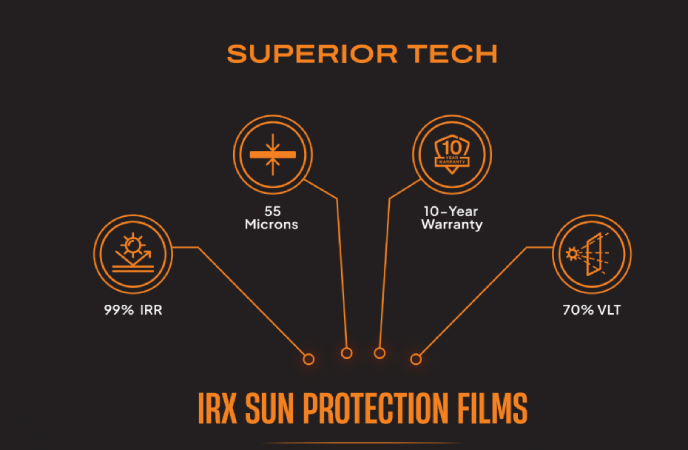
IRX films use advanced technology to deliver strong heat rejection without relying on dark tint.
Key benefits include:
- High infrared heat rejection to reduce cabin temperature
- Excellent optical clarity for comfortable driving
- Powerful UV protection for interior safety
- Durable multi-layer construction
- Long-lasting performance even in extreme climates
Because of these features, IRX works effectively as a car cooling film that improves comfort while maintaining the elegant appearance of your vehicle.
Conclusion
Indian summers can be extremely harsh on both drivers and vehicles. When a car sits under direct sunlight, heat quickly builds up inside the cabin. This not only makes driving uncomfortable but can also affect interior materials over time.
Installing a car window film is one of the most practical ways to manage this problem. High-quality films can reduce infrared heat, block harmful UV rays and help maintain a more comfortable cabin environment.
However, choosing the right film is important. Dark tint alone does not guarantee heat protection and may even create legal issues. Modern films focus on advanced heat rejection technologies that work without compromising visibility.
Premium solutions like the IRX window films from Aegis Films are designed to deliver effective heat rejection while maintaining a clean and natural glass appearance. By selecting a reliable film and ensuring proper installation, car owners can significantly improve comfort during summer drives.
FAQs
1. Which sun control film is best for cars in India?
Nano ceramic films are considered the best because they block infrared heat effectively while maintaining high clarity and durability.
2. Does window film reduce heat inside a car?
Yes. High-quality heat rejection window films can block a significant portion of infrared radiation, helping reduce cabin temperature.
3. Is window film legal in India?
Window films must comply with VLT limits. Front windshields must allow 70% light transmission and side windows must allow at least 50%.
4. Which is better, ceramic or dyed window film?
Ceramic films are far superior because they block infrared heat, provide strong UV protection and last longer without fading.
5. How long do car window films last?
Premium films typically last between 5 to 10 years, depending on product quality and installation.