
You just booked your new car. The delivery date is fixed. You are already imagining that first drive, the temple visit, the Instagram reel, the long highway stretch. Then someone says, “Bhai, PPF lagwa lena. Indian roads hain.”
Now you pause.
You have heard about paint protection film. You know it protects the paint. But you also heard mixed opinions. Some say it is a must. Some say it is overhyped. Some say ceramic is enough. Some say it peels. Some say it turns yellow. And suddenly your excitement turns into confusion.
So let’s clear everything.
This is your complete guide to paint protection film, especially for Indian roads, Indian traffic, Indian parking habits, and Indian jugaad culture.
By the end, you will not just “know” what PPF is. You will understand how it works, why it works, when it makes sense, and what separates average films from the best paint protection film in India.
Table of Contents
- The Reality of Indian Roads
- What Exactly Is Paint Protection Film?
- How Does PPF Work?
- Why Indian Roads Make PPF More Relevant
- PPF vs Ceramic Coating : Which is Better?
- Full Body PPF vs Partial PPF. What Should You Choose?
- Why PPF Requires Expert Installation?
- How Long Does PPF Last?
- Resale Value and Long-Term Benefit of Car PPF
- Why Aegis PPF Is the Best Paint Protection Film in India
- Final Thoughts
- Frequently Asked Questions
The Reality of Indian Roads
Before we talk about film, let’s talk about what your car is actually up against.
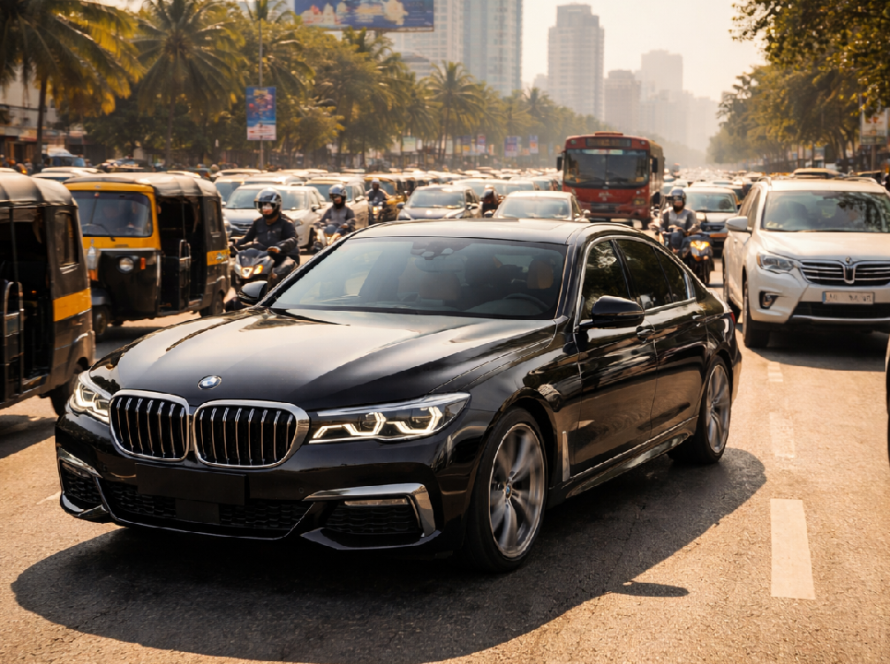
Indian roads are unpredictable. You can drive a ₹10 lakh hatchback or a ₹1.5 crore sports car. The threats are the same.
You are dealing with:
- Loose gravel flying from trucks on highways
- Two-wheelers squeezing through gaps
- Auto-rickshaws brushing past your bumper
- Kids cycling too close in residential areas
- Cows leaning against parked cars
- Construction dust and cement particles
- Hard water stains during monsoon
- Tree sap in society parking
- Random key scratches in public parking
And then comes the emotional damage. You wash your brand-new car. You admire the gloss. Then one tiny stone chip appears on the front bumper. That small white dot keeps staring at you every time you walk past.
That is where car paint protection film enters the picture.
What Exactly Is Paint Protection Film?
Let’s simplify this.
Paint protection film, often called car PPF or car protection film, is a transparent, flexible layer applied on top of your car’s painted surfaces. It acts as a sacrificial barrier between your paint and the outside world.
Think of it as a screen guard for your phone. The guard takes the hit so your screen stays safe.
A high-quality PPF is a multi-layer engineered product. Most premium films are made from aliphatic TPU, which stands for thermoplastic polyurethane.
Why aliphatic TPU?
Because it offers:
- High clarity
- Strong impact resistance
- UV resistance
- Self-healing properties
- Non-yellowing performance
This is where many cheaper films fail. They use low-quality TPU or low-grade material like TPH. Those films look fine initially. But over time, they turn yellow, crack or peel.
How Does PPF Work?
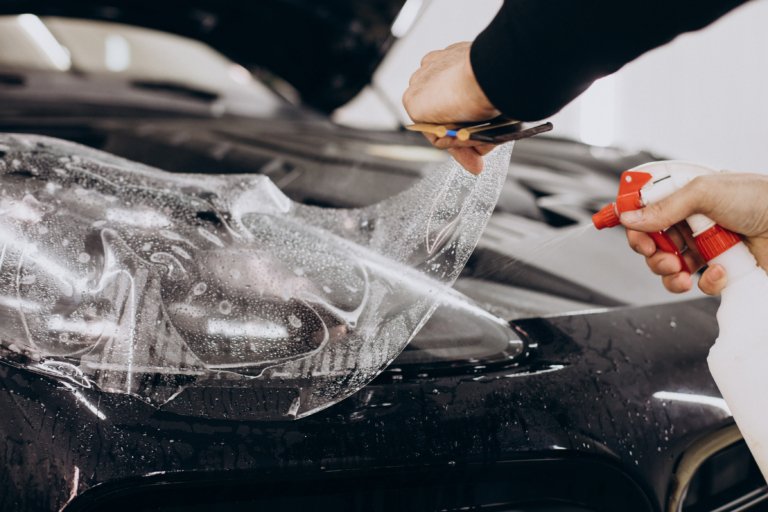
A standard high-quality car paint protection film has multiple layers:
- Top Coat Layer
This is the outermost layer. It is clear and glossy. It has self-healing properties. It resists stains and UV rays. - TPU Core Layer
This is the main impact-absorbing layer. It takes the hit from stones, road debris, and scratches. - Adhesive Layer
This sticks the film to your car’s paint. A good adhesive ensures strong bonding without damaging paint during removal.
Now imagine this scenario.
You are driving your new BMW 3 Series on the Mumbai-Pune Expressway. A small stone flies from a truck tyre and hits your front bumper at high speed.
Without PPF, the stone hits the paint directly. The paint chips. You see white primer. You feel pain.
With car PPF, the stone hits the film. The TPU layer absorbs the energy. The impact spreads across the flexible surface. The paint underneath remains untouched. Even if there’s a minor scratch, you can pour hot water and park your car in the sunlight and the scratch will heal by itself due to the self-healing property of PPF.
Why Indian Roads Make PPF More Relevant
In Europe or Japan, roads are smoother. Lane discipline exists. Gravel is controlled. Dust levels are lower.
In India, reality is different.
First, we have constant road work. Loose stones are common. Even inside cities like Ahmedabad, Bangalore or Delhi, fresh tar roads often leave debris behind.
Second, parking is a battlefield. Malls, markets, weddings, office basements. The cars are parked so close to each other that Doors hitother car doors.
Third, the climate is extreme. In Rajasthan, the heat crosses 45°C. In coastal areas, humidity is high. In hill stations, the temperature drops sharply.
Low-quality PPF coating can fail in such conditions. It can bubble. It can discolor. It can lose adhesion.
This is why choosing the best PPF brands matters more in India than anywhere else.
PPF vs Ceramic Coating : Which is Better?
This is the most common debate in car communities.
“Bhai ceramic karwa lo, PPF ki kya zarurat hai?”
Let’s clear it.
Ceramic coating is a liquid polymer applied on paint. It creates a thin protective layer that enhances gloss and offers hydrophobic properties.
It protects against:
- Minor chemical stains
- Water spots
- Light swirl marks
It does not protect against:
- Stone chips
- Deep scratches
- Physical impact
PPF coating for car, on the other hand, physically absorbs impact.
So ceramic is like a wax on steroids. PPF is like a shield.
Full Body PPF vs Partial PPF. What Should You Choose?
Do you need full-body PPF? Or only high-impact areas?
Partial PPF usually covers:
- Front bumper
- Bonnet
- Side mirrors
- Headlights
This is budget-friendly. It protects the most vulnerable zones.
Full PPF covers:
- Entire body panels
- Doors
- Fenders
- Rear bumper
- Pillars
Full PPF is ideal if:
- You bought a premium car
- You chose a dark or matte colour
- You want maximum resale value
- You plan to keep the car long-term
In India, darker shades like black, navy blue and deep red show scratches more easily. So full car protection film makes strong sense for such colours.
Why PPF Requires Expert Installation?
Even the best paint protection film in India can fail if installed badly.
Installation is everything.
A proper PPF installation requires:
- Dust-free controlled environment
- Pre-cut patterns using plotter machines
- Paint decontamination before application
- Skilled technicians
- Edge wrapping wherever possible
Poor installation leads to:
- Lifted edges
- Visible cut marks
- Trapped dust particles
- Peeling corners
This is why serious car enthusiasts only go to trusted detailing studios.
How Long Does PPF Last?
Premium Car PPF can last between 5 to 10 years depending on:
- Film quality
- Installation quality
- Maintenance
- Driving conditions
In India, with harsh sun exposure, performance depends heavily on material quality.
Aliphatic TPU films resist yellowing and cracking much better and can last up to 5 years. Films with TPU Polycarbonate blend from Aegis paint protection films last even longer for up to 10-12 years and even a lifetime. Low-grade films may start fading within 2 to 3 years.
Resale Value and Long-Term Benefit of Car PPF
Indian buyers inspect used cars closely.
If your car has original paint in excellent condition after 4 or 5 years, it builds trust. Buyers pay more.
PPF acts like a time capsule. When removed properly, it reveals protected paint underneath.
This is a big advantage for luxury car owners who upgrade frequently.
Why Aegis PPF Is the Best Paint Protection Film in India
Now let us talk specifically about Aegis paint protection film.
When choosing the best PPF brands, material quality and product range matter.
Aegis paint protection film uses high-quality aliphatic TPU. This ensures:
- High clarity
- Strong impact absorption
- UV resistance
- Long-term non-yellowing performance
Aegis offers a wide range of products suited for different needs. Whether you own a daily-driven sedan or a high-performance supercar, there is a suitable thickness and variant available.
One strong USP is offering some of the thickest PPF options available for supercars. Thicker film means higher impact resistance, which is critical for low-ground-clearance sports cars that face stone blasting on highways.
Aegis focuses on:
- Precision manufacturing
- Long durability
- Clarity that enhances paint depth
- Reliable warranty
When people search for the best paint protection film in India, they look for three things. Protection, longevity, and trust. Aegis paint protection film is engineered to deliver all three.
Final Thoughts
Your car’s factory paint is baked in a controlled environment with robotic precision. That OEM clear coat is stronger and more uniform than any repaint you will ever get outside the factory. Once it chips or gets repainted, you cannot truly go back.
Paint protection film works as a sacrificial polyurethane shield. It absorbs kinetic energy from stone impacts, reduces point-stress on the clear coat, and blocks UV degradation. Over 5 to 7 years, this means less clear coat thinning from polishing, fewer repaints, and significantly better panel integrity.
On Indian roads, where gravel, dust, heat and careless parking are daily realities, car PPF becomes really important. However, you should always opt for high-quality PPF and not fall for cheap PPF trap.
Always select the best paint protection film in India, like Aegis Films, which has high-grade aliphatic TPU, resists yellowing under harsh sun, maintains optical clarity and holds strong adhesion without damaging paint during removal.
Frequently Asked Questions
- What is paint protection film and is it worth it in India?
Paint protection film is a transparent TPU layer applied to the car paint to prevent scratches and stone chips. In Indian road conditions, it is highly worth it, especially for new cars and dark colours.
- How much does a PPF coating for a car cost in India?
Cost depends on car size, film quality and coverage. Partial coverage costs less. Full-body premium PPF coating can range significantly higher for luxury cars.
- Does PPF turn yellow?
High-quality aliphatic TPU-based films resist yellowing. Cheap films may discolour over time, especially under Indian sun exposure.
- What is the difference between PPF and ceramic coating?
Ceramic protects against stains and enhances gloss. PPF provides physical impact protection against stone chips and scratches.
- How long does car PPF last?
Premium films last 5 to 10 years, depending on usage and maintenance.
- Which is the best paint protection film in India?
The best paint protection film in India uses aliphatic TPU, offers a strong warranty and is installed by skilled professionals. Aegis paint protection film is one such film. It works perfectly for Indian conditions with high durability and clarity.