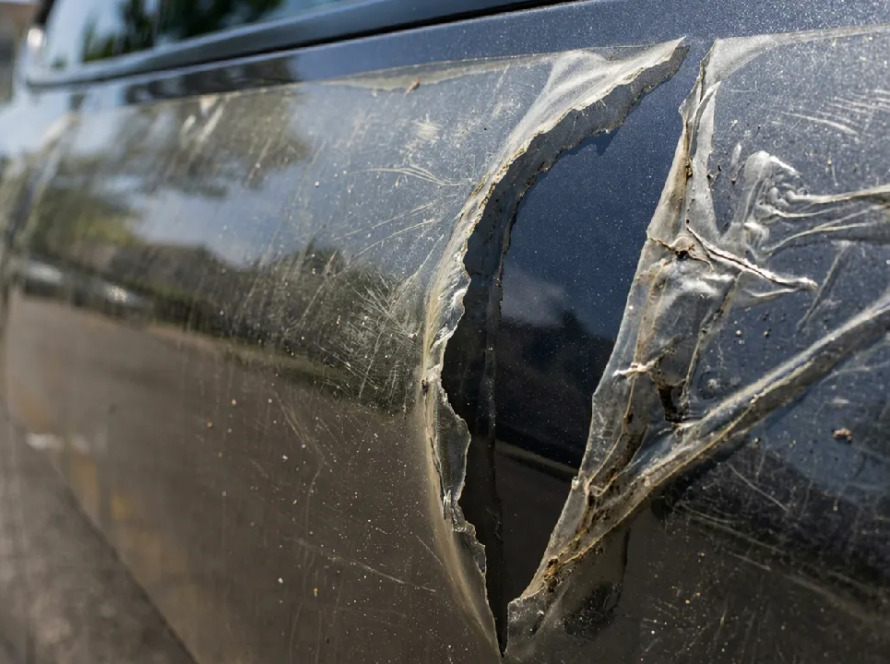
Paint Protection Film, or PPF, is a clear, flexible layer of thermoplastic polyurethane applied over a car’s paint. It works as a sacrificial barrier, absorbing stone chips, scratches and UV damage before they reach the factory paint underneath. The best films, built from aliphatic TPU, also self-heal light scratches with heat.
You just booked your new car. The delivery date is fixed. You are already imagining the first drive, the temple visit, the long highway stretch. Then someone says, “Bhai, PPF lagwa lena. Indian roads hain.”
You have heard of paint protection film. You know it protects the paint. But you have also heard mixed opinions. Some say it is a must. Some say it is overhyped. Some say ceramic coating does the same job. This guide clears all of that up, with a specific focus on what PPF means, how it works and whether it makes sense for Indian roads.
Table of Contents
- What Does PPF Stand For? (Full Form and Meaning)
- The Reality of Indian Roads
- What Is Paint Protection Film Made Of?
- How Does PPF Work?
- Benefits of Paint Protection Film
- Types of Paint Protection Film
- PPF vs Ceramic Coating
- Areas of the Car You Should Protect
- How Long Does PPF Last?
- Signs Your PPF May Need Replacement
- PPF Maintenance Tips
- Common Myths About PPF
- How Much Does PPF Cost in India?
- How to Choose the Right PPF
- Is PPF Worth It?
- Bringing It All Together
- Frequently Asked Questions
What Does PPF Stand For? (Full Form and Meaning)
PPF stands for Paint Protection Film. In the context of cars, it has nothing to do with the Public Provident Fund. It is a transparent polyurethane film installed over a vehicle’s painted panels to shield the factory finish from stone chips, scratches, UV rays and everyday road grime.
The Reality of Indian Roads
Before we get into the film itself, here is what your car is actually up against on an average day in India. Loose gravel flies off truck tyres on the highway. Two-wheelers squeeze through impossible gaps. Auto-rickshaws brush past your bumper in traffic. Kids cycle too close in residential lanes. Cows lean against parked cars. Construction dust, cement particles, hard water stains and tree sap all take their turn on your paint over a year.
Then comes the emotional damage. You wash your brand-new car, admire the gloss, and a week later a stone chip shows up on the front bumper. That small white dot stares back at you every time you walk past. This is exactly where car paint protection film earns its place.
What Is Paint Protection Film Made Of?
A high-quality PPF is a multi-layer engineered product, not a single sheet of plastic. Most premium films use aliphatic TPU, short for aliphatic thermoplastic polyurethane. It offers high clarity, strong impact resistance, UV resistance, self-healing and non-yellowing performance over years of sun exposure.
Not every film on the market is built the same way. Here is how the common materials compare:
| Material | Durability | Yellowing Risk | Typical Use |
|---|---|---|---|
| PVC | Low, rigid and brittle | High, yellows within a year | Avoid for Indian conditions |
| TPH (polyurethane hybrid) | Moderate, limited elasticity | Moderate, lasts 2 to 3 years | Budget films |
| Aliphatic TPU | High, flexible and self-healing | Low, resists yellowing for 5 to 10 years | Recommended for Indian roads |
A genuine aliphatic TPU film typically runs between 150 and 200 microns, or roughly 6 to 8 mils, in total thickness. That thickness is what lets it absorb a stone impact at highway speed without transferring the full force to the paint underneath.
How Does PPF Work?
A standard high-quality car paint protection film is built in three layers.
Top Coat Layer
The outermost layer is clear and glossy. It carries the self-healing property and resists stains and UV rays.
TPU Core Layer
Adhesive Layer
This bonds the film to the car’s paint. A good adhesive, usually a non-yellowing acrylic pressure-sensitive adhesive, holds firmly for years but still releases cleanly without damaging the paint during removal.
Picture this. You are driving a new BMW 3 Series on the Mumbai-Pune Expressway. A stone flies off a truck tyre and hits your front bumper at high speed. Without PPF, the stone hits the paint directly, chips it, and exposes the white primer underneath. With PPF, the stone hits the film instead. The TPU layer absorbs the energy and spreads the impact, so the paint underneath stays untouched. Even a minor scratch on the film itself can heal on its own with warm water and sunlight, thanks to the self-healing top coat.
Benefits of Paint Protection Film
Protection Against Stone Chips
Stone chips are one of the biggest reasons car owners choose PPF. On an expressway or a recently repaired highway, a truck ahead can kick up a loose stone that strikes your bonnet or bumper at speed. Without PPF, that impact can chip the paint and expose the primer, and the only permanent fix is repainting the panel. With PPF, the TPU layer absorbs the impact and spreads the force across a wider area.
Protection From Daily Scratches
Most paint damage does not come from accidents. It comes from everyday life: a bag brushing against the door in a parking lot, a bicycle handle dragged too close, an old microfiber cloth at the local car wash. PPF takes this abuse before it reaches the factory paint.
Self-Healing Technology
Premium TPU-based films have self-healing properties. When light swirl marks or surface scratches appear, heat from sunlight or warm water helps the top layer return to its original form, so the film keeps looking newer for longer without constant polishing.
Protection Against India's Climate
Indian vehicles face some of the harshest conditions in the world. Rajasthan can cross 45 degrees Celsius. Coastal cities bring high humidity and salt-laden air. Monsoon months bring hard water stains, mud and other contaminants. A quality film acts as an added barrier against all of this, helping preserve gloss and colour over time.
Better Resale Value
When selling a used car, original paint matters. Buyers and dealerships inspect paint condition carefully, since repainted panels often signal previous damage. A car that retains its factory finish generally commands stronger buyer confidence and a better resale price.
Types of Paint Protection Film
Clear Paint Protection Film
Clear PPF is the most common type. It is virtually invisible once applied and preserves the car’s original finish while protecting it from stone chips, scratches, bird droppings and tree sap.
Matte Paint Protection Film
Matte PPF combines protection with a satin, stealth-like look. It works on both matte-finished and gloss-painted cars and offers the same protection as clear film, just with a non-reflective finish.
Coloured Paint Protection Film
Coloured PPF changes the look of a car while protecting the original paint underneath. Unlike a repaint, it is removable, which makes it attractive for owners who want a fresh look without a permanent change.
PPF vs Ceramic Coating
This is the most common debate in car communities. “Bhai ceramic karwa lo, PPF ki kya zarurat hai?” Here is the actual difference. Ceramic coating is a liquid polymer that creates a thin protective layer with hydrophobic properties and added gloss. Car paint protection film physically absorbs impact instead.
| Feature | Paint Protection Film | Ceramic Coating |
|---|---|---|
| What it is | TPU film applied over paint | Liquid polymer coating |
| Protects against | Stone chips, deep scratches, physical impact | Chemical stains, water spots, light swirl marks |
| Self-healing | Yes, heat activated | No |
| Typical lifespan | 5 to 10 years | 1 to 3 years |
| Best for | Physical impact protection | Gloss and chemical resistance |
Ceramic coating is essentially wax on steroids. PPF is a physical shield. Many owners choose to run both together, PPF on the high-impact panels and ceramic coating over the top for gloss and easier washing.
Areas of the Car You Should Protect
Not every panel faces the same level of risk. Many owners protect high-impact areas strategically instead of covering the entire car.
- Front bumper: the first line of defence against road debris and the single most stone-chipped panel on Indian highways.
- Bonnet: constantly exposed to flying stones and insects at highway speed, and chips show up fastest on darker colours.
- Side mirrors (ORVMs): they protrude from the body and sit closest to passing two-wheelers and pedestrians in traffic.
- Door cups: rings, keys and fingernails leave scratches here that become visible within a couple of years.
- Door edges: narrow parking spots mean accidental contact with walls, pillars and neighbouring cars.
- Rear bumper lip: loading luggage, grocery bags and sports equipment scratches this area more than owners expect.
Partial PPF covers these high-risk panels at a lower cost. Full-body PPF covers every painted surface and suits owners who plan to keep the car for many years, especially on luxury or performance vehicles.
How Long Does PPF Last?
This depends on three things: the quality of the film, the quality of installation and how the car is maintained. Entry-level films typically last 3 to 5 years, while premium aliphatic TPU films last 5 to 10 years or more.
A high-quality film installed poorly can fail early through lifting edges or contamination. Even the best film ages faster with harsh chemicals, abrasive washing or a car that stays outdoors in intense sun or coastal humidity rather than in a garage.
Signs Your PPF May Need Replacement
- Noticeable yellowing or loss of clarity
- Deep scratches that penetrate the film
- Edge lifting or peeling
- Cracking or brittleness
- Loss of self-healing performance
PPF Maintenance Tips
- Wait 5 to 7 days after installation before washing the car, so the adhesive fully cures.
- Wash regularly. Dust, grime, bird droppings and tree sap should not sit on the film for long.
- Use a pH-neutral car shampoo. Harsh detergents wear down the top coat over time.
- Remove bird droppings immediately, since they are acidic and can damage both paint and film.
- Avoid aggressive polishing. PPF does not need heavy compounding.
Be careful with pressure washers near exposed edges and seams. - Get the film inspected annually so edge lifting or damage gets caught early.
Common Myths About PPF
Myth 1: PPF Damages Paint
Myth 2: All PPF Turns Yellow
Myth 3: Ceramic Coating Offers the Same Protection
Myth 4: PPF Is Only for Luxury Cars
Stone chips do not care whether a car costs 10 lakh rupees or a crore. Luxury cars were early adopters, but the technology works the same way on daily-driven hatchbacks, sedans and SUVs.
Myth 5: PPF Makes a Car Look Artificial
How Much Does PPF Cost in India?
Cost depends on vehicle size, coverage area, film quality and installer expertise. Partial coverage on high-impact areas such as the front bumper, bonnet and ORVMs typically starts around ₹20,000 and goes up to ₹60,000. Full-body installation generally ranges from ₹60,000 to ₹2,80,000 or more, depending on the film and vehicle size.
Lower-cost films may look attractive upfront, but they usually compromise on clarity, durability, self-healing performance and warranty support.
How to Choose the Right PPF
- City driving: a reliable TPU-based film offers a practical balance between protection and cost.
- Highway driving: go for premium self-healing films with greater impact resistance, since stone chip exposure is higher.
- Luxury or performance vehicles: advanced films with longer warranties and superior clarity offer better long-term value.
- Changing the look: matte or coloured PPF lets you transform the appearance while still protecting the paint underneath.
- Tight budget: choose a genuine TPU-based film from a reputable brand rather than the cheapest option available, since replacing a poor-quality film usually costs more than the original saving.
Is PPF Worth It?
Spending ₹75,000 to ₹2,80,000 on paint protection can feel like a lot at first glance. The real comparison is not what PPF costs, it is what paint damage costs over time. A single bumper repaint runs ₹5,000 to ₹15,000. A bonnet repaint runs ₹10,000 to ₹25,000. Multiple panels affected by stone chips and scratches can push repair costs past ₹50,000, and higher still on luxury vehicles.
Original factory paint is applied under tightly controlled manufacturing conditions and remains one of the most valuable parts of a car’s appearance and resale value. Once it is damaged, it can never be replicated perfectly through a repaint. PPF absorbs that daily wear before it reaches the paint, which is why owners who plan to keep a car for years, drive frequently on highways, or simply want to preserve its appearance tend to see it as a practical long-term investment.
Bringing It All Together
A car’s factory paint is baked under controlled conditions with a level of precision no repaint outside the factory can fully match. Once it chips or gets repainted, you cannot truly go back to that original finish.
Paint protection film works as a sacrificial polyurethane shield. It absorbs kinetic energy from stone impacts, reduces point stress on the clear coat and blocks UV degradation. Over 5 to 7 years, that means less clear coat thinning from polishing, fewer repaints and better panel integrity overall.
On Indian roads, where gravel, dust, heat and careless parking are daily realities, car paint protection film earns its cost quickly. Always choose a high-quality film like AEGIS, built on genuine aliphatic TPU, over a cheap alternative that will need replacing within a year or two.
Frequently Asked Questions
1. What is the full form of PPF in a car?
PPF stands for Paint Protection Film. It has no connection to the Public Provident Fund in the automotive context.
2. What is paint protection film and is it worth it in India?
Paint protection film is a transparent TPU layer applied to a car’s paint to prevent scratches and stone chips. On Indian roads, it is worth it, especially for new cars and darker colours.
3. How much does PPF coating for a car cost in India?
Cost depends on car size, film quality and coverage. Partial coverage costs less, while full-body premium coating costs significantly more, especially on larger or luxury cars.
4. Does PPF turn yellow?
High-quality aliphatic TPU films resist yellowing. Cheaper films can discolour within a year, especially under Indian sun exposure.
5. What is the difference between PPF and ceramic coating?
Ceramic coating protects against stains and adds gloss. PPF provides physical impact protection against stone chips and scratches. See our full PPF vs ceramic coating comparison above for the detailed breakdown.
6. How long does car PPF last?
Premium films last 5 to 10 years depending on usage and maintenance. Entry-level films typically last 3 to 5 years.
7. Which is the best paint protection film in India?
The best paint protection film in India uses genuine aliphatic TPU, carries a strong warranty and is installed by trained professionals. AEGIS is one such film, built for Indian conditions with high durability and clarity.