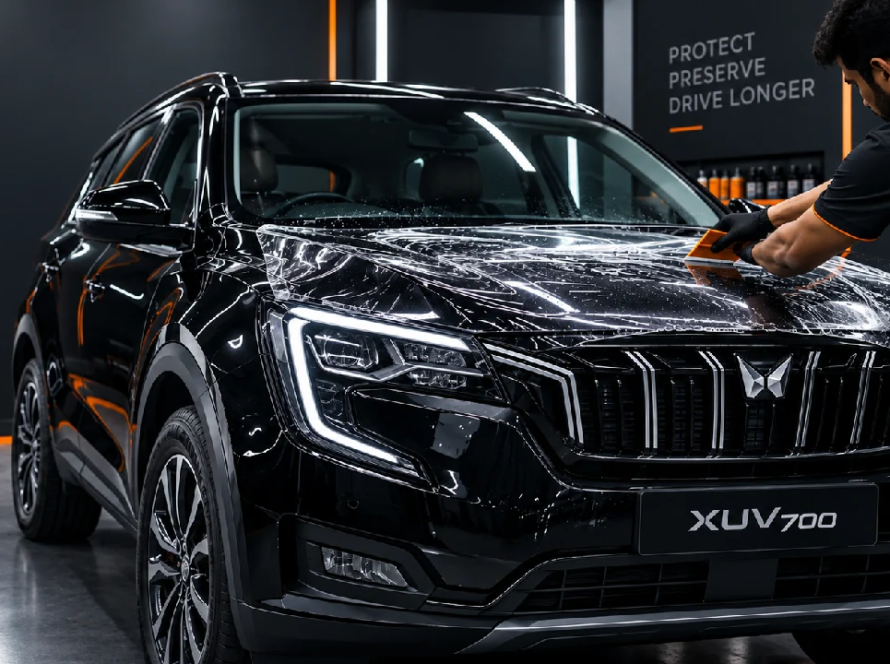
If you walk into any premium detailing studio today, one thing is clear. Paint Protection Film is no longer a luxury upgrade. It has become a serious investment decision.
Owners across segments are choosing car PPF because repainting modern factory paint is expensive, time-consuming and never truly matches OEM quality.
But here is the real problem.
Most peopleend up choosing the wrong paint protection film because the Indian market is flooded with rebranded imports, half information, confusing jargon and aggressive marketing claims.
So in this blog, we will understand how to identify a good quality car PPF and stay away from the scammers.
By the end, you will know exactly what to check before investing in PPF coating for car.
Table of Contents
What Is Paint Protection Film?
Paint protection film is a multi-layer thermoplastic polyurethane film that is installed on painted surfaces to protect against:
- Stone chips
- Road debris
- Light scratches
- Swirl marks
- UV damage
- Chemical stains
A high-quality car paint protection film usually consists of:
- Clear coat layer – Provides gloss and self-healing ability
- TPU core layer – The main impact-absorbing structure
- Adhesive layer – Bonds film to paint without damaging OEM finish
- Release liner – Removed during installation
Why Imported PPFs Don’t Work in India?
Before we talk about the best PPF brands, you need to understand something critical.
India is brutal on paint.
- High UV exposure
- Dust and sandstorms
- Gravel-heavy highways
- Narrow city roads
- Unpredictable parking conditions
- Hard water spots
A film that performs well in Europe does not automatically perform well here.
For example, self-healing properties depend on surface temperature. In Mumbai summer, surface temperature easily crosses 60°C. A high-quality PPF coating activates self-healing faster. Cheaper films soften excessively, which leads to stretch marks and edge lifting.
So climate compatibility is not a small detail. It is a core decision factor.
What Defines the Best Paint Protection Film in India?
Let’s break this down logically.
1. Material Quality: TPU Grade
High-end car PPF uses aliphatic TPU with elastomeric memory. This allows:
- Scratch resistance
- Thermal self-healing
- Long-term clarity
- Resistance to yellowing
Avoid films that are PVC-based. They are cheaper, but they crack and fade.
2. Thickness: More Is Not Always Better
Most premium films range between 150 to 200 microns.
But here is the catch.
Thickness alone does not guarantee impact resistance. Structure matters more than microns.
For example:
| Feature | Cheap 200 Micron Film | Premium 180 Micron Film |
|---|---|---|
| TPU Type | Aromatic | Aliphatic |
| Self Healing | Limited | Thermal + Minor Cold Healing |
| UV Resistance | Moderate | High |
| Clarity | Slight haze | Crystal clear |
| Longevity | 2–3 years | 5–10 years |
So thickness alone doesn’t matter.
3. Self-Healing: Is it Real?
Self-healing is one of the biggest selling points of car paint protection film.
But there are two types:
- Thermal self-healing – Requires heat from the sun or hot water
- Instant elastomeric healing – Minor swirl recovery at room temperature
In India, thermal self-healing works well because of the high ambient temperature. However, low-quality films lose healing ability after 1-2 years because the top coat oxidises.
When evaluating PPF coating:
- Ask for a scratch demo
- Check healing after 30 seconds
- Inspect clarity post-healing
4. Adhesive Quality: The Silent Game Changer
Nobody talks about adhesive. But this is where disasters happen.
Low-quality adhesive leads to:
- Edge lifting
- Glue marks
- Paint pull-off during removal
- Silvering effect
Premium car PPF uses acrylic pressure-sensitive adhesive engineered for automotive clear coat compatibility.
Ask this:
- Is adhesive residue-free on removal?
- Has the brand tested removal after 5 years?
If the installer cannot answer, be cautious.
Installation: 50% Product, 50% Skill
Even the best paint protection film in India will fail if installed poorly.
Here’s what separates professional installation from average work:
Professional Setup Includes:
- Closed dust-controlled bay
- Panel prep with decontamination
- Clay bar and IPA wipe
- Computer-cut templates
- Edge wrapping where possible
- Controlled curing time
Warning Signs:
- Outdoor installation
- Blade cutting directly on paint
- Excessive stretching
- Visible stretch lines
- Bubbles left unattended
How to Inspect PPF After Installation
Before delivery, check:
- Edges are wrapped
- No visible lift
- No trapped dust
- Uniform gloss
- Panel alignment
Clear vs Matte vs Satin PPF: Which is Best?
Car protection film is not just about safety. It changes appearance too.
- Clear PPF enhances the original shine and texture.
- Matte PPF gives a classy matte finish. Can be applied on matte as well as shiny cars.
- Satin PPF offers a subtle sheen
Clear PPF goes well on every car and is often the most common choice. You can prefer any finish unless the brand is recognised and qualit is good.
Comparing Best PPF Brands in India
The Indian market has multiple imported and rebranded films. Some are genuine global brands. Some are white-labelled products with local branding.
When comparing best PPF brands, evaluate:
- TPU origin
- Top coat technology
- Warranty transparency
- Local distributor support
- Availability of replacement panels
Do not choose only based on price.
Cheaper film today often means repaint tomorrow.
Why Aegis Paint Protection Film Stands Out
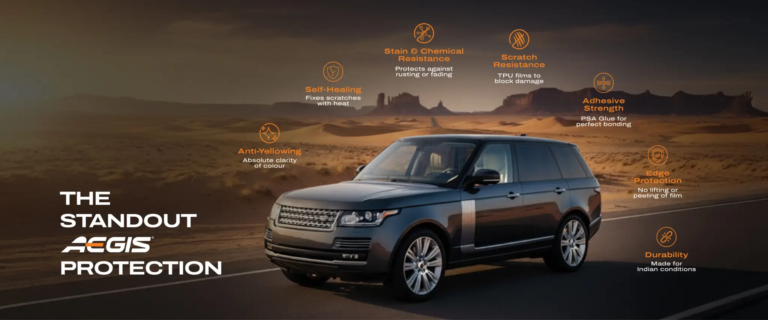
Now let’s talk about Aegis paint protection film.
In a crowded market, what makes a brand truly stand out?
- Aliphatic TPU Structure
Aegis uses high-grade aliphatic TPU engineered for Indian climate. This reduces yellowing risk significantly.
- Advanced Self-Healing Top Coat
The top layer responds efficiently to heat exposure, making it ideal for Indian summers.
- Optical Clarity
Many films create slight distortion on darker cars like black Audi or navy blue Mercedes. Aegis PPF maintains clarity without orange peel effect.
- Strong Yet Safe Adhesive
Engineered for long-term bonding without damaging OEM paint during removal.
- Climate-Optimised Testing
Designed keeping Indian dust, UV index and water hardness in mind.
- Transparent Warranty
Any Aegis Films customer can claim the 5-year, 10-year, 12-year or lifetime warranty (depending upon the product) at 125+ partner studios across India.
Final Thoughts
Choosing the best paint protection film in India is not about picking the most expensive option. It is about understanding material science, installation quality, warranty transparency and climate compatibility.
When you evaluate car PPF with clarity, you protect more than paint. You protect resale value. You protect aesthetics. You protect peace of mind.
And that is exactly where brands like Aegis paint protection film focus. Not noise. Not inflated claims. Just engineered protection designed for Indian roads.
If you are investing in PPF coating for car, do not rush the decision. Inspect. Ask. Compare. And then choose wisely.
Because great protection is invisible. But its impact lasts for years.
FAQs
1. Is paint protection film worth it in India?
Yes, especially in cities with high dust and highway usage. It protects OEM paint and preserves resale value.
2. Which is the best paint protection film in India?
The best film combines aliphatic TPU, strong adhesive, clear warranty and expert installation. Brands like Aegis paint protection film focus on climate-specific performance.
3. How long does car PPF last?
Premium films last 5 to 10 years, depending on maintenance and environmental exposure.
4. Does PPF coating damage paint?
No, high-quality car paint protection film with proper adhesive does not damage OEM paint when removed correctly.
5. Is PPF better than ceramic coating?
They serve different purposes. PPF protects from impact. Ceramic enhances gloss and water behaviour.