If you are here, you must be wondering: Is PPF really worth it? What if it peels off or what if it gets yellow? What will you do to protect it? These are the valid concerns of every car owner looking to shield their investment. No one wants to pay for a paint protection film only to have it look like old, cracked tape a few years down the road.
The truth is that paint protection film is a high-tech shield, but its longevity isn’t a single, fixed number. PPF lifespan depends on material chemistry, professional installation and maintenance. There is a significant difference between budget materials that fail early and a high-performance car protection film engineered to stay crystal clear for a decade.
This guide breaks down the technical reality of how long film actually lasts and why certain products are built to outlast the competition. By understanding the factors that dictate durability, you can ensure your car stays flawless for years without the fear of yellowing or peeling.
Table of Contents
What is Car Paint Protection Film?
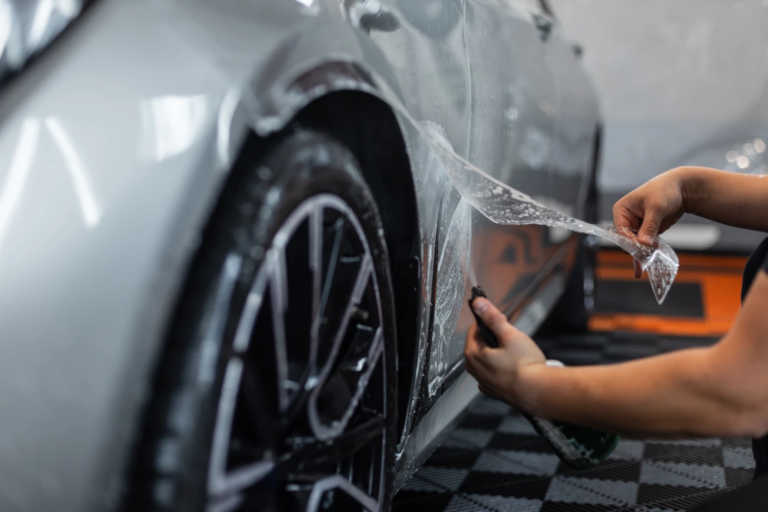
Car protection film is a clear, self-adhesive polyurethane layer applied directly to your vehicle’s painted surfaces. Think of it as a sacrificial barrier, it absorbs the hits, scratches and environmental damage so your actual paint doesn’t have to.
It was originally developed for the military to protect helicopter blades from debris damage. That same protective principle applies to your car’s paint. The PPF takes the impact, saving your expensive factory finish from rock chips, swirl marks, bird droppings, tree sap and UV fading.
Modern PPF isn’t what it was 10-15 years ago. Today’s films come with advanced features like self-healing technology (minor scratches disappear with heat), hydrophobic topcoats (water beads right off) and UV inhibitors (prevent yellowing). This technology directly impacts how long your film will protect your investment.
How Long Does PPF Last?
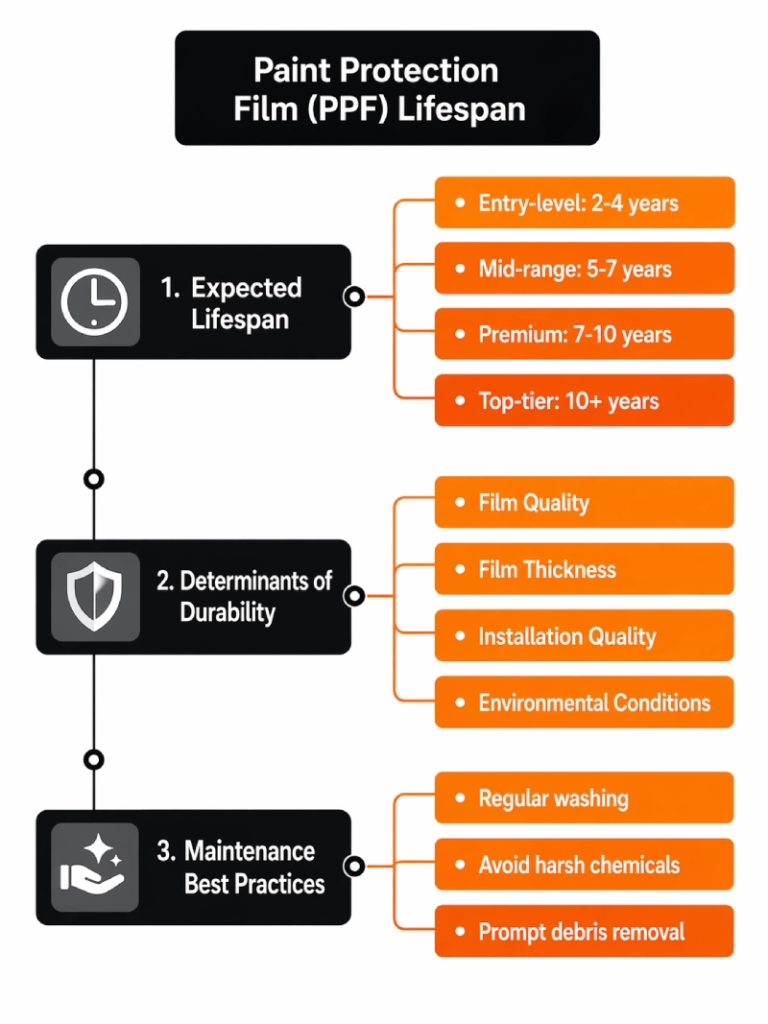
| PPF Type | Expected Lifespan | Warranty Range |
|---|---|---|
| Entry-level PPF | 2-4 years | 3-5 years |
| Mid-range PPF | 5-7 years | 5-7 years |
| Premium PPF | 7-10 years | 7-10 years |
| Top-tier / Advanced PPF | 10+ years | Lifetime (conditional) |
On average, high-quality PPF lasts between 5 and 10 years when professionally installed and properly maintained. Some premium films can even exceed 10 years under ideal conditions..
That being said, the warranty ≠ actual lifespan.
A 7-year PPF warranty means the brand guarantees performance for 7 years under defined conditions. But a well-maintained film can last longer.
At the same time, a poorly maintained “10-year PPF” can start failing in 3-4 years.
What Actually Determines PPF Lifespan?
As we mentioned earlier, the durability of PPF depends on various factors. Knowing these factors will help you find the right PPF and will also set clear expectations about what to expect in a PPF.
1. Quality of the Film
Not all PPF coatings are built the same.
High-quality films use aliphatic polyurethane, which offers:
- Better UV resistance
- Non-yellowing properties
- Strong self-healing
Lower-quality films use cheaper materials that:
- Turn yellow over time
- Become brittle
- Lose clarity
2. Thickness of the Film
Thickness is measured in microns.
- Standard PPF: 150-180 microns
- Premium PPF: 180-210+ microns
Thicker films usually:
- Absorb impacts better
- Last longer under harsh conditions
But thickness alone isn’t enough.
A thick, low-quality film is still a bad film.
3. Installation Quality
Even the best paint protection film can fail if installed poorly.
Common issues from bad installation:
- Edge lifting
- Air bubbles
- Premature peeling
That’s why professional installation matters just as much as the film itself.
4. Driving Conditions
PPF behaves very differently in India compared to Europe or the US.
Factors that reduce PPF lifespan:
- High heat and UV exposure
- Dust and pollution
- Highway driving (stone chips)
- Acidic bird droppings
So when a brand says “10 years”, that’s often tested in controlled environments.
In Indian conditions, 7-8 years of solid performance is already excellent.
5. Maintenance Habits
This is where most owners mess up.
If you’re not maintaining car PPF properly, you’ll see:
- Loss of gloss
- Surface contamination
- Reduced self-healing
Simple habits that extend lifespan:
- Regular washing (2-3 times a month)
- Avoid harsh chemicals
- Quick cleaning of bird droppings
How to Extend Your PPF's Lifespan
Of all the PPF installation mistakes car owners make after the film is on, improper washing is by far the most common and the most preventable. The irony is that car owners who invested heavily in PPF often end up damaging it themselves because nobody told them that washing a car with PPF requires a different approach than washing an unprotected car.
PPF is tough, but its topcoat is a precision-engineered surface. The wrong wash chemicals or techniques can degrade the hydrophobic properties, scratch the coating and eventually cloud the film’s optical clarity.
The Washing Protocol for PPF-Coated Cars
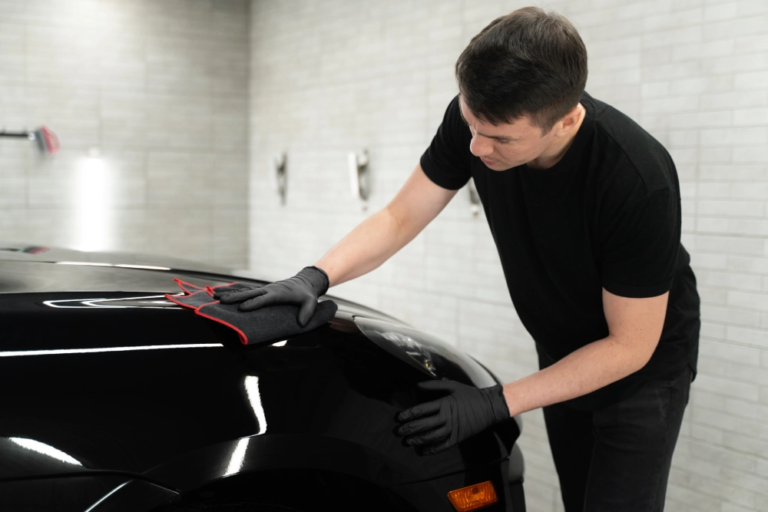
Getting 7-10 years (or more) from your PPF isn’t complicated. It requires consistent habits, not expensive treatments. Think of PPF maintenance like brushing your teeth; daily care prevents big problems down the line.
1. Wash Your Car Regularly (But Do It Right)
Dust, pollution and road grime slowly degrade the surface of your PPF coating.
- Wash your car every 1-2 weeks
- Use a pH-neutral car shampoo
- Avoid household detergents; they’re too harsh
This keeps the film clean and prevents long-term surface damage.
2. Clean Bird Droppings and Tree Sap Immediately
This is critical, especially in Indian conditions.
Bird droppings and tree sap are acidic. If left sitting:
- They can stain the film
- They may damage the top coat layer
A quick wipe with a microfiber cloth and water is enough if done early.
3. Avoid Automatic Car Washes with Hard Brushes
Those spinning brushes might seem convenient, but they can:
- Create micro-scratches
- Reduce the clarity of the film over time
Instead, go for:
- Hand wash
- Or touchless car wash systems
4. Use Microfiber Cloths Only
When drying or cleaning your car, always use soft microfiber.
Rough cloths can:
- Leave swirl marks
- Reduce the smooth finish of the paint protection film
It’s a small change, but it makes a visible difference over time.
5. Park Smart Whenever Possible
Constant exposure to heat and UV rays speeds up aging.
Whenever you can:
- Park in shaded areas
- Use covered parking
This simple habit helps maintain both your car’s paint and the film.
6. Don’t Delay Minor Fixes
If you notice:
- Slight edge lifting
- Small bubbles
Get it checked early.
Fixing small issues on time prevents bigger problems and helps extend the overall PPF lifespan.
Signs That Your PPF Needs To Be Replaced
Even the best paint protection film has a lifespan. Over time, exposure to Indian conditions like heat, dust and pollution starts to affect its performance. Here are the key signs to watch out for:
- Yellowing or Discolouration
If the film starts turning slightly yellow, especially noticeable on white or light shades, it’s a clear sign the UV resistance is breaking down. At this point, the film is no longer maintaining the original look of your car. - Loss of Clarity or Gloss
When your car begins to look dull or slightly hazy even after a proper wash, it usually means the film has lost its transparency. This takes away that “fresh paint” finish that the PPF was meant to preserve. - Edge Lifting or Peeling
If you notice the film lifting around edges, corners, or panel joints, it’s a sign of wear or adhesive fatigue. Once this starts, dust and moisture can get underneath, reducing protection. - Deep Scratches That Don’t Heal
High-quality PPF can self-heal minor scratches with heat. But if scratches remain visible and don’t disappear over time, it indicates that the top layer has worn out. - Stains or Permanent Marks
Marks from bird droppings, tree sap, or hard water that don’t go away even after cleaning suggest the protective layer has degraded and is no longer resisting contaminants effectively.
Recognising these signs early helps you replace the film at the right time—so your car’s original paint stays protected without compromise.
Which Is the Best Paint Protection Film in India?
There’s no single best paint protection film for everyone because the right choice depends on what you value the most. If your priority is maximising PPF lifespan, then you should focus on films that use high-quality materials, resist yellowing and perform consistently in Indian conditions. A strong and reliable PPF warranty also matters, but only when it reflects durability.
Aegis Films is one such example, where the approach leans towards consistent durability, long-term clarity and performance that holds up in everyday driving conditions.
At the end of the day, the best car protection film is not the one that promises the highest number but the one that continues to perform well year after year.
Conclusion
So, how long does paint protection film actually last?
In Indian conditions, most good-quality car protection film typically lasts around 5 to 7 years, while premium films can extend up to 8 to 10 years when chosen carefully and maintained properly. But more than the number itself, what really matters is the quality of the film you start with.
A well-made film, installed correctly and maintained with basic care, will not only last longer but also retain its finish and protection over time. On the other hand, choosing a lower-quality option often leads to earlier replacements and inconsistent performance.
So instead of focusing only on warranty claims, it makes more sense to choose a film that delivers reliable results. That’s where the true value of paint protection film lies.
Frequently Asked Questions About PPF Coating
1. How often should paint protection film be replaced?
Most paint protection film doesn’t need frequent replacement. Good-quality films typically last 5 to 7 years, while premium options can go up to 8-10 years. Replacement is usually needed only when the film starts losing clarity or performance.
2. What are the disadvantages of paint protection film?
While PPF coating offers strong protection, it does come with a few drawbacks. It has a higher upfront cost, requires professional installation and lower-quality films may yellow or peel over time. Also, it protects against minor damage but not major impacts.
3. What does PPF look like after 5 years?
A high-quality paint protection film should still look clear and glossy after 5 years, especially with proper care. Lower-quality films, however, may start showing slight dullness or early signs of wear.
4. What happens to paint protection film after 10 years?
After around 10 years, most PPF coatings reach the end of their lifecycle. The film may lose clarity, flexibility and overall effectiveness, which is when replacement is usually recommended to maintain protection.
5. Does PPF damage paint when removed?
No, high-quality paint protection film does not damage the original paint when removed correctly. In fact, it helps preserve the paint underneath. However, improper removal or low-quality PPF coating with poor adhesive can increase the risk of minor issues, which is why professional removal is always recommended.