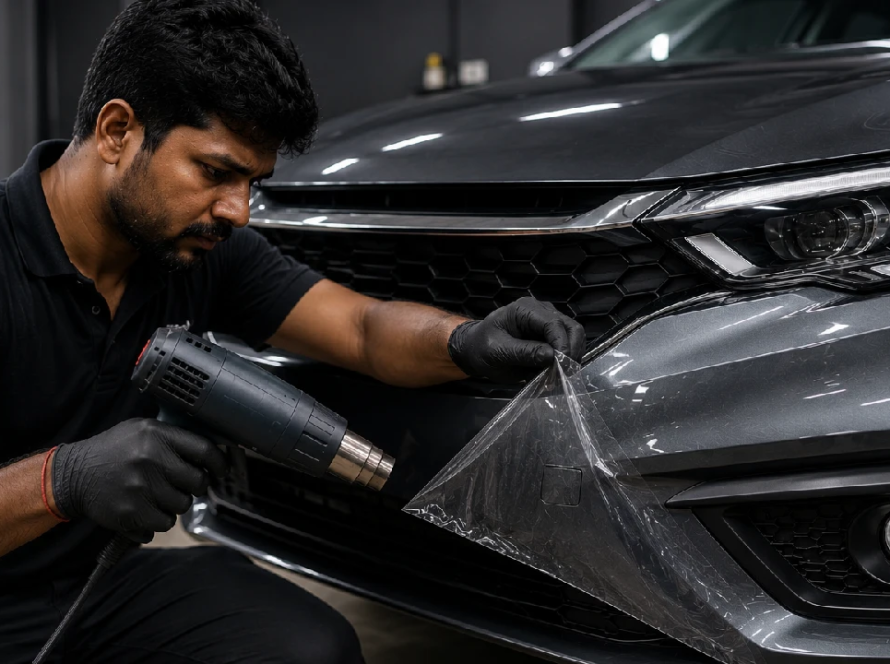
Colour PPF is not just a modern spin on car customisation. It is coloured paint protection film manufactured with pigment built into it, so it changes how your car looks while still protecting the factory paint underneath. Owners choose it because it delivers a colour change without a repaint while also guarding against stone chips, scratches and UV damage. This is different from a purely cosmetic colour change such as a vinyl wrap, which alters appearance but adds little real protection. Because coloured PPF stays on your paint for years, the film you pick, its finish, thickness, warranty and installer matter as much as the shade itself.
Table of Contents
- Key Takeaways
- What Is Colour PPF?
- Colour PPF vs Vinyl Wrap: What’s the Difference?
- How to Choose the Right Colour PPF for Your Car
- Gloss vs Matte vs Satin Colour PPF
- 10 Important Things To Check Before Buying Coloured PPF
- Does Coloured PPF Protect Your Original Paint?
- How Long Does Coloured PPF Last?
- Is Coloured PPF Worth It?
- Aegis Prism: Coloured PPF With Protection and Customisation
- Frequently Asked Questions
Key Takeaways
- Coloured PPF changes your car’s colour while protecting the factory paint underneath. A vinyl wrap only changes appearance.
- Gloss, matte and satin finishes differ in look and day-to-day care, not in overall protection level.
- Film construction, TPU grade, thickness, adhesive and warranty terms matter more than colour choice alone.
- Coloured PPF does not make paint scratch-proof or damage-proof. It reduces everyday wear from chips, scratches and UV exposure.
- Installation quality can make or break the result, even with a premium film.
- Aegis Prism, Aegis Films’ coloured PPF, carries a 7-year warranty and is installed exclusively through CarzSpa’s certified studios.
What Is Colour PPF?
Coloured PPF is a pigmented TPU film applied over your car’s factory paint, changing its colour while adding the same self-healing, chip-resistant protection as clear PPF. Unlike a vinyl wrap, it’s not just cosmetic.
Underneath, it stacks four layers: a hydrophobic, self-healing top coat, a pigmented colour layer, an adhesive layer that bonds to factory paint and a release liner you peel off during installation. In India, coloured PPF typically costs ₹1,00,000 to ₹2,50,000+ for a full car, depending on size and grade. Aegis Prism ranges from ₹1,61,000 to ₹2,38,000 across small to XL vehicles.
Also Read: Is Colour PPF legal in India?
TPU matters here because it gives coloured PPF its flexibility around body curves, its resistance to cracking in Indian heat and its ability to shrug off minor swirl marks. A film built on lower-grade material may still hold colour, but it is more likely to lose flexibility, yellow faster or lift at the edges sooner.
It also differs from clear PPF, which uses the same TPU base but leaves the original colour completely unchanged. Buyers weighing clear PPF vs coloured PPF are really deciding between preserving the factory colour and changing it while keeping a similar level of underlying protection.
This is also where coloured paint protection film differs from a conventional vinyl wrap. Vinyl wrap is a cosmetic material, usually PVC-based, designed to change appearance. It is not engineered to absorb stone-chip impact or resist scratches the way a TPU-based film is.
Colour PPF vs Vinyl Wrap: What's the Difference?
| Factor | Colour PPF | Vinyl Wrap |
|---|---|---|
| Primary purpose | Protect paint and change appearance | Change appearance |
| Paint protection | Adds a physical barrier against chips and scratches | Offers little to no impact protection |
| Material | Usually TPU-based | Usually PVC-based |
| Scratch resistance | Generally higher, varies by product | Generally lower |
| Stone-chip protection | Can absorb minor impacts | Chips through easily |
| Self-healing | Many coloured PPF products include a self-healing top layer, though not all do | Rare, most vinyl wraps do not self-heal |
| Customisation | Wide range of finishes | Very wide range of colours, finishes and printed graphics |
| Durability | Often several years, backed by a warranty | Typically shorter, more prone to fading and lifting |
| Maintenance | Similar to clear PPF, hydrophobic variants ease cleaning | Needs careful washing, can lift at edges |
| Cost | Generally higher upfront cost | Generally lower upfront cost |
| Removal | Designed for controlled removal without damaging paint, if applied correctly | Also removable, though aged vinyl can leave residue |
Neither product is automatically the better choice. If your priority is a low-cost, temporary colour change with no protection requirement, vinyl wrap may suit you well. If you want a colour change and a protective layer over the factory paint for years, coloured paint protection film is built for that job. This is the core question behind the ongoing PPF vs vinyl wrap comparison, and the answer depends on your budget, how long you plan to keep the car and how much protection you actually need.
How to Choose the Right Colour PPF for Your Car
1. Start with the finish you want
Coloured PPF comes in several finishes, each changing the car’s visual character.
- Gloss gives a deep, mirror-like shine close to a fresh factory finish.
- Matte produces a flat, non-reflective look often associated with stealth styling.
- Satin sits between the two, softer than gloss but not fully flat.
- Metallic and pearl finishes add depth and shimmer that shift under light.
- Colour-shifting finishes change hue with the viewing angle for a more dramatic look.
None of these is objectively best. Gloss reads closest to a factory finish. Matte and satin PPF finishes look more custom and are harder to blend if only part of the car is wrapped. The right pick depends on the look you want, not on which finish performs better.
2. Consider your car’s existing colour
Existing paint colour matters less because of transparency, since quality coloured PPF is engineered to be opaque, and more because of how the new colour reads against trims, glass and any factory-painted parts you leave untouched. A dramatic colour change can look striking but needs more careful attention at panel gaps and returns. Staying close to your car’s existing shade generally gives an installer an easier reference point for matching around the areas that stay unwrapped.
3. Think about how you use the car
How and where you drive should shape your protection level, not just your finish choice.
- Daily city driving exposes the front bumper and lower panels to kerb scrapes and tight parking.
- Highway driving increases stone-chip exposure on the hood, bumper and mirror housings.
- Outdoor parking raises UV exposure, bird-dropping risk and dust build-up.
- Monsoon conditions bring water spotting and grime that sit longer on unprotected paint.
Someone driving mostly on well-kept city roads with covered parking has different needs than someone doing regular highway runs and parking outdoors. Both can benefit from coloured PPF, but coverage area and product tier should reflect actual usage, not just the desired look.
4. Consider maintenance
Different finishes carry different care habits rather than different difficulty levels. Gloss coloured PPF shows swirl marks and water spots more visibly, the same way glossy factory paint does, because reflections highlight surface imperfections. Matte and satin finishes hide swirl marks better but can show fingerprints or residue from products not designed for matte surfaces. Neither finish is universally harder to maintain. What matters is using cleaning products suited to that specific finish.
5. Check film construction
When comparing PPF for cars across brands, thickness and warranty terms tell you more than marketing language. Before choosing a product, ask your installer about:
- Film material, since most quality coloured PPF is TPU-based
- Thickness, usually listed in microns
- Adhesive type and how it holds up long-term without lifting
- Self-healing technology and what activates it
- UV resistance or anti-yellowing performance
- Hydrophobic properties
- Colour stability and clarity data over time
- Warranty coverage and duration
Thickness alone does not decide quality. A thicker film is not automatically the better-performing one. Thickness works alongside material grade, adhesive quality and topcoat technology, and Aegis explains the TPU-based technology behind its films in more detail.
6. Do not overlook installation quality
A premium film installed poorly can still deliver a disappointing result. Installation quality depends on surface preparation and paint correction before application, correct stretching technique to avoid wrinkles or bubbles, clean edge finishing, full panel coverage without visible seams, installer experience specifically with coloured or pigmented film and warranty documentation you can verify later. Before booking, ask to see examples of an installer’s previous coloured PPF work around curves, mirrors and door handles, since these areas expose weak technique fastest. A pan-India network of certified studios is one practical way to check installer credentials before committing.
Gloss vs Matte vs Satin Colour PPF
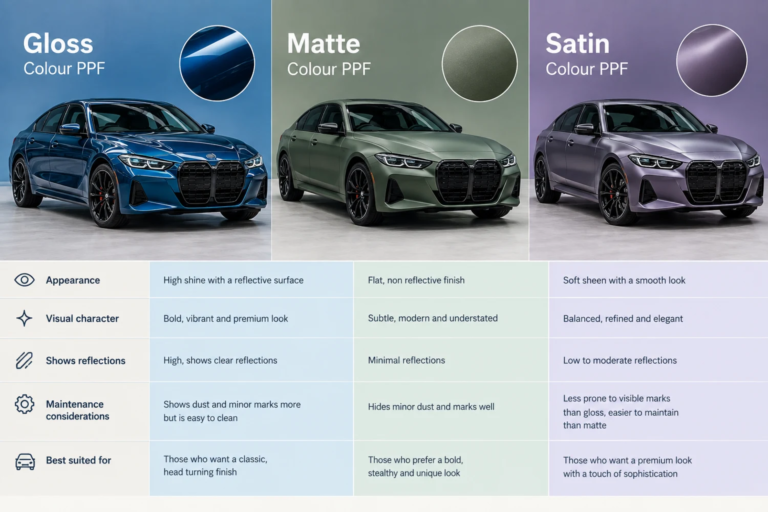
None of these finishes is superior in performance terms. The choice depends on the look you want and how you plan to maintain the car. If a matte finish PPF appeals to you for its stealth look, ask about matte-specific care products before committing, since standard shampoos, waxes and some coatings are formulated for gloss surfaces, not matte ones. A glossy coloured PPF finish, on the other hand, generally works fine with regular wash routines.
10 Important Things To Check Before Buying Coloured PPF
- Confirm the film material is genuine TPU rather than PVC-based vinyl marketed as PPF.
- Ask exactly what the warranty covers. Discolouration, cracking and lifting are typical; accident damage usually is not.
- Check the thickness in microns and how it compares within that brand’s own range.
- Ask what activates the self-healing layer: heat, sunlight or warm water.
- Ask for colour-stability or anti-yellowing data if the installer has it.
- Check the UV resistance rating.
- Confirm the installer’s specific experience with coloured PPF, not only clear PPF.
- Ask about the surface preparation process before installation.
- Check how edges and panel returns are finished.
- Confirm after-sales support and whether the warranty is digitally registered and checkable.
Does Coloured PPF Protect Your Original Paint?
Yes. Quality coloured PPF adds a physical layer between your factory paint and everyday road exposure, helping guard against minor scratches, stone chips, road debris and UV-related fading. It is not a guarantee against every form of damage, and it does not make the paint underneath scratch-proof or immune to major impacts.
Coloured paint protection film is designed to absorb the kind of everyday contact that gradually wears down unprotected paint: keys brushing a door, gravel kicked up on the highway, tree sap or bird droppings sitting on the surface and prolonged sun exposure. What it cannot do is prevent damage from a collision, a deep gouge from a sharp object under pressure or paint damage caused by poor installation or aftercare. No paint protection film should be described as damage-proof, and any claim of total immunity from damage is worth treating with scepticism.
How Long Does Coloured PPF Last?
There is no single lifespan that applies to every coloured PPF product, because durability depends on several factors together: film quality and material grade, installation technique, exposure to sun, heat and road debris, maintenance habits and the manufacturer’s stated warranty.
As a reference point, Aegis Prism, a TPU-based coloured paint protection film, carries a 7-year warranty according to its official product page. This reflects the manufacturer’s confidence in colour stability and durability under normal conditions, though real-world lifespan still depends on how the car is driven, parked and maintained. When comparing products, ask for the specific warranty terms of each film rather than relying on a general PPF lifespan figure, since coverage and duration vary between brands and product tiers.
Is Coloured PPF Worth It?
Coloured PPF tends to make sense if you want a genuine colour change along with paint protection, rather than a purely cosmetic change. It is a stronger fit if you plan to keep the car for several years, want to preserve the factory paint for resale value or are not willing to risk a repaint that permanently alters the original finish.
It may make less sense if you want a very short-term colour change, are working with a tight budget or are comfortable with the lower protection level of a vinyl wrap for a temporary look. Coloured PPF sits at a higher price point than vinyl wrap, largely because of material cost and the protective performance it delivers, so the decision often comes down to how long you want the result to last and how much you value protecting the paint underneath. There is no universal answer here. It depends on your budget, your ownership timeline and what you actually want the film to do for you.
Aegis Prism: Coloured PPF With Protection and Customisation
If you have decided that coloured paint protection film fits your needs better than a purely cosmetic wrap, Aegis Prism is Aegis Films’ dedicated coloured PPF range, built on the same TPU platform used across the brand’s other films.
Prism is available in more than 50 shades, including solids, metallics and pearl finishes, so the finish decisions covered earlier in this article, gloss, matte, satin and metallic, apply directly when picking a shade. The film includes self-healing properties for minor marks and a hydrophobic surface that keeps day-to-day maintenance simpler. It comes with 210 to 250 microns thickness on the official product page, sitting toward the thicker end of Aegis’s PPF range. It carries a 7-year warranty and is installed exclusively through CarzSpa Detailing Studios.
Get in touch with team Aegis Films today for a personalised recommendation on what PPF film type suits your requirements best.
Frequently Asked Questions
1. Is coloured PPF better than a vinyl wrap?
Neither is universally better. Coloured PPF offers stronger paint protection and TPU-based durability, while vinyl wrap is generally cheaper and offers a wider range of speciality finishes and printed designs. The right choice depends on your budget and how much protection matters to you.
2. Colour PPF vs Clear PPF: Which is actually better?
“Better” depends on your priority. Clear PPF is best if you want to keep the factory colour with maximum protection and lowest cost. Coloured PPF is better if you want a new look (matte, satin, tinted, etc.) along with paint protection, but it costs more and may need RTO endorsement if the car’s visible colour changes.
3. Is Colour PPF allowed in India?
Yes, coloured PPF is allowed in India, but with an important condition: if the film changes your car’s visible colour from what’s mentioned in the RC, you must get RTO approval and update the registration. Clear/transparent PPF doesn’t need this, but any noticeable colour or finish change (matte, satin, tinted, etc.) should be endorsed on the RC to avoid fines or hassles.
4. Does coloured PPF damage factory paint?
No, properly installed coloured PPF should not damage the factory paint underneath. Correct removal, done by a trained installer, is designed to lift cleanly without harming the clear coat, provided the paint was in good condition beforehand and the film has not degraded significantly.
5. Is matte PPF harder to maintain than gloss?
Not universally. Matte PPF needs finish-specific cleaning products since standard gloss waxes and some coatings are not designed for matte surfaces. It is not inherently more failure-prone; it simply needs different maintenance habits.
6. Can coloured PPF be removed later?
Yes, quality coloured PPF is designed to be removed without damaging the paint underneath when removed correctly within its expected service life. Film that has degraded due to age or poor maintenance can be harder to remove cleanly, which is one reason installer experience matters.
7. How much does coloured PPF cost compared to clear PPF?
Coloured PPF usually costs a bit more than clear PPF from the same brand due to the added pigment layer and manufacturing process. In India, full-car clear PPF normally ranges from ₹55,000–₹1,20,000, while coloured/tinted PPF (including Aegis) generally falls between ₹70,000–₹1,60,000 depending on car size, finish, and coverage.
8. Is coloured PPF worth it for a car you plan to sell soon?
It is generally a stronger fit for owners keeping their car for several years, since the upfront cost is recovered mainly through protection and reduced repainting or detailing costs over time, not through short-term ownership.
9. Does coloured PPF fade over time?
Quality coloured PPF is engineered with UV stabilisers to resist fading, but no film is entirely immune to colour change after years of sun exposure. Checking a manufacturer’s anti-yellowing or colour-stability data, and the warranty terms around it, is the most reliable way to compare products on this point.