Many car owners assume that once they have invested in Paint Protection Film (PPF), maintenance becomes optional especially in monsoon. That assumption often leads to disappointment.
PPF is one of the most effective forms of car paint protection available today. It shields the paint from stone chips, road debris, light scratches and environmental contamination. Premium films also offer hydrophobic properties and self-healing technology that make cleaning significantly easier.
However, monsoon creates a unique set of challenges. Rainwater carries pollutants. Roads throw mud and grime onto panels. High humidity keeps contaminants on the surface longer than many owners realise.
The good news is that maintaining a PPF-protected car during monsoon is not complicated. A few simple habits can help preserve both the film and the paint underneath for years.
Let’s look at the practices that actually make a difference.
Table of Contents
- Why Monsoon Is the Toughest Season for Your Car’s Exterior
- How PPF Helps During Monsoon And Where Its Limits Are
- The Biggest Monsoon Mistakes PPF Owners Make
- Monsoon Do’s for Cars Protected With PPF
- Monsoon Don’ts That Can Shorten PPF Life
- PPF Cleaning After Rain
- Should You Pressure Wash a PPF-Coated Car During Monsoon?
- PPF Bubbling and Peeling During Monsoon: What Is Normal and What Is Not?
- A 5-Minute Weekly Monsoon Inspection Routine for PPF Protected Cars
- Should You Install PPF During Monsoon?
- Does Film Quality Make a Difference in Monsoon?
- Final Thoughts
- Frequently Asked Questions
Why Monsoon Is the Toughest Season for Your Car's Exterior
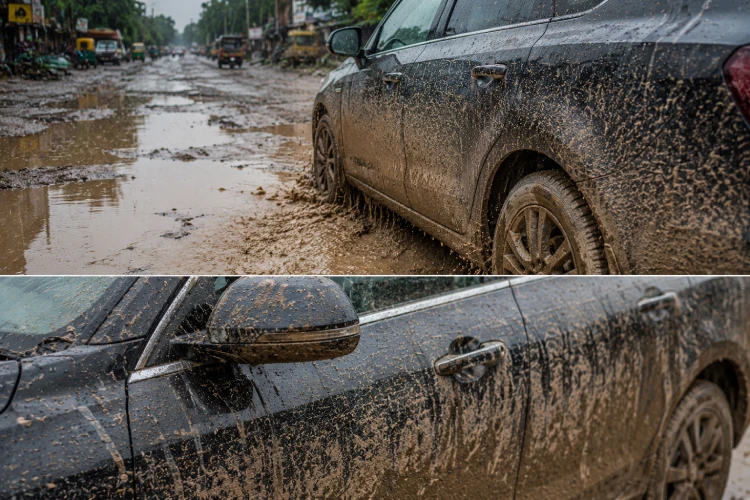
Most people associate summer with vehicle damage because of harsh sunlight and high temperatures. Yet monsoon can be equally demanding on a car’s exterior.
The reason is simple. Rainwater is rarely pure.
As raindrops fall through the atmosphere, they collect dust, pollution, industrial particles and airborne contaminants. By the time that water lands on your car, it often contains far more than just H₂O.
Then comes the second challenge: road contamination.
Every puddle contains a mix of mud, oil residue, brake dust, tar and dirt. Vehicles passing nearby spray that mixture onto doors, bumpers, side skirts and wheel arches. Over time, these contaminants can sit on the surface for days if the vehicle is not cleaned regularly.
Indian monsoon conditions make this even tougher.
A car parked outdoors may experience:
| Monsoon Challenge | Impact on Vehicle |
|---|---|
| Muddy roads | Surface contamination |
| Standing water | Increased grime buildup |
| High humidity | Slower drying |
| Bird droppings | Potential staining |
| Tree sap | Difficult removal |
| Industrial pollution | Water spots and deposits |
| Frequent rain cycles | Reduced washing opportunities |
Even vehicles with PPF require attention because contamination affects the film’s appearance and long-term performance.
How PPF Helps During Monsoon And Where Its Limits Are
This is where many misconceptions begin.
Some owners believe PPF coating for car acts like an invisible shield that prevents all damage. Others assume rain simply washes contaminants away.
Neither is entirely true.
Quality PPF coating is engineered to provide a protective layer between the environment and your paint. Modern films are made from advanced thermoplastic polyurethane materials that are designed to withstand challenging conditions.
A good quality film can provide:
- Protection against stone chips
- Resistance to light scratches
- Easier cleaning
- Stain resistance
- UV protection
- Hydrophobic water repellency
- Self-healing capabilities for minor swirl marks
During monsoon, hydrophobic performance becomes especially valuable.
When water lands on the surface, it forms beads rather than spreading into a large sheet. Those beads roll away more easily, carrying some dirt and contaminants with them.
This makes maintenance simpler. It does not eliminate maintenance altogether.
Think of PPF coating for car like a high-quality raincoat.
A raincoat keeps you protected during bad weather. It does not stop you from getting dirty if you walk through mud all day. The same principle applies to your car.
Quality Car PPFs such as Aegis Films are designed with advanced top-coat technology that helps reduce contamination adhesion and improve cleaning efficiency. This means mud, grime and environmental fallout generally release more easily during washing compared to an unprotected painted surface.
The Biggest Monsoon Mistakes PPF Owners Make
Every detailing studio sees similar issues during rainy season. The interesting part is that most problems are not caused by defective films. They are caused by habits.
One common example involves owners who delay washing because the car will get dirty again anyway. The logic sounds reasonable. Why wash the vehicle if another shower is expected tomorrow?
Unfortunately, contaminants do not stop reacting with the surface simply because you are expecting rain and thinking rain will wash it. Mud, bird droppings, tree sap and pollution deposits continue sitting on the film. The longer they remain there, the harder they become to remove.
Another mistake involves parking beneath large trees.The shade feels convenient. The vehicle stays cooler. Yet during monsoon, trees often create a perfect recipe for contamination. Water dripping from branches carries organic residue, pollen, sap and debris directly onto the car.
Many owners also use household cleaning products. Dishwashing liquids are especially common. While they may remove dirt, they can affect the surface characteristics of the film and reduce the effectiveness of maintenance products applied to it.
Then there are drivers who attack dried mud with aggressive scrubbing. That approach rarely ends well. Even though self-healing car PPF can recover from light surface marks under appropriate conditions, excessive abrasion is unnecessary and avoidable.
Monsoon Do's for Cars Protected With PPF
Small habits create the biggest difference over the life of a vehicle. Here are monsoon car care tips that you should follow :
1. Rinse Heavy Mud Quickly
If you have driven through flooded roads or muddy areas, try to rinse the vehicle within a reasonable timeframe. Dried mud is harder to remove than fresh contamination. It can also trap abrasive particles against the film. A quick rinse is often enough until a full wash becomes possible.
2. Wash the Car Regularly
There is no universal schedule because driving conditions vary. A vehicle used daily during monsoon may benefit from cleaning every one to two weeks. A garage-kept weekend car may require less frequent washing. The goal is to prevent contaminants from accumulating for extended periods.
3. Dry the Vehicle Properly
Many owners stop after rinsing. That is where water spots begin. Allowing mineral-rich water to dry naturally can leave deposits behind. A quality microfibre drying towel helps reduce this risk significantly.
4. Inspect PPF Edges
Take a few moments during each wash to inspect exposed film edges.
Look for:
- Dirt accumulation
- Lifting corners
- Debris buildup
- Unusual discolouration
Early detection prevents minor issues from becoming expensive repairs.
5. Remove Bird Droppings Promptly
Bird droppings remain one of the most aggressive contaminants for vehicle surfaces. PPF provides valuable protection, but prompt removal is still recommended. The longer they remain on the surface, the greater the chance of staining.
6. Keep Wheel Arches Clean
Wheel arches receive constant punishment during rainy weather. Mud, sand and road grime collect here rapidly. Cleaning these areas regularly helps prevent contamination from spreading back onto freshly washed panels.
Monsoon Don'ts That Can Shorten PPF Life
Some practices create unnecessary stress on the film or cause PPF water damage. There are some maintenance don’ts that you need to know to stop this damage.
1. Don't Use Harsh Detergents
Strong household cleaners may seem effective, but they are rarely designed for automotive surfaces. Use pH-neutral automotive shampoos whenever possible.
2. Don't Scrub Dry Dirt
If contamination has dried onto the vehicle, soften it first. Water, foam and patience are safer than aggressive scrubbing.
3. Don't Ignore Edge Lifting
A small lifted corner can attract additional dirt and moisture. If you notice lifting, consult the installer rather than waiting for the issue to grow.
4. Don't Let Water Spots Sit for Months
Fresh water spots are usually manageable. Older deposits become increasingly difficult to remove.
5. Don't Use Dirty Cloths
A contaminated cloth can introduce scratches and swirl marks. Always use clean wash media.
6. Don't Assume Self-Healing Fixes Everything
Self-healing technology is impressive. It does not make the film indestructible. Proper maintenance remains essential.
7. Don’t Ignore Water Spots on PPF
Few monsoon complaints are as common as water spots. The interesting thing is that rain itself is often not the main culprit. Water spots typically form after the water evaporates. What remains behind are minerals, pollutants and dissolved contaminants that were carried by the water.
You may notice them as:
- Circular marks
- Hazy patches
- White deposits
- Streaks
Several factors increase the likelihood of spotting. Cars parked outdoors for long periods face greater exposure. Areas with hard water also experience higher mineral deposits.
Safe Removal Process For Water Spots
If the spots are recent:
- Wash the vehicle thoroughly.
- Use a quality automotive shampoo.
- Rinse thoroughly.
- Dry immediately using a clean microfibre towel.
For stubborn deposits:
- Use products specifically designed for automotive water spot removal.
- Follow manufacturer recommendations.
Avoid abrasive polishing methods unless advised by professionals.
Aggressive correction techniques can create more problems than they solve.
PPF Cleaning After Rain
Many owners overcomplicate washing. A simple and consistent process usually works best.
Step 1: Pre-Rinse
Begin with a thorough rinse.
This removes loose dirt and reduces the chance of dragging abrasive particles across the surface.
Step 2: Apply Foam
A foam pre-wash helps loosen contamination before physical contact.
This stage is especially useful after highway driving in rainy conditions.
Step 3: Contact Wash
Use the two-bucket method if possible.
One bucket contains clean shampoo solution.
The second bucket is used for rinsing the wash mitt.
Step 4: Final Rinse
Remove all remaining shampoo residue.
Pay attention to panel gaps and trim areas.
Step 5: Dry Properly
Drying is often the most overlooked step.
A large microfibre drying towel helps minimise spotting.
Step 6: Inspection
Take a quick walk around the vehicle.
Check for:
- Remaining contamination
- Water spots
- Edge lifting
- Bird droppings
- Tree sap
This inspection usually takes less than two minutes.
Should You Pressure Wash a PPF-Coated Car During Monsoon?
Pressure washing is one of the most misunderstood topics among car owners. Many believe pressure washers damage PPF automatically. That is not accurate.
Used correctly, pressure washing can be a safe and effective cleaning method. Problems usually arise when users hold the nozzle too close to film edges or direct excessive pressure at vulnerable areas.
Safe Practices
| Recommended Practice | Reason |
|---|---|
| Maintain distance from surface | Reduces concentrated force |
| Avoid spraying directly into edges | Prevents lifting risks |
| Use sensible pressure settings | Minimises stress on film |
| Keep nozzle moving | Avoids prolonged force on one spot |
If the film was installed correctly and remains in good condition, occasional pressure washing should not be a concern.
PPF Bubbling and Peeling During Monsoon: What Is Normal and What Is Not?
Monsoon often makes owners notice things they may have ignored earlier. Tiny visual imperfections become more obvious on wet surfaces. Not every bubble indicates a serious problem.
Some temporary changes can occur as environmental conditions fluctuate.
However, certain signs deserve professional inspection.
| Symptom | Monitor | Visit Installer |
|---|---|---|
| Tiny isolated bubble | ✓ | |
| Growing bubble | ✓ | |
| Edge lifting | ✓ | |
| Large moisture pocket | ✓ | |
| Film separating from panel | ✓ |
Peeling is generally more concerning than bubbling.
Film edges should remain securely attached. If lifting begins, contamination can enter the affected area and worsen the situation.
Early intervention is almost always cheaper than replacement.
A 5-Minute Weekly Monsoon Inspection Routine for PPF Protected Cars
You do not need professional equipment to identify potential problems. A simple weekly check can help catch issues early. Start at the front bumper and move around the vehicle.
Look for:
Surface Contamination
Check for:
- Mud deposits
- Water spots
- Bird droppings
- Sap residue
Edge Condition
Inspect:
- Bonnet edges
- Door edges
- Mirror areas
- Bumper transitions
Water Behaviour
Observe how water reacts during washing.
Healthy hydrophobic surfaces generally show strong beading and easier water movement.
Clarity
Look across the paint from different angles.
The film should remain clear and visually consistent.
This routine rarely takes more than five minutes.
Should You Install PPF During Monsoon?
This question comes up every year from owners who buy a new car between June and September and aren’t sure whether to wait for the rains to pass before getting PPF installed. The short answer is: don’t wait.
Professional PPF installation happens entirely indoors, in climate-controlled environments. External humidity does not affect the installation process when done correctly, installers use controlled workspace conditions, proper preparation solutions and professional-grade tools regardless of what the weather is doing outside. A reputable studio in July installs film just as effectively as one in February.
The concern most people have is the curing period, the 5-7 days after installation when the adhesive is still bonding with the paint. During this window, avoid heavy pressure washing, manual rubbing of the film, or submersion in heavy standing water. Light rain is generally acceptable and won’t cause problems. The key precaution is simply not washing the car with force or pressure during the curing period.
Getting PPF installed before your first monsoon is significantly better than waiting. A car that spends even one monsoon season without PPF accumulates stone chips, fine scratches and UV damage that are locked beneath the film forever once it’s installed. The film protects what’s underneath it, so the earlier you install, the better the baseline you’re locking in.
Does Film Quality Make a Difference in Monsoon?
Yes, more than in any other season. The reason is that monsoon is where the topcoat quality of a film is tested continuously.
The hydrophobic performance is the first differentiator. A film with a water contact angle above 130-140 degrees causes rain to bead and roll off rapidly, carrying most of the mineral and acidic content with it. A film with 90-degree hydrophobicity which sounds like a lot, but is far less effective in practice allows water to sit on the surface in broader, thinner layers. More surface area means more evaporation, which means more mineral deposits per rain event.
The self-healing topcoat is the second differentiator. Premium films use elastomeric polymer formulations that retain their healing capacity over multiple UV and moisture cycles. Lower-grade topcoats may self-heal early in their life but lose that capacity faster when repeatedly cycled through the wet-dry patterns of monsoon.
Yellowing resistance matters too and it’s specific to film material. Films made with aliphatic TPU resist yellowing even under sustained UV exposure and humidity. Films using aromatic TPU common in entry-level products can begin showing colour shift within 12-18 months in Indian conditions, accelerated by the moisture cycles of monsoon. On a white or silver car the difference may be subtle for a few years, but on darker colours or premium finishes, yellowing is immediately visible.
Aegis Films has developed its product range specifically around the demands of Indian driving conditions. The XG Series which includes the Eternal 400 , Eternal 300 and Ultra 250 and Exceed, uses a polycarbonate-TPU blend that delivers impact resistance alongside superior optical clarity, with a hydrophobic topcoat. The self-healing formulation activates quickly with warm water or sunlight, making it particularly practical for monsoon maintenance. The advanced UV inhibitors prevent yellowing even through seasons of high moisture and post-rain UV intensity. These films are installed exclusively through CarzSpa’s network of over 125 studios across India with standardised installation protocols that ensure consistent quality regardless of city.
None of this means that a premium film takes care of itself. But it does mean that the right material, combined with correct maintenance habits, gives you a film that looks as good at year seven as it did at year one.
Final Thoughts
Monsoon will test every protection product on your vehicle.
Mud will still find its way onto the doors. Rainwater will still leave deposits if allowed to dry. Bird droppings will still appear at the worst possible moment.
The goal is to make cleaning easier, reduce long-term damage and preserve the condition of the paint underneath.
That is where quality PPF coating for car earns its place.
Best quality PPFs such as Aegis Films combine hydrophobic performance, self-healing technology and durable construction to help owners spend less time worrying about contamination and more time enjoying their vehicles. Pair that protection with a sensible maintenance routine and your car will emerge from the monsoon looking far better than most vehicles on the road.
Frequently Asked Questions
1. Does rain damage PPF?
Quality PPF is designed to handle regular exposure to rain. Contaminants carried by rainwater are usually a bigger concern than the water itself.
2. How often should I wash a PPF-coated car during monsoon?
For regularly driven vehicles, cleaning every one to two weeks is generally sufficient. Extremely muddy conditions may require more frequent rinsing.
3. Can PPF prevent water spots?
PPF can reduce the impact of contamination but water spots may still form if mineral-rich water dries on the surface.
4. Why is my PPF losing water beading?
Contamination buildup is often the cause. A thorough wash and maintenance treatment may restore performance.
5. Can pressure washing peel PPF?
Improper technique can create issues. Pressure washing itself is not automatically harmful when used correctly.