Despite the growing popularity of car PPF coating in India, there is still a lot of confusion surrounding Paint Protection Film. Some people believe it is only for luxury cars. Others think it lasts forever. Many are unsure whether it is worth the investment at all. Questions about installation, durability, maintenance and car PPF cost continue to dominate forums and search engines.
This guide answers those questions in detail. We will break down how PPF actually works, what it protects against, what it cannot do and whether it makes sense for your vehicle. By the end, you will have a clear understanding of whether Paint Protection Film is the right choice for your car.
Table of Contents
- What Is PPF Coating?
- Why Is PPF Becoming So Popular in India?
- Question 1: Is PPF Really Worth It?
- Question 2: What Is the Car PPF Cost in India?
- Question 3: How Long Does PPF Last?
- Question 4: Does PPF Turn Yellow Over Time?
- Question 5: Can PPF Heal Scratches Automatically?
- Question 6: PPF vs Ceramic Coating: Which Is Better?
- Question 7: Can PPF Be Installed on an Old Car?
- Question 8: Will PPF Damage My Original Paint?
- Question 9: How Do You Maintain a PPF-Protected Car?
- Question 10: Which Is the Best PPF Brand in India?
- Final Verdict: Should You Get PPF Coating for Your Car?
- Frequently Asked Questions
What Is PPF Coating?
PPF or Paint Protection Film is a transparent polyurethane-based film applied over a vehicle’s painted surfaces. It acts as a sacrificial layer that absorbs daily wear and tear before it reaches the original paint underneath.
Think of it as a screen protector for your smartphone, except significantly more advanced.
Modern PPF consists of multiple layers working together to protect the vehicle.
The Typical Structure of Premium PPF
Top Coat Layer
- Provides stain resistance
- Enhances gloss
- Offers hydrophobic properties
- Supports self-healing technology
TPU Layer
- The main protective layer
- Absorbs impacts
- Resists stone chips
- Maintains flexibility
Adhesive Layer
- Bonds the film securely to the paint
- Allows professional removal when required
What Does PPF Protect Against?
A high-quality PPF coating can help protect your vehicle from:
- Stone chips
- Road debris
- Minor scratches
- Swirl marks
- Bird droppings
- Tree sap
- UV damage
- Hard water spotting
- Light scuffs from daily use
What Does PPF Not Protect Against?
One of the biggest misconceptions in the industry is that PPF makes a car indestructible.
It does not.
PPF cannot prevent damage from:
- Major accidents
- Deep key scratches
- Severe impacts
- Scraping against walls or pillars
- Structural damage
It is designed to reduce everyday paint damage, not eliminate every possible risk.
Why Is PPF Becoming So Popular in India?
The popularity of Paint protection film in India is not just a trend.
It is largely driven by changing ownership habits and increasing vehicle costs.
Today’s cars feature sophisticated paint systems and premium finishes. Repainting a single panel on a luxury vehicle can cost tens of thousands of rupees. Matching factory paint perfectly is also challenging.
At the same time, Indian roads expose vehicles to conditions that many global PPF brands fail to consider.
These include:
- Loose gravel from road construction
- Flying debris from trucks
- Congested urban traffic
- Tight parking spaces
- Harsh summer temperatures
- Dust accumulation
- Hard water exposure
For owners who take pride in maintaining their vehicles, PPF is the best solution. And you might have questions that you need answers for before committing to it. So let’s jump right into the most asked questions about car ppf in India.
Question 1: Is PPF Really Worth It?
The answer depends on your vehicle, ownership duration and expectations.
When PPF Is Usually Worth It
PPF generally provides excellent value for:
- New cars
- Premium vehicles costing above ₹20,00,000
- Luxury cars
- Dark-coloured vehicles
- Enthusiast-owned cars
- Long-term ownership vehicles
If you plan to keep your vehicle for five years or more, preserving factory paint can help maintain appearance and resale value.
When PPF May Not Be Necessary
PPF may be harder to justify when:
- The vehicle is already heavily damaged
- You plan to sell within a year
- The vehicle is used primarily for commercial purposes
- Cosmetic appearance is not a priority
- You own a car less than ₹20,00,000
Costs You Incur If You Don’t Get PPF Done
Many owners focus only on the upfront car PPF cost. However, it is equally important to consider the cost of maintaining or restoring paint over the years. While PPF is not a replacement for accident repairs, it can help reduce many of the common paint-related expenses that come with daily driving.
Disclaimer: The figures below are approximate averages for India and may vary depending on the vehicle, city, workshop, paint system, quality of repair and the brand.
| Expense | Approximate Cost Range |
|---|---|
| Full Car PPF Coating | ₹60,000 - ₹2,50,000+ |
| Paint Correction (Single Stage) | ₹5,000 - ₹20,000+ |
| Multi-Step Paint Correction | ₹15,000 - ₹50,000+ |
| Repainting a Bumper | ₹4,000 - ₹15,000+ |
| Repainting a Bonnet | ₹8,000 - ₹25,000+ |
| Repainting a Door | ₹5,000 - ₹15,000+ |
| Multiple Panel Repainting | ₹25,000 - ₹1,00,000+ |
| Touch-Ups for Stone Chips and Minor Paint Damage | ₹2,000 - ₹10,000+ |
Question 2: What Is the Car PPF Cost in India?
The truth is that there is no single price.
Several factors influence installation costs.
Factors Affecting Car PPF Cost
1) Film Quality
Not all PPF films are equal.
Premium TPU-based films cost significantly more than lower-quality alternatives because they offer:
- Better clarity
- Better durability
- Superior self-healing
- Greater stain resistance
2) Vehicle Size
A compact hatchback naturally requires less material than a large SUV.
3) Coverage Area
Options typically include:
- Partial front protection
- Full front package
- High-impact areas
- Complete vehicle coverage
4) Installation Quality
Professional installation contributes significantly to final cost.
Poor installation can lead to:
- Lifting edges
- Trapped dust
- Visible seams
- Reduced lifespan
5) Warranty Support
Premium brands often include longer warranties, which influence pricing.
Typical Car PPF Cost in India (2026)
| Vehicle Type | Approximate Range |
|---|---|
| Hatchback | ₹60,000 - ₹1,20,000 |
| Compact SUV | ₹80,000 - ₹1,50,000 |
| Mid-Size SUV | ₹1,00,000 - ₹1,80,000 |
| Luxury Sedan | ₹1,20,000 - ₹2,00,000+ |
| Premium SUV | ₹1,50,000 - ₹2,50,000+ |
Important : These figures vary based on brand, installer, coverage area and warranty.
Beware of Extremely Cheap Quotes
If a full-car PPF quote seems dramatically lower than market rates, investigate carefully.
Low pricing often indicates:
- Inferior materials
- PVC-based films
- Weak warranties
- Inexperienced installation
The cheapest option frequently becomes the most expensive in the long run.
Question 3: How Long Does PPF Last?
The lifespan of Paint Protection Film depends on both product quality and maintenance.
Entry-Level TPU Films
- 3 to 5 years
Mid-Range Films
- 5 to 7 years
Premium Films
- 7 to 10 years
Factors That Affect Longevity
Climate
Vehicles exposed to constant sunlight generally experience faster wear.
Washing Habits
Proper maintenance significantly extends film life.
Parking Conditions
Covered parking reduces UV exposure and environmental contamination.
Product Quality
Premium TPU films typically age much more gracefully than lower-quality alternatives.
Signs That PPF May Need Replacement
Watch for:
- Loss of clarity
- Surface cracking
- Excessive staining
- Edge lifting
- Reduced self-healing performance
Well-maintained premium films can often remain visually impressive for many years.
Question 4: Does PPF Turn Yellow Over Time?
This question stems from older generations of Paint Protection Film.
Years ago, yellowing was a genuine concern.
Today, reputable manufacturers use advanced aliphatic TPU materials designed to resist discolouration.
Why Older Films Yellowed
Earlier films were vulnerable to:
- UV exposure
- Oxidation
- Heat degradation
Over time, these factors could create a noticeable yellow tint.
How Modern PPF Has Improved
High-quality films now feature:
- UV inhibitors
- Improved top coats
- Advanced TPU chemistry
These developments dramatically reduce yellowing risks.
Which Vehicles Show Yellowing Most Easily?
Even minor discolouration is more noticeable on:
- White vehicles
- Silver vehicles
- Light grey vehicles
This is why selecting a reputable brand remains important. If you own a white luxury cars and expect no yellowing, Aegis XG series is the idea choice as it has anti-yellowing capabilities which means it never yellows.
Question 5: Can PPF Heal Scratches Automatically?
How Self-Healing Works
Premium films contain elastic top layers that can return to their original shape after minor surface damage.
When exposed to:
- Sunlight
- Warm water
- Heat
Light scratches often disappear.
What Self-Healing Can Fix
Generally:
- Light wash marks
- Minor swirl marks
- Surface-level scratches
What Self-Healing Cannot Fix
It cannot repair:
- Deep cuts
- Stone punctures
- Torn film
- Severe abrasion
Self-healing is incredibly useful, but it should not be viewed as magic.
Think of it as a way to keep the surface looking fresher for longer rather than a solution for every scratch.
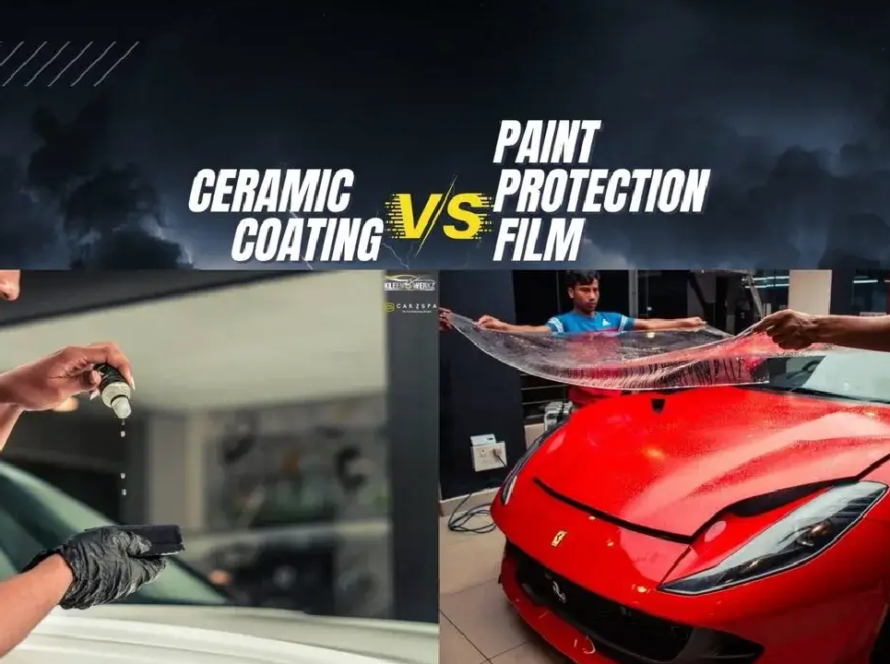
Question 6: PPF vs Ceramic Coating: Which Is Better?
This is one of the most debated PPF coating questions online.
The truth is that these products serve different purposes.
What Ceramic Coating Does Well
Ceramic coatings provide:
- Hydrophobic behaviour
- Easier cleaning
- Enhanced gloss
- Chemical resistance
However, ceramic coatings are extremely thin.
They cannot absorb impacts.
What PPF Does Well
Paint Protection Film provides:
- Physical protection
- Stone chip resistance
- Scratch resistance
- Self-healing capability
| Feature | PPF | Ceramic Coating |
|---|---|---|
| Stone Chip Protection | Excellent | Minimal |
| Scratch Resistance | Excellent | Limited |
| Self-Healing | Yes | No |
| Hydrophobicity | Good | Excellent |
| Paint Preservation | Excellent | Moderate |
| Impact Absorption | Yes | No |
Question 7: Can PPF Be Installed on an Old Car?
Yes. However, preparation becomes critical. It is also important to note that PPF preserves the condition of the paint beneath it. It does not magically improve damaged paint. If defects already exist, they may remain visible after installation.
Professional installers often recommend this before applying PPF :
- Decontamination
- Machine polishing
- Paint correction
This helps ensure the film is protecting a properly prepared surface.
When Installing PPF on an Older Car Makes Sense
It is often worthwhile when:
- Paint remains in good condition
- The owner plans long-term ownership
- The vehicle has sentimental value
- Restoration work has recently been completed
Question 8: Will PPF Damage My Original Paint?
Quality PPF installed and removed correctly generally does not damage factory paint.
However, Issues usually arise from:
- Poor Repaint Quality : Aftermarket paint is sometimes weaker than factory paint.
- Low-Quality Films : Inferior adhesives can create removal problems.
- Incorrect Removal Methods : Removing film without proper technique may create unnecessary stress on the paint.
Why Professional Installation Matters
What Makes a Great PPF Brand?
- Surface preparation
- Film stretching limits
- Edge management
- Safe removal procedures
This reduces risks significantly.
Question 9: How Do You Maintain a PPF-Protected Car?
One of the biggest advantages of PPF is that maintenance is relatively simple.
However, some best practices help maximise lifespan.
Most installers recommend:
- Avoiding aggressive washing
- Avoiding pressure washing near edges
- Allowing adhesive curing
For routine washing, use:
- pH-neutral shampoos
- Microfibre wash mitts
- Quality drying towels
Avoid:
- Strong solvents
- Abrasive compounds
- Unapproved cleaners
One last important tip, remove contaminants quickly. Bird droppings and tree sap should not remain on the surface for extended periods. Prompt cleaning helps preserve appearance.
Question 10: Which Is the Best PPF Brand in India?
This is perhaps the hardest question because there is no universal answer. The best film is not simply the most expensive one.
Instead, evaluate a brand based on measurable factors like :
High-Quality TPU
The TPU layer determines much of the film’s durability.
Optical Clarity
The film should enhance the vehicle’s appearance rather than distort it.
Self-Healing Technology
Premium films recover from minor scratches more effectively.
Hydrophobic Performance
Better water behaviour helps reduce maintenance.
Warranty Support
Strong warranties indicate manufacturer confidence.
Installer Network
Even the best film can perform poorly when installed incorrectly.
Why Aegis Films Is The Best PPF Brand in India
Aegis Films has gained attention because it focuses on the characteristics that matter most to vehicle owners.
These include:
- Advanced TPU construction
- High optical clarity
- Self-healing capability
- Hydrophobic top-coat technology
- Long-term durability
- Strong value proposition
- Professional installer support
Most importantly, Aegis Films is built for hot, tropical climate like India. Factors such as high temperatures, dust exposure, monsoon conditions, highway travel and urban traffic create unique challenges that many imported products are not specifically positioned around.
When evaluating any PPF brand, owners should compare specifications, warranty terms, installation standards and after-sales support. On those parameters, Aegis Films has established itself as one of the brands worth serious consideration in today’s market.
Final Verdict: Should You Get PPF Coating for Your Car?
Paint Protection Film has evolved significantly over the past decade.
Modern films are clearer, stronger, more stain resistant and more durable than ever before. For Indian car owners facing harsh weather, challenging road conditions and increasing repair costs, PPF offers genuine benefits.
That said, not every owner needs it.
If your vehicle is a long-term keeper, a premium purchase or something you genuinely enjoy maintaining, PPF can be one of the smartest cosmetic investments you make. It helps preserve factory paint, reduces everyday wear and keeps the vehicle looking newer for longer.
The key is choosing quality over shortcuts.
A premium film installed by trained professionals will almost always outperform a cheaper alternative that cuts corners on material quality or installation standards.
Ultimately, the goal of PPF is not to make your car invincible. The goal is to preserve the finish you fell in love with on day one. For many enthusiasts, that peace of mind alone makes the investment worthwhile.
Frequently Asked Questions
1. Can PPF be removed later?
Yes. Professionally installed Paint Protection Film can be removed safely when proper techniques are used.
2. Can PPF be polished?
Light polishing is possible on many premium films, although manufacturer recommendations should always be followed.
3. Does PPF increase resale value?
While it does not guarantee a higher selling price, well-preserved original paint can improve buyer confidence.
4. Can PPF crack?
High-quality TPU films are designed to remain flexible. However, ageing, poor-quality materials or severe abuse can eventually lead to deterioration.
5. Is PPF waterproof?
PPF itself is water resistant and many premium films feature hydrophobic top coats that help water bead and roll off.
6. How long does PPF installation take?
A complete vehicle installation typically takes between two and five days depending on vehicle size, preparation requirements and complexity.
7. Can PPF be installed on motorcycles?
Yes. Many riders use Paint Protection Film on fuel tanks, fairings and other painted components.
8. Can I apply wax on PPF?
Yes, although many owners prefer products specifically designed for Paint Protection Film to maintain optimal performance.