We believe you finally think that PPF is worth your investment and that’s why you’ve been doing all this research to know which material is the best choice to make. Right?
The honest answer is that TPU film, TPH PPF films, and TPU Polycarbonate films are not the same material wearing different labels. They perform differently on your car, especially in Indian heat, dust and monsoon conditions. This guide breaks down what each material actually is, how they compare on the things that matter and which one is worth your money, without any sales pitch attached.
Quick Summary
TPU (Thermoplastic Polyurethane) is the industry-standard PPF material. It self-heals with heat, resists yellowing well and generally lasts 5 to 10 years.
TPH (Thermoplastic Hybrid) is a cheaper, budget-tier material. It offers basic scratch protection but weaker self-healing, faster yellowing and a shorter lifespan of roughly 1 to 3 years.
TPU Polycarbonate bonds a polycarbonate layer with high-grade TPU for extra impact resistance, on top of TPU’s flexibility and self-healing. It is the premium option.
Self-healing works through heat. It softens the film’s molecular structure just enough to smooth out light scratches and swirl marks. It cannot fix deep cuts or punctures.
Yellowing resistance comes down to chemistry. Films made with aliphatic polyurethane resist UV-driven yellowing far better than films made with aromatic or lower-grade blends.
For most Indian car owners keeping their car for 3 or more years, TPU or TPU Polycarbonate is worth the extra cost over TPH. Prices for the BE6 across these options range from ₹70,000 to ₹190,000, depending on the film and coverage you choose.
TPU Polycarbonate makes the most sense for high-value cars, coastal cities and owners who want a longer warranty and maximum stone-chip protection.
Genuine TPU Polycarbonate and TPU films usually come with proper warranty documentation. If a seller cannot explain what material you are getting or show you warranty terms, that is a red flag.
Table of Contents
- What Is a PPF Material, and Why Does It Matter?
- TPU: The Industry Standard
- TPH: The Budget Alternative
- TPU Polycarbonate: The Premium Option
- TPU vs TPH vs TPU Polycarbonate: Comparison Table
- Which Material Lasts Longer?
- Which Material Self-Heals Better?
- Which Material Resists Yellowing Best?
- Which Material Gives Better Gloss and Clarity?
- Which Material Is Easiest to Maintain?
- Which Material Is Best for Indian Weather and Roads?
- Which PPF Material Is Worth the Money?
- Common Myths About PPF Materials
- How to Identify Low-Quality PPF Before You Buy
- Questions to Ask Before You Book
- Expert Recommendation
- Aegis Films: India’s No. 1 PPF Films
- FAQs
What Is a PPF Material, and Why Does It Matter?
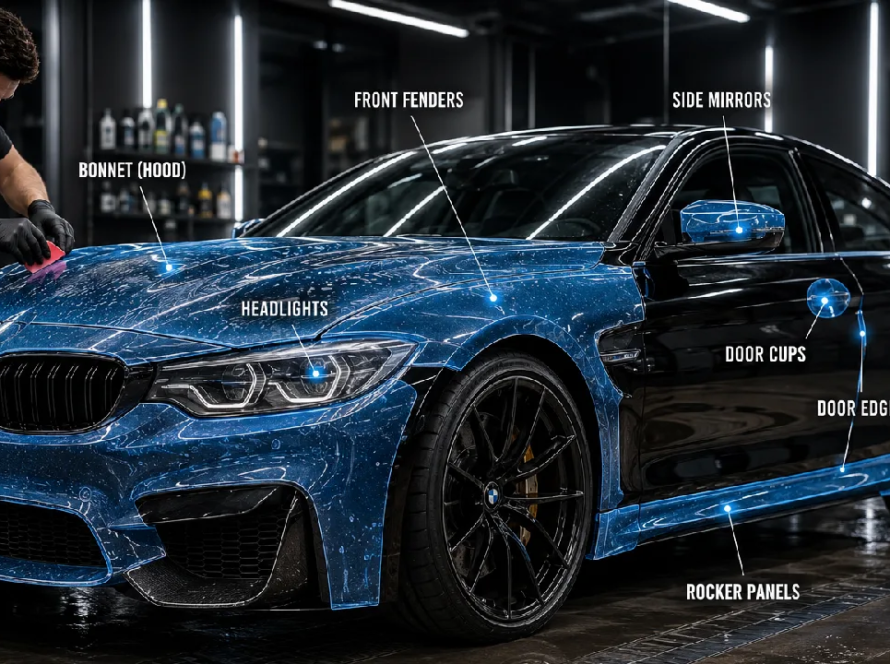
Paint Protection Film is a clear, flexible film applied over your car’s paint to physically block stone chips, scratches, bug splatter, tree sap and bird droppings. Unlike ceramic coating, which only guards against chemicals and adds gloss, PPF creates an actual physical barrier between road hazards and your paint.
Almost every good quality PPF has four layers, no matter which material it is built from:
- A clear top coat with hydrophobic properties, which makes water bead off
- The main body film, which is where TPU, TPH or TPU Polycarbonate actually differ
- An adhesive layer that bonds the film to your paint
- A liner that gets peeled off during installation
The top coat and adhesive layer stay roughly similar across brands. The real difference sits in that main body film, and that single layer decides almost everything else: how well the film self-heals, how long it stays clear, how it holds up to Indian sun and how much it costs. That is why understanding the material matters more than trusting a brand name alone.
TPU: The Industry Standard
Thermoplastic Polyurethane, or TPU, has been the backbone of the PPF industry for years. It is a flexible, elastomeric material, meaning it stretches to fit curved panels like bumpers and mirrors, then holds its shape.
Advantages of TPU
- Genuine self-healing: When the film is warmed by sunlight or hot water, its molecular structure loosens just enough to smooth out light scratches and swirl marks on its own.
- Good UV stability: Quality TPU films use aliphatic polyurethane chemistry, which resists yellowing far better than cheaper alternatives.
- High flexibility: TPU can stretch significantly during installation, resulting in fewer seams and cuts on curved panels such as door handles and mirrors.
- Solid chemical resistance: It holds up well against fuel splashes, bird droppings, and tree sap without leaving permanent stains.
- Established warranties: Quality Thermoplastic Polyurethane generally comes with 5 to 10-year warranties, since the material’s performance is well understood and well tested.
Limitations of TPU
- It offers moderate impact resistance. It absorbs small stone chips well but is not built for the same level of physical impact as a polycarbonate-backed film.
- Not all TPU is equal. Cheaper TPU blends using aromatic rather than aliphatic chemistry can still yellow faster than premium versions, so the brand and formulation genuinely matter.
- It costs more than TPH, though usually less than TPU Polycarbonate.
TPH: The Budget Alternative
Thermoplastic Hybrid, or TPH, is generally sold as a lower-cost alternative to TPU. To be honest, one confusing part of researching TPH is that its exact composition is not consistent across manufacturers. Some brands use a PVC base with added plasticisers for flexibility, others use polyolefin blends, and some are simply lower-grade polyurethane formulations marketed to sound similar to TPU. There is no single fixed recipe, which is itself worth knowing before you buy: two films both labelled “TPH” can perform quite differently.
Advantages of TPH
- Lower upfront cost, which makes it appealing for budget-conscious buyers
- Basic protection against light scratches, dust and minor road grime
- A reasonable short-term option for older cars or cars you plan to sell soon
Limitations of TPH
- Weaker self-healing: Where TPU flows back into shape with heat, TPH generally does not self-heal at all, or does so only faintly.
- Faster yellowing: TPH films typically lack the aliphatic chemistry that keeps TPU clear, so discolouration tends to show up sooner, particularly under India’s intense summer sun.
- Shorter lifespan: Most TPH films last around 1 to 3 years before visible wear, cracking or yellowing sets in, compared to 5 to 10 years for TPU.
- Less flexible: TPH stretches less than TPU during installation, which can mean more visible seams around complex curves.
- Shorter warranties: Because the material itself is less durable, warranties on TPH are usually much shorter, sometimes just 1 to 2 years, if offered at all.
TPH can be a reasonable choice if you genuinely need basic protection for a short period and are clear-eyed about its limits. It is not a like-for-like substitute for TPU, whatever the pricing pitch might suggest.
TPU Polycarbonate: The Premium Option
TPU Polycarbonate is a newer, dual-material construction. Instead of relying on one polymer to do everything, it bonds a polycarbonate layer, known for exceptional impact resistance and hardness, with a high-grade TPU layer, which brings flexibility and self-healing. Aegis Films builds its PPF with the right innovation in manufacturing technology. They provide the lowest ΔE score in the PPF industry.
How Is It Different?
- Higher impact resistance: The polycarbonate layer absorbs stone chips and road debris more effectively than TPU alone, which matters most on highways and gravel-heavy stretches.
- Retains TPU’s self-healing: The TPU layer still handles light scratches and swirl marks the same way standard TPU does.
- Thicker construction: These films are usually available from around 190 microns up to 400 microns for specialised applications, noticeably thicker than standard TPU or TPH.
- Longer warranties. Because the material is engineered for durability, warranties often extend up to a lifetime, well beyond what TPH or even standard TPU typically offers.
- Higher cost: This level of protection comes at a premium price, which makes the most sense for high-value cars or owners planning long-term ownership.
TPU vs TPH vs TPU Polycarbonate: Comparison Table
| Feature | TPH | TPU | TPU Polycarbonate |
|---|---|---|---|
| Impact resistance | Basic | Good | Excellent |
| Self-healing | Limited or none | Good, works with heat | Good, retains TPU's self-healing |
| Yellowing resistance | Weak, yellows faster | Good with aliphatic chemistry | Strong |
| Optical clarity | Basic | Very good | Excellent |
| Flexibility during install | Lower, more seams | High | Moderate, needs skilled handling |
| Typical thickness | 100 to 150 microns | 150 to 200 microns | 190 to 400 microns |
| General lifespan | 1 to 3 years | 5 to 10 years | 10+ years |
| General warranty | 1 to 2 years, if offered | 5 to 10 years | Up to lifetime |
| Approximate cost (sedan, full body) | ₹40,000 to ₹65,000 | ₹75,000 to ₹1,10,000 | ₹1,20,000 and above |
Prices vary depending on your car’s size, the exact film variant chosen and the studio doing the installation. Treat these as broad indicative bands rather than fixed quotes.
Also Read: PPF vs Ceramic Coating: Which Is Better for Indian Cars in 2026?
Which Material Lasts Longer?
TPU Polycarbonate generally lasts the longest, often 10 years or more with proper care, thanks to its added impact resistance and UV stability. Standard TPU comes next, usually holding up well for 5 to 10 years. TPH lags behind at roughly 1 to 3 years, since its weaker chemistry breaks down faster under sun, heat and road contact.
Which Material Self-Heals Better?
Self-healing works through heat. Warmth, whether from sunlight or hot water, loosens the film’s molecular structure just enough for it to flow back into a smooth surface, closing up light scratches and swirl marks.
- Both TPU and TPU Polycarbonate use this same underlying chemistry, so their self-healing performance is broadly similar.
- TPH, by contrast, generally does not self-heal, or does so only weakly, since it lacks the same elastomeric structure.
It is worth knowing that self-healing has limits regardless of material: deep cuts, gouges and punctures will not repair themselves on any PPF, no matter how premium.
Which Material Resists Yellowing Best?
This comes down to chemistry rather than brand claims. Polyurethane made with aliphatic isocyanates resists UV-driven yellowing far better than polyurethane made with aromatic isocyanates, because aliphatic chemistry does not form the light-absorbing compounds that cause discolouration. Quality TPU and TPU Polycarbonate films are usually built on aliphatic formulations, which is why they hold their clarity for years even under India’s intense summer sun. TPH films and lower-grade TPU blends using aromatic chemistry tend to yellow noticeably sooner, sometimes within a couple of years in high-UV cities.
Which Material Gives Better Gloss and Clarity?
TPU Polycarbonate generally offers the highest optical clarity, since the polycarbonate layer is inherently very transparent and resists the microscopic surface changes that dull a film’s finish over time. TPU comes a close second, offering strong clarity that shows off your paint’s original colour and depth. TPH tends to look noticeably flatter and less glossy, particularly once it starts ageing.
Which Material Is Easiest to Maintain?
Which Material Is Best for Indian Weather and Roads?
Which PPF Material Is Worth the Money?
Common Myths About PPF Materials
“All PPF looks and performs the same once installed.” In reality, the material underneath decides how the film ages over the next several years, even if it looks identical on day one.
“TPH is basically the same as TPU, just cheaper.” As covered above, TPH generally lacks TPU’s self-healing strength and yellowing resistance. The lower price reflects a genuinely different material, not just a discount.
“A thicker film is always better.” Thickness helps with impact resistance, but flexibility, chemistry and installation quality matter just as much. A poorly installed thick film can still fail early.
“Once installed, PPF needs no maintenance.” Every PPF material benefits from regular gentle washing and prompt removal of bird droppings or tree sap, regardless of how premium it is.
How to Identify Low-Quality PPF Before You Buy
- Ask the installer directly which material you are getting and ask them to explain the difference, rather than accepting a vague answer like “premium film.”
- Request warranty documentation in writing. Genuine TPU and TPU Polycarbonate films usually come with clear warranty terms from the manufacturer.
- Compare pricing against the ranges above. A price that seems unusually low for “TPU” or “Polycarbonate” often signals a TPH film being sold under a different name.
- Ask to see a sample or a previous installation in person, so you can judge clarity and finish yourself.
- Check whether the installer is a certified or authorised applicator for the brand they are quoting.
Questions to Ask Before You Book
- Which exact material is this: TPU, TPH or TPU Polycarbonate, and can you show me documentation confirming that?
- What is the warranty period, and what exactly does it cover?
- What thickness does this film come in, and is that appropriate for my car and driving conditions?
- How long has your studio been installing this specific film?
- What is the expected turnaround time, and how soon can I wash my car after installation?
Expert Recommendation
For most Indian car owners, standard TPU remains a sound, well-balanced choice, offering genuine self-healing, good UV resistance and a fair price for 5 to 10 years of protection. If your car is a premium or high-value model, if you drive extensively on highways, or if you live somewhere with intense sun or salt air, TPU Polycarbonate’s added impact resistance and longer warranty are usually worth the extra investment. TPH is best reserved for short-term ownership or as a stop-gap, not as a long-term protection strategy.
Choose AEGIS Films For Best Paint Protection
Aegis Films are exclusively installed at CarzSpa studios by trained professionals. CarzSpa doesn’t give franchises to everyone. If a detailer doesn’t look quality-focused during the training period, they don’t get the franchise. As a trusted paint protection film brand, Aegis Films wants to make sure every car owner who chooses it gets long-term protection. The overall lifespan of your PPF coating highly depends on how well it was installed, so we make sure you get the best quality PPF installation across India. Find your nearest Carzspa studio today.
FAQs
1. Which PPF material is best for cars in India?
It depends on your budget and how long you plan to keep the car. TPU offers the best balance of self-healing, yellowing resistance and cost for most owners. TPU Polycarbonate adds extra impact resistance and a longer warranty, which suits high-value cars or heavy highway driving.
2. Is TPU better than TPH?
Yes, generally. TPU self-heals more effectively, resists yellowing better and typically lasts 5 to 10 years compared to TPH’s 1 to 3 years. TPH costs less upfront but does not match TPU’s long-term performance.
3. Is TPH a fake version of TPU?
Not exactly fake, but it is a different, generally lower-grade material often marketed to sound similar to TPU. Its exact composition varies by manufacturer, and it consistently underperforms TPU on self-healing and yellowing resistance.
4. Does adding polycarbonate actually improve PPF?
Yes. Polycarbonate adds impact resistance and hardness that standard TPU alone does not have, while the TPU layer keeps the film flexible and self-healing. Together, they offer stronger stone chip protection than TPU alone.
5. Which PPF material lasts the longest?
TPU Polycarbonate typically lasts the longest, often 10 years or more with proper care. Standard TPU follows at around 5 to 10 years, while TPH generally lasts only 1 to 3 years.
6. Which PPF material turns yellow the fastest?
TPH tends to yellow fastest, since it usually lacks the aliphatic polyurethane chemistry that resists UV-driven discolouration. Lower-grade TPU blends can also yellow faster than premium aliphatic TPU.
7. Which PPF brands use TPU?
TPU is the standard material used by most established PPF brands globally, including XPEL, 3M and STEK, alongside Indian brands like Aegis, which builds on TPU with its TPU Polycarbonate XG Series.
8. How do I know if I am actually getting genuine TPU?
Ask your installer for the material name in writing and request warranty documentation from the manufacturer. Genuine TPU films come with clear, verifiable warranty terms, unlike unbranded or unclear films.
9. Which PPF material gives the best value for money?
For most owners keeping their car 5 years or more, TPU offers the strongest value, balancing protection, self-healing and cost. TPH offers lower upfront cost but weaker long-term value.
10. Does PPF material affect installation quality?
Yes. TPU’s flexibility makes it easier to stretch around curves with fewer seams. TPH is less forgiving during installation, and TPU Polycarbonate needs a skilled, experienced installer to bond both layers correctly.