Monsoon is particularly harsh on your car because rainwater carries airborne pollutants, dust and acidic compounds that settle on the paint. Once the water evaporates, it leaves behind mineral deposits and contaminants that can stain or even etch the clear coat. Add muddy roads, flying debris, high humidity and improper washing into the mix and your paint starts losing its gloss much faster than during other seasons.
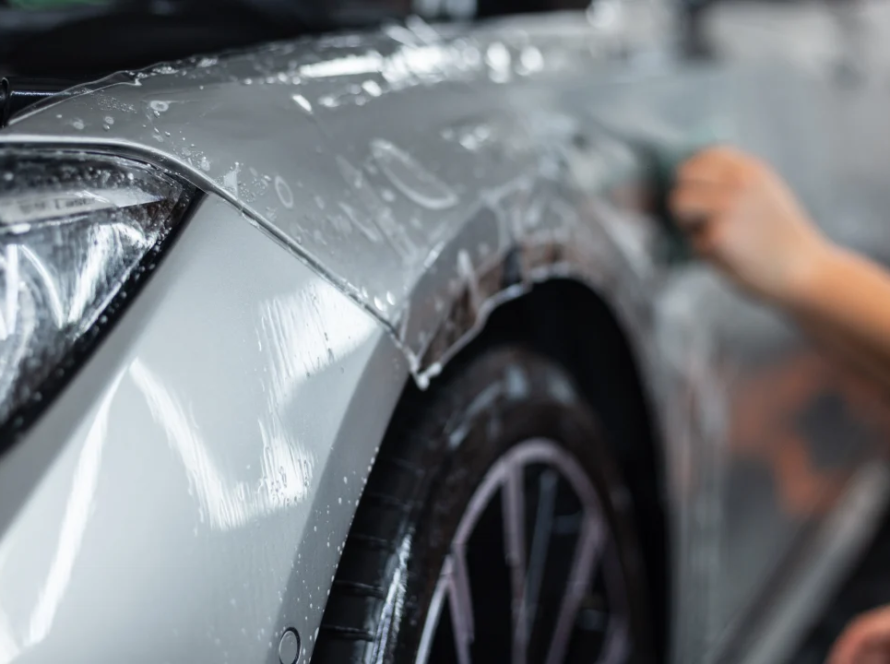
A good quality car paint protection film creates a durable protective layer over your vehicle’s factory paint. It shields the surface from environmental contaminants, road debris, water spots, chemical stains and minor scratches, making it one of the most effective ways to protect your car throughout India’s challenging weather conditions.
Let’s dive deep into it.
Table of Contents
- Why the Indian Monsoon is Much Tougher on Your Car’s Paint
- What Really Damages Your Car’s Paint During Monsoon?
- Common Types of Damage That Affect Your Car’s Paint During Monsoon
- How to Tell If Your Car’s Paint Is Already Being Damaged
- So, How Do You Actually Protect Your Car During Monsoon?
- How PPF Protects Against Every Major Monsoon Threat
- Wax vs Ceramic Coating vs Paint Protection Film
- Monsoon Car Care Tips if Your Car Has Paint Protection Film
- Final Thoughts
- Frequently Asked Questions
Why the Indian Monsoon is Much Tougher on Your Car's Paint
When people think about monsoon damage, they usually imagine water sitting on the surface of the car. While that certainly plays a role, it is only a small part of the story.
Indian driving conditions create a perfect environment for paint damage because multiple factors combine at the same time.
Think about a typical rainy-day commute.
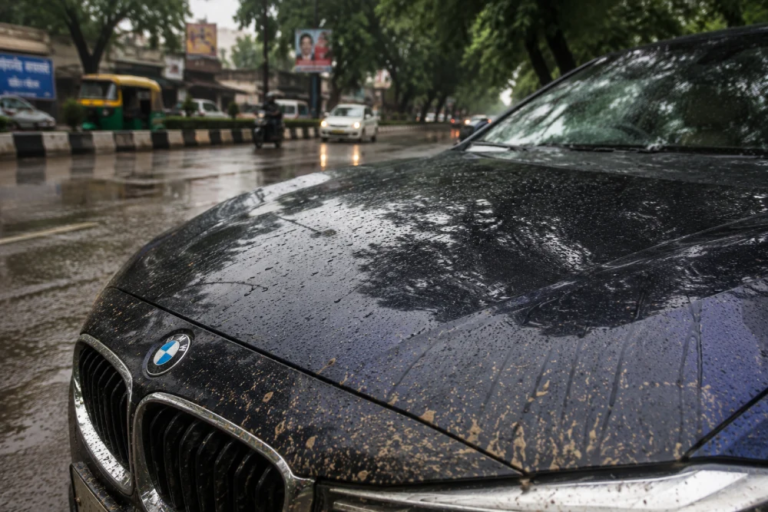
You leave home in light rain. The roads are already covered with dust from nearby construction. Water mixes with engine oil leaked from vehicles, brake dust, tyre particles and industrial pollution. Every passing vehicle sprays this contaminated mixture directly onto your doors, bumpers and wheel arches.
By the time you reach your destination, your car is coated with much more than rainwater.
Now imagine leaving it parked outside for two or three days.
The water slowly evaporates. However, the minerals, pollutants and contaminants remain stuck to the paint. Under constant humidity, these deposits become even more difficult to remove. If they stay on the surface for too long, they begin interacting with the clear coat itself.
This is exactly how permanent staining starts.
What Really Damages Your Car's Paint During Monsoon?
Many people think rain alone damages paint. That’s only part of the picture.
In reality, the monsoon exposes your car to a combination of chemical contamination, physical abrasion and prolonged moisture. These three factors work together, slowly wearing down the clear coat day after day. The damage doesn’t happen overnight.
It builds gradually until one day you notice your car no longer has the same depth, shine and smooth finish it once had.
Let’s begin with one of the biggest yet least understood causes.
Acid Rain and Pollution
When people hear the term acid rain car paint damage, they often imagine rain instantly ruining the paint. In reality, the damage happens gradually.
As rain falls through polluted air, it picks up contaminants from vehicle emissions and industrial pollution. Once the water evaporates, these residues remain on your car’s surface. If left for days, they can slowly stain or etch the clear coat, especially when combined with heat and humidity.
Regular washing after heavy rain helps prevent these contaminants from sitting on the paint for too long.
Rain Water Spots
Not all rain water spots on car surfaces disappear after a wash.
Rainwater collects dust, minerals and airborne pollutants before landing on your vehicle. As it dries, these contaminants remain behind. Initially, they sit on the surface, but over time they can bond with the clear coat and leave permanent marks.
The longer water spots remain, the harder they become to remove. Drying your car after washing and cleaning it regularly during monsoon can significantly reduce this risk.
Hard Water
Rain isn’t the only source of water spots.
In many parts of India, tap water contains minerals like calcium and magnesium. If you wash your car and let it air dry, these minerals can leave behind stubborn deposits similar to rainwater spots.
Using filtered water or drying the car with a microfiber towel after washing helps prevent mineral build-up.
Mud and Road Slush
Monsoon roads are filled with much more than water.
Mud often contains sand, construction dust, tiny stones, brake dust and other abrasive particles. As vehicles drive past, this mixture is thrown onto your car’s paint.
The biggest damage usually happens during washing. If this grit is rubbed across the surface without proper rinsing, it creates fine scratches and swirl marks in the clear coat.
Bird Droppings
Bird droppings are highly acidic and should never be left on your car for long.
During monsoon, they stay moist for longer, giving the acidic compounds more time to interact with the clear coat. This increases the chances of staining or etching, particularly on darker-coloured vehicles.
Remove bird droppings as soon as possible using a damp microfiber cloth or a dedicated cleaning spray. Avoid scrubbing the affected area.
Tree Sap
Parking under trees may protect your car from direct rain, but it introduces another problem: tree sap.
Fresh sap is sticky and quickly attracts dust, pollen and other contaminants. As it hardens, it bonds tightly to the paint, making it difficult to remove without scratching the surface.
Cleaning sap early is much easier than removing hardened deposits days later.
Common Types of Damage That Affect Your Car's Paint During Monsoon
By now, you know that your car’s clear coat is constantly exposed to the environment. But what does that damage actually look like?
Contrary to popular belief, paint damage isn’t limited to visible scratches. In reality, your car can suffer from several different types of deterioration, many of which begin so gradually that they’re easy to miss until the shine has already faded.
Understanding these different forms of damage makes it much easier to identify problems early and take the right preventive measures.
1. Water Spots
One of the most common issues during monsoon is rain water spots on car surfaces.
As rainwater evaporates, it leaves behind minerals, dust and airborne contaminants. Initially, these deposits simply sit on top of the paint. However, if they’re left unattended, they can gradually etch into the clear coat, making them much harder to remove.
Common signs:
- White circular marks
- Cloudy patches
- Rough texture after washing
2. Paint Oxidation
Another common problem is paint oxidation, especially on vehicles that spend long hours outdoors.
As the clear coat is exposed to UV rays, oxygen and environmental pollutants over time, it slowly begins to break down. During the rainy season, prolonged moisture and contaminants can accelerate this deterioration, contributing to paint oxidation rainy season issues.
Common signs:
- Loss of gloss
- Chalky appearance
- Dull finish
- Faded-looking paint
3. Swirl Marks and Fine Scratches
Contrary to what many owners believe, these usually don’t come from driving.
They often happen while washing the car.
When mud, dust or grit is wiped across the paint without proper rinsing, tiny scratches form in the clear coat.
Under sunlight, they appear as circular swirl patterns.
Dark-coloured vehicles make these defects especially noticeable.
4. Stone Chips
Indian roads during monsoon are full of loose gravel and broken road surfaces.
When tyres throw these particles towards your vehicle at high speed, they can chip away small portions of the clear coat and paint.
Bonnets, bumpers, mirrors and front fenders are usually affected first.
Unlike swirl marks, stone chips expose the lower paint layers and, if ignored, may even allow corrosion to begin on exposed metal panels.
5. Chemical Etching
One of the more serious forms of paint damage is chemical etching.
It occurs when contaminants such as acidic rainwater, bird droppings, insect remains or tree sap remain on the paint for too long.
Instead of merely staining the surface, they slowly begin reacting with the clear coat itself.
Once etching occurs, simple washing won’t remove the mark. Professional polishing or paint correction is often required.
6. Paint Fading
Many people believe only sunlight causes fading.
In reality, car paint fading rain is usually the result of several factors working together.
Repeated exposure to UV rays, moisture, pollution and oxidation gradually weakens the clear coat. As its protective ability reduces, the coloured base coat underneath begins losing its richness and depth.
This is why older vehicles often appear dull even when freshly washed.
7. Staining
Certain contaminants don’t scratch the paint. Instead, they stain it.
These include:
- Bird droppings
- Tree sap
- Hard water deposits
- Industrial fallout
- Iron particles
- Organic residue
If left on the surface for several days, these contaminants can leave permanent marks that are difficult to remove completely.
8. Loss of Gloss
Sometimes the paint isn’t scratched or faded. It simply doesn’t shine the way it used to. This usually happens because hundreds of microscopic defects accumulate over time. Swirl marks, oxidation, mineral deposits and chemical contamination all reduce the way light reflects from the paint.
The result is a finish that looks tired, even though the colour itself may still be intact.
| Type of Damage | Main Cause | Can It Be Prevented? |
|---|---|---|
| Water Spots | Mineral deposits after rain | ✔ Yes |
| Paint Oxidation | UV rays, pollution and moisture | ✔ Yes |
| Swirl Marks | Improper washing | ✔ Yes |
| Stone Chips | Road debris | ✔ Mostly with PPF |
| Chemical Etching | Acid rain, bird droppings, tree sap | ✔ Yes |
| Paint Fading | Oxidation and UV exposure | ✔ Yes |
| Staining | Organic and chemical contaminants | ✔ Yes |
| Loss of Gloss | Combined surface wear | ✔ Yes |
How to Tell If Your Car's Paint Is Already Being Damaged
The biggest challenge with paint damage is that it often develops gradually.
By the time it’s obvious, repairing it can become expensive.
Fortunately, your car usually gives several warning signs long before serious deterioration begins.
| What You Notice | Likely Cause | Can It Be Fixed? |
|---|---|---|
| White circular marks | Mineral water spots | Usually yes if treated early |
| Rough paint after washing | Surface contamination | Yes, through decontamination |
| Small dull patches | Early oxidation | Often yes with polishing |
| Swirl marks in sunlight | Improper washing | Usually yes |
| Tiny chips on bonnet | Road debris | Touch-up or repaint if severe |
| Sticky spots | Tree sap | Yes if removed early |
| Bird dropping stains | Acidic contamination | Sometimes, depending on severity |
| Loss of gloss | Clear coat deterioration | Varies depending on damage |
If you notice several of these signs together, your paint is already under stress.
Rather than repeatedly polishing the factory clear coat, many enthusiasts choose to protect what remains with car paint protection film before the damage progresses further.
So, How Do You Actually Protect Your Car During Monsoon?
By now, one thing is clear.
The Indian monsoon doesn’t expose your car to just one type of damage. Instead, it creates the perfect environment for multiple threats to work together. Acidic contaminants settle on the paint, mineral deposits leave behind stubborn water spots, muddy roads throw abrasive grit onto the body and improper washing adds swirl marks that slowly dull the finish.
Naturally, the next question is:
How do you protect your car from all of this?
Most car owners explore three common options:
- Wax
- Ceramic coating
- Paint Protection Film (PPF)
Each has its place but they don’t offer the same level of protection. Understanding the difference can help you choose the right solution based on how you use your car and the conditions it faces.
How PPF Protects Against Every Major Monsoon Threat
| Monsoon Hazard | Damage Without PPF | How Paint Protection Film Helps |
|---|---|---|
| Acid rain | Chemical staining and etching | Creates a sacrificial barrier between contaminants and paint |
| Rainwater | Mineral deposits and water spots | Hydrophobic surface reduces water retention and simplifies cleaning |
| UV Rays | Paint oxidation and fading | Blocks harmful UV exposure |
| Mud & Slush | Swirl marks and abrasion | Prevents direct contact with the clear coat |
| Road Debris | Stone chips and paint damage | TPU layer absorbs impacts |
| Bird Droppings | Acidic stains and etching | Keeps contaminants away from factory paint |
| Tree Sap | Sticky stains and scratches | Easier removal with stain-resistant top coat |
| Improper Washing | Fine swirl marks | Self-healing film recovers from many light wash marks |
The biggest advantage of Paint Protection Film isn’t that it makes your car indestructible.
It’s that it takes the damage instead of your paint.
Every water spot, minor scratch, bird dropping or road contaminant now interacts with a replaceable protective film rather than the irreplaceable factory finish. That’s exactly why enthusiasts choose PPF early, before the damage begins, instead of spending significantly more on paint correction or repainting later.
Wax vs Ceramic Coating vs Paint Protection Film
These three products are often compared, but they work in completely different ways.
Wax acts as a temporary sacrificial layer. Ceramic coating chemically bonds to the paint and enhances its resistance to dirt and water. Car paint protection film, on the other hand, is a physical polyurethane film applied over the paint, creating an actual barrier against environmental damage.
Here’s how they compare.
| Feature | Wax | Ceramic Coating | Car Paint Protection Film |
|---|---|---|---|
| Protection Type | Sacrificial layer | Nano-ceramic layer | Physical TPU film |
| Lifespan | 1-3 months | 2-5 years (depending on product and maintenance) | 7-10 years for premium films |
| Protection Against Stone Chips | ✖ | ✖ | ✔ |
| Scratch Resistance | Low | Moderate | High |
| Self-Healing | ✖ | ✖ | Available in premium TPU films |
| Resistance to Water Spots | Moderate | Good | Excellent |
| Chemical Resistance | Limited | Good | Excellent |
| UV Protection | Moderate | Very Good | Excellent |
| Gloss Enhancement | Good | Excellent | Excellent |
| Protection Against Road Debris | ✖ | Limited | ✔ |
| Best For | Short-term shine | Easier maintenance | Long-term paint preservation |
Looking at the table, it becomes obvious that these products aren’t direct substitutes for one another.
Wax and ceramic coatings primarily protect against surface contamination and make cleaning easier. They don’t provide a thick enough barrier to absorb physical impacts.
That’s where car paint protection film stands apart.
Monsoon Car Care Tips if Your Car Has Paint Protection Film
One of the biggest advantages of car paint protection film is that it makes maintaining your car much easier during the rainy season. However, “easier” doesn’t mean “maintenance-free.”
PPF coating protects your factory paint, but it still needs proper care to perform at its best for years.
Here are a few simple habits that make a noticeable difference.
1. Wash Your Car Every 7-10 Days
Many owners stop washing their cars during monsoon because they know it will get dirty again.
That’s the wrong approach.
Rainwater, mud and road grime contain contaminants that shouldn’t be left sitting on the film for long periods.
A gentle wash every week helps prevent dirt build-up and keeps the hydrophobic properties working effectively.
2. Don’t Let Mud Dry Completely
Mud contains fine sand, dust and tiny stones.
Once it hardens, rubbing it off can create unnecessary scratches on the film.
Instead:
- Rinse thoroughly first.
- Let water soften stubborn dirt.
- Use a pH-neutral car shampoo.
- Wash using a clean microfiber wash mitt.
Patience always produces better results than aggressive scrubbing.
3. Dry the Car Properly
Even with PPF, allowing water to evaporate naturally can leave behind mineral deposits.
After every wash:
- Use a clean microfiber drying towel.
- Dry from top to bottom.
- Pay attention to mirrors, badges and panel gaps where water tends to collect.
This simple step greatly reduces water spotting.
4. Remove Bird Droppings and Tree Sap Quickly
Although PPF coating offers an additional layer of defence, highly acidic or sticky contaminants should never be ignored.
The sooner they’re removed, the easier the cleaning process becomes.
Carry a quick detailer and a microfiber cloth in your boot if you frequently park outdoors.
5. Avoid Harsh Chemicals
Household detergents, strong solvents and acidic cleaners may reduce the lifespan of the film.
Always use products specifically designed for automotive finishes.
6. Inspect the Film Occasionally
Every few weeks, spend a couple of minutes checking:
Film edges
- Bonnet corners
- Door edges
- Wheel arches
- Mirror caps
Early inspection allows minor issues to be corrected before they become larger problems.
Monsoon Car Care Tips if Your Car Doesn’t Have PPF
Not everyone chooses Paint Protection Film immediately.
If your vehicle still has its original paint exposed, proper maintenance becomes even more important during monsoon.
Here are a few habits that can significantly reduce long-term damage.
Wash After Long Drives in Heavy Rain
Rainwater often carries road oil, brake dust and industrial fallout.
Leaving these contaminants on the paint for several days increases the risk of staining and water spots.
Never Wipe a Dirty Car Dry
One of the quickest ways to create swirl marks is by wiping a muddy vehicle with a dry cloth.
Always rinse loose dirt first.
Only then should you begin washing.
Use Two Buckets While Washing
Professional detailers follow the two-bucket method for a reason. One bucket contains clean shampoo.
The other is used to rinse dirt from the wash mitt.
This simple technique dramatically reduces the chances of rubbing grit across the paint.
Avoid Parking Under Trees
Trees provide shade.
They also introduce:
- Bird droppings
- Tree sap
- Falling twigs
- Leaves
- Pollen
Whenever possible, choose covered parking instead.
Dry Standing Water
Don’t rely on evaporation.
Removing water manually prevents many mineral deposits from forming.
Final Thoughts
Every monsoon tells a different story.
Some cars emerge from the season looking almost unchanged.
Others lose a little more shine, collect a few more stone chips and develop a few more water spots.
The difference usually isn’t luck.
It’s preparation.
The damage caused during monsoon is rarely the result of one heavy shower. Instead, it comes from hundreds of small attacks that happen every day. Polluted rainwater dries on the surface. Mud carries abrasive grit. Bird droppings remain longer because of humidity. Road debris chips away at the clear coat. Individually, these seem insignificant. Together, they slowly rob your car of the finish that made you fall in love with it in the first place.
Once the factory clear coat is worn away, restoring it is both expensive and time-consuming. Protecting it from the beginning is almost always the smarter approach.
Whether you choose to invest in car paint protection film today or simply adopt better maintenance habits, understanding how India’s climate affects automotive paint puts you one step ahead.
After all, preserving your car isn’t just about keeping it clean.
It’s about protecting the craftsmanship beneath the shine so that years from now, your vehicle still turns heads every time you take it out for a drive.
Frequently Asked Questions
1. Can rain permanently damage my car’s paint?
Rain alone rarely causes permanent damage. However, when polluted rainwater dries on the surface, it can leave behind contaminants and mineral deposits that may stain or etch the clear coat if left untreated.
2. Does every car need Paint Protection Film?
Not necessarily. However, if you drive frequently, park outdoors or want to preserve your factory paint for the long term, car paint protection film is one of the most effective solutions available.
3. Is ceramic coating enough for Indian monsoons?
Ceramic coating provides excellent chemical resistance and makes washing easier, but it cannot protect against stone chips or physical abrasion like Paint Protection Film.
4. Does PPF stop water spots completely?
No. It reduces the likelihood of stubborn deposits sticking to the surface, but contaminated water can still leave marks if allowed to dry for extended periods.
5. Will Paint Protection Film turn yellow?
High-quality TPU films are designed to resist yellowing far better than older or lower-grade materials. Choosing a reputable brand like Aegis Films and professional installer like CarzSpa plays a significant role in long-term appearance.
6. How long does Paint Protection Film last?
Good quality TPU Paint Protection Films typically last between 7 and 10 years, depending on the product, installation quality and maintenance.