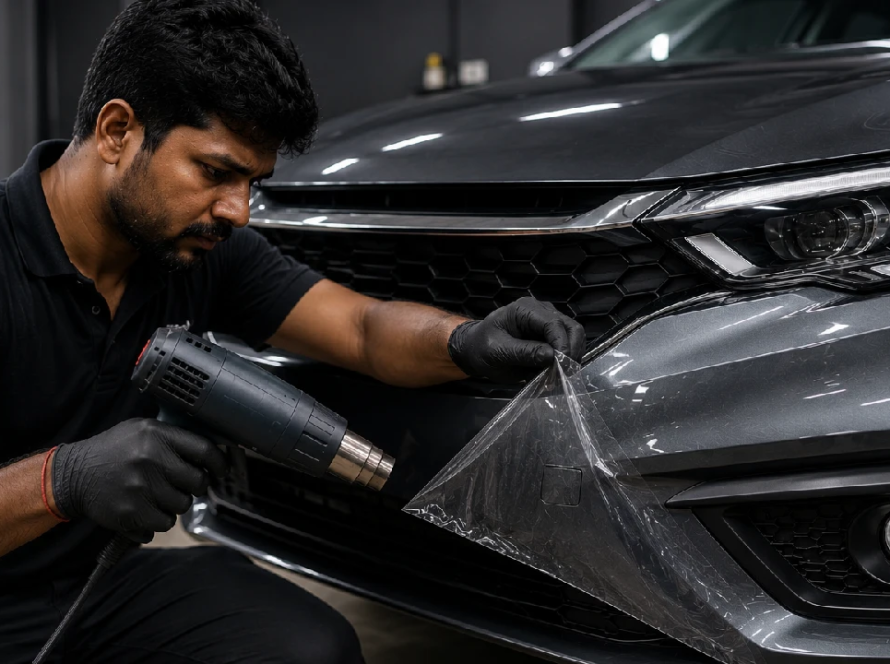
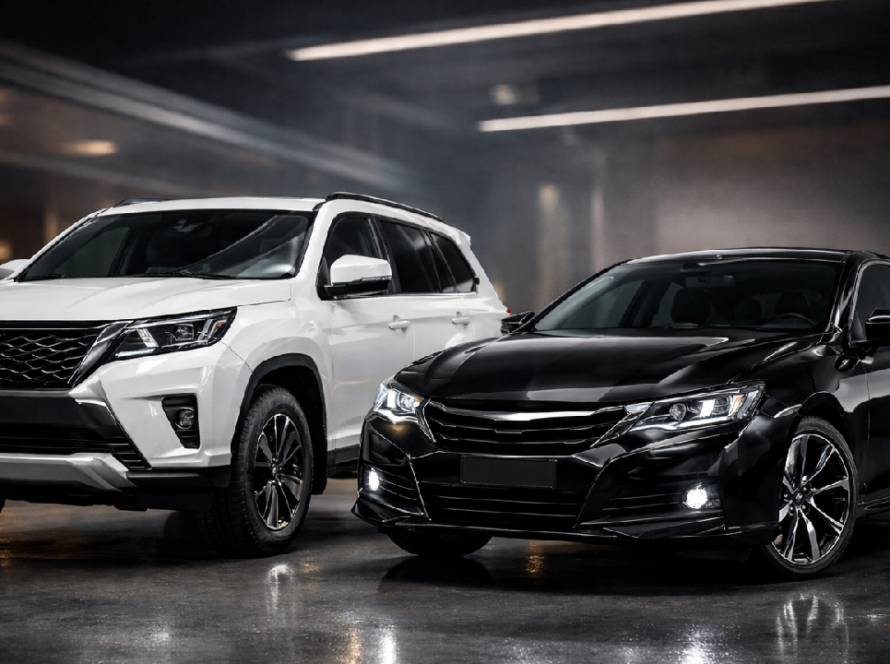
The upright, commanding front profiles of the Mahindra Thar Roxx and Scorpio-N make them absolute magnets for stone chips, highway debris and trail scratches on Indian roads. Protecting these large, slab-fronted SUVs requires physical impact defence that traditional liquid coatings simply cannot provide.
If you are researching how to safeguard your vehicle’s paint, the solution comes down to material science. To protect a vehicle with this kind of rugged geometry, skip the cheap, entry-level hybrid PPF coating for a car. Instead, prioritise a high-quality, 190-250 microns thick Aliphatic TPU car PPF.
A high-quality PPF coating for car protection acts as a shock-absorbing cushion against flying gravel, harsh tropical UV rays and close-quarter urban traffic scuffs. This guide breaks down exactly where these SUVs get damaged, what technical specifications actually matter and how to choose the right film without falling for common detailing studio traps.
Table of Contents
- Do Thar Roxx and Scorpio-N Actually Need PPF?
- Where These SUVs Get Damaged First
- Why Ceramic Coating Alone Often Falls Short on Large SUVs
- The Three Types of PPF You Will Find in India
- What Makes a Good PPF on a Thar Roxx or Scorpio-N?
- The Biggest PPF Mistakes SUV Owners Make
- How Different Driving Styles Affect Your PPF Needs
- Which PPF Brands Are Worth Considering in India?
- How Much Should You Expect to Pay?
- Should You PPF the Entire SUV or Only High-Impact Areas?
- Conclusion
Do Thar Roxx and Scorpio-N Actually Need PPF?

The short answer is yes. You need PPF for Thar Rozz as well as Scorpio-N PPF protection.
Most Mahindra Thar Roxx and Scorpio-N owners are far more likely to benefit from a PPF coating for car protection than owners of a typical hatchback or city-focused SUV.
The reason lies in ownership behaviour.
These SUVs are bought for road trips, mountain drives, family holidays, monsoon adventures and exploring roads that aren’t always in perfect condition. Even owners who never go off-road often spend long hours on highways where trucks, gravel, loose stones and road debris constantly attack the paint.
Large SUVs also have larger targets.
The tall bonnet of the Scorpio-N and the upright front profile of the Thar Roxx receive direct impacts from stone chips. Wide wheel arches collect mud, gravel and sand. Large doors attract scratches from parking lots and narrow roads.
Paint damage rarely appears overnight.
It starts with a few tiny chips on the bonnet. Then a scratch near a door handle. A mark from a tree branch during a weekend trip. After a few years, the vehicle no longer looks as fresh as it once did.
Owners planning to keep their SUV for five years or longer usually benefit the most from SUV PPF in India. The longer the ownership period, the more protection becomes valuable.
Where These SUVs Get Damaged First
Every car has a damage hierarchy. Knowing it helps you prioritise coverage correctly.
The Bonnet
On both the Thar Roxx and Scorpio-N, the bonnet is the single most vulnerable panel. Its large flat surface faces highway traffic at speed and every stone, grit particle or debris fragment kicked up by the vehicle ahead lands here first. On the Thar Roxx specifically, the higher ride height and squared front end mean the leading edge of the bonnet catches a lot of direct impact. Chips here are not just cosmetic. They expose bare metal, which rusts in Indian monsoon conditions faster than most people realise.
ORVMs (Wing Mirrors)
The outer rear-view mirrors take a beating from two directions. Stone chips hit them from the front and parking in tight urban spaces means brush contact from walls, pillars and other vehicles. The Scorpio-N’s mirrors are large and the housing corners are a common first-scratch location in city parking.
Front Bumper
The lower front bumper is particularly vulnerable on the Thar Roxx. Off-road use brings it into contact with rocks, undergrowth and uneven terrain. Even road use means low-speed scrapes in parking lots, kerb contact and general urban attrition. The Scorpio-N’s bumper faces more highway stone chips at speed since the radiator grille area creates turbulence that directs debris toward the lower bumper.
Rear Wheel Arches
Both vehicles have exposed rear arches that collect everything the rear tyres throw up. Mud, sand, small stones, grit, all of it sprays continuously against the inner arch lining and the painted surface around it. Over two to three years, this area develops paint erosion that is more progressive than sudden, which means owners often don’t notice until the damage is significant.
Door Edges
Every time a car door opens in a parking lot, the edge is at risk. On larger SUVs like these, the doors are heavier, longer and harder to control precisely in tight spaces. Door edge chips are among the most common damage patterns on any SUV and they are disproportionately frustrating because they are visible every single time you open the door.
Tailgate
The Thar Roxx’s spare wheel-mounted tailgate is a specific vulnerability. The spare tyre bracket and the surrounding painted area take contact from loading luggage, camp equipment or simply being bumped in parking. The Scorpio-N’s tailgate lower section gets similar treatment from loading cargo into the boot.
A useful way to think about coverage priority based on usage:
| Highest Risk Zones | Recommended Minimum Coverage |
|---|---|
| Bonnet, front bumper, ORVMs | Full front-end + mirrors |
| Bonnet, bumper, arches, sills, tailgate | Full body or near-full |
| Door edges, ORVMs, bumper corners | Partial + door edges |
| All panels | Full body PPF recommended |
Why Ceramic Coating Alone Often Falls Short on Large SUVs
Ceramic coating is an excellent product and there is no argument against it as part of a protection strategy. But it is not a substitute for PPF, especially on a vehicle used like a Thar Roxx or Scorpio-N.
Ceramic coating creates a hardened glass-like layer over your paint. It makes the surface hydrophobic, easier to clean and more resistant to light chemical etching from bird droppings, tree sap and industrial fallout. A good ceramic coating also adds a depth of gloss that most owners genuinely appreciate. What it cannot do is absorb physical impact.
When a stone hits a ceramic-coated bonnet at 90 km/h, the coating does not flex. It cracks and the chip goes straight through to the paint beneath, sometimes through to the primer. The hardness that makes ceramic coating glossy and chemical-resistant is also what makes it brittle under impact.
| Protection Type | Stone Chips | UV Protection | Hydrophobicity | Self-Healing | Longevity |
|---|---|---|---|---|---|
| Ceramic Coating only | No protection | Good | Excellent | No | 2–5 years |
| PPF only (no topcoat) | Excellent | Good | Moderate | Yes (premium) | 7–10 years |
| PPF + Ceramic topcoat | Excellent | Excellent | Excellent | Yes | 7–10 years |
The ideal setup, especially for a Thar Roxx or Scorpio-N, is PPF as the primary physical barrier, with a ceramic coating applied over it. This gives you impact resistance, UV stability and a surface that is genuinely easy to maintain. Many premium PPF films now come with a factory-applied hydrophobic topcoat, which achieves something similar from the outset.
The Three Types of PPF You Will Find in India
The PPF market in India is more stratified than most buyers realise. What gets sold as ‘PPF’ covers a wide range, from commodity films imported in bulk to genuinely engineered products. Understanding the three main categories helps you ask the right questions at a detailing studio.
The three types of PPF you’ll find in India :
TPH Films
TPH films became popular largely because of their lower cost.
They offer basic protection but often struggle with long-term clarity, flexibility and self-healing performance. This type of film is not recommended at all, as the quality of adhesive used in this kind of film is not at all good and many users experience paint chipping off.
TPU Films
TPU films offer better flexibility, improved impact absorption and stronger resistance to environmental damage.
For many SUV owners, this category provides a good balance between performance and cost.
TPU-Polycarbonate Films
Not all brands in India have these kinds of films. They are the highest quality films available in the Indian market, which are highly flexible, strong and don’t yellow at all.
It is especially popular for supercars and ultra-premium luxury cars as it comes with superior protection and more than 10 years of warranty. Only Aegis Films has this kind of car PPF in India.
What Makes a Good PPF on a Thar Roxx or Scorpio-N?
Beyond the base material, several specific characteristics separate a film that performs well from one that merely exists on the car.
Thickness
Top Coat Quality
The top coat is the surface of the film that you actually interact with. A good top coat should be hydrophobic (water beads and rolls off rather than sheeting), resistant to minor chemical contact and have a high enough hardness rating to resist light scratching from normal washing. Some films come with a sacrificial top coat that can be refreshed over time. This is worth asking about specifically.
Self-Healing Performance
Self-healing works through polymer memory; the film’s molecular structure is engineered to return to its original form when heated. The key variables are how quickly it heals and at what temperature. Good quality films heal light scratches in direct sunlight within 20–30 minutes. Entry-level films may require hot water or a heat gun and the healing is less complete.
Hydrophobicity
A hydrophobic surface does more than look good. Water carrying mud, salt and mineral deposits rolls off rather than drying in place. For both vehicles, particularly the Thar Roxx, which encounter mud and dusty tracks. This means significantly less post-drive cleaning effort and less long-term contamination buildup in the film surface.
Optical Clarity
Both the Thar Roxx and Scorpio-N come in deep, dark colours that Mahindra markets as signature finishes. Deep Pearl White, Everest White, Napoli Black, Stealth Grey, Galaxy Silver- all of these are colours where any optical haze in a film is immediately visible in direct sunlight. Premium films are essentially invisible. Cheaper films have a slight milky or orange-peel texture that becomes obvious at close inspection angles. On a vehicle at this price point, that is not an acceptable compromise.
Edge Wrapping
This is where installation quality and film elasticity intersect. A properly applied PPF film should wrap around panel edges rather than stopping at them. If the film terminates at the visible edge of the bonnet, chips will still occur right at the edge and the edge of an applied film tends to lift over time if not properly wrapped.
The Biggest PPF Mistakes SUV Owners Make
Most PPF regrets come from one of five recurring errors. None of them is expensive to avoid if you know what to watch for.
1. Choosing the Cheapest Quote
The lowest price often comes with compromises.
These may include:
- Lower-grade film
- Poor installation practices
- Reduced coverage
- Limited after-sales support
2. Falling for Marketing Claims
Terms like “military-grade” and “lifetime protection” sound impressive.
They don’t always tell you much about actual performance.
3. Ignoring Installation Quality
Even the best film can fail when installed poorly.
An experienced installer often matters as much as the film itself.
4. Not Inspecting Edge Finishing
Poor edge finishing becomes noticeable over time.
Dust accumulates. Edges lift. The installation begins to look untidy.
5. Choosing Based Only on Thickness
A thicker film isn’t automatically a better film.
Material quality, top coat technology and adhesive performance matter more.
6. Believing Every Warranty Covers Everything
Most warranties have conditions.
They rarely cover damage caused by accidents, poor maintenance or improper washing.
Always read the fine print.
How Different Driving Styles Affect Your PPF Needs
The Highway Traveller
You cover 1,500 km or more a month, primarily on national and state highways. Stone chips are your primary enemy. The front third of the car- bonnet, bumper, fenders, A-pillars is under constant bombardment at speed. A full front-end protection package is the minimum sensible choice. If you do this consistently for more than two years, extend coverage to the roof leading edge, which takes windshield-deflected debris at highway speeds. Best quality TPU film with strong chip absorption is the non-negotiable specification here.
The City User
Your damage pattern is fundamentally different. Stone chips are less frequent at city speeds, but door dings, parking scrapes and paint transfer from other vehicles are constant risks. Door edges and ORVMs are higher priorities than the bonnet. A partial coverage package focused on high-contact zones makes practical and financial sense. If you park regularly in tight multi-level parking structures, adding rear bumper film is also worth considering.
The Off-Road Enthusiast
For a Thar Roxx driven on trails, full-body PPF or near-full coverage is appropriate. Brush scrapes happen across door sills, lower doors, wheel arches and bumpers. The bonnet takes flying gravel. The tailgate and lower quarter panels take lateral contact from narrow tracks. At this level of use, the cost difference between a partial and full installation is recovered the first time you drive a forest trail without worrying about the paint.
Which PPF Brands Are Worth Considering in India?
The Indian market has consolidated around a handful of brands that are genuinely worth specifying. Here is an honest assessment of each.
| Brand | Material + Features | Indian Climate Suitability | Installer Network | Warranty |
|---|---|---|---|---|
| Aegis Films | High-quality TPU, self-healing, hydrophobic topcoat | Engineered specifically for Indian heat, UV and monsoon conditions | Pan-India network, authorised studios | 5–12 years (Pan India) |
| XPEL | High-quality TPU | Might not work in regions with extreme summers | Limited, select cities | 10 years on select products |
| LLumar | Mid to premium TPU range | Good UV stability | Wider network via distributors | 5–7 years |
| STEK | Premium TPU | Decent | Growing network | 10 years on top-tier products |
Aegis Films occupies a specific position in this market that is worth understanding. As an Indian manufacturer producing PPF for Indian conditions, the film is developed with actual knowledge of what the climate demands: prolonged UV exposure from April through June, monsoon humidity and acid rain from June through September and the temperature cycling that causes lesser films to develop micro-cracks in their adhesive layer.
The film clarity holds up well on dark colours, which matters for both the Napoli Black Scorpio-N and the Stealth Grey Thar Roxx. The self-healing performance is rated among the faster in the market at Indian summer temperatures.
For owners who want a manufacturer that is accountable, whose
warranty is enforceable in India and whose film has been made for a hot and humid climate like that of India, Aegis Films is a strong first consideration.
How Much Should You Expect to Pay?
Costs vary significantly by city, studio quality, coverage level and film brand.
Pricing varies depending on:
- Film quality
- Vehicle size
- Coverage area
- Installer expertise
- City
Typical SUV PPF Costs
| Coverage | Typical Price Range |
|---|---|
| Front Bumper | ₹8,000 – ₹15,000 |
| Full Front Package | ₹30,000 – ₹70,000 |
| High-Impact Areas | ₹40,000 – ₹90,000 |
| Full Body Entry TPU | ₹70,000 – ₹1.2 Lakh |
| Full Body TPU | ₹1.2 Lakh – ₹2 Lakh+ |
Price Disclaimer: All prices are approximate and intended for general guidance only. Actual costs may vary based on the PPF brand, coverage package, installation quality and location.
Should You PPF the Entire SUV or Only High-Impact Areas?
The full-body versus partial debate comes down to three factors: how you use the vehicle, how long you plan to keep it and what pain threshold is for visible damage on protected versus unprotected areas.
Full-body PPF makes the most sense for the Thar Roxx used off-road, for long-term keepers planning eight or more years of ownership and for owners who find any paint damage genuinely distressing. The peace of mind is real and quantifiable if you are the kind of person who notices every chip.
Partial coverage, specifically a quality front-end package, is a defensible choice if your car is used primarily on highways and in cities, and the front of the car takes major damage. Protecting the bonnet, bumper, fenders and mirrors eliminates the bulk of the risk at roughly half the cost of a full installation.
What does not work is trying to save money by applying thin, cheap film everywhere. You end up with a car that has visual degradation from the film itself, yellowing, hazing, and lifting edges, on top of whatever paint damage the film failed to prevent. If the budget is genuinely tight, do less with better film rather than more with worse film.
Conclusion
If your Thar Roxx or Scorpio-N spends most of its time on highways, rough roads or weekend adventures, a quality PPF is a smart investment. It helps preserve the factory paint from stone chips, scratches, UV exposure and everyday wear, especially if you plan to keep the SUV for several years.
More importantly, don’t choose a film based on price alone. The quality of the film, the expertise of the installer and the warranty support will have a far greater impact on your experience. A well-installed premium TPU film from a trusted brand like Aegis Films can keep your SUV looking its best long after the kilometres start adding up.
If your Thar Roxx or Scorpio-N is new or less than a year old, now is the best time. Paint that has not yet accumulated swirl marks, chips or fading takes film better and the protection period aligns with your ownership rather than catching up to existing damage. If the vehicle is older, have the paint corrected properly before film goes on. There is no benefit to sealing in damage that was already there.