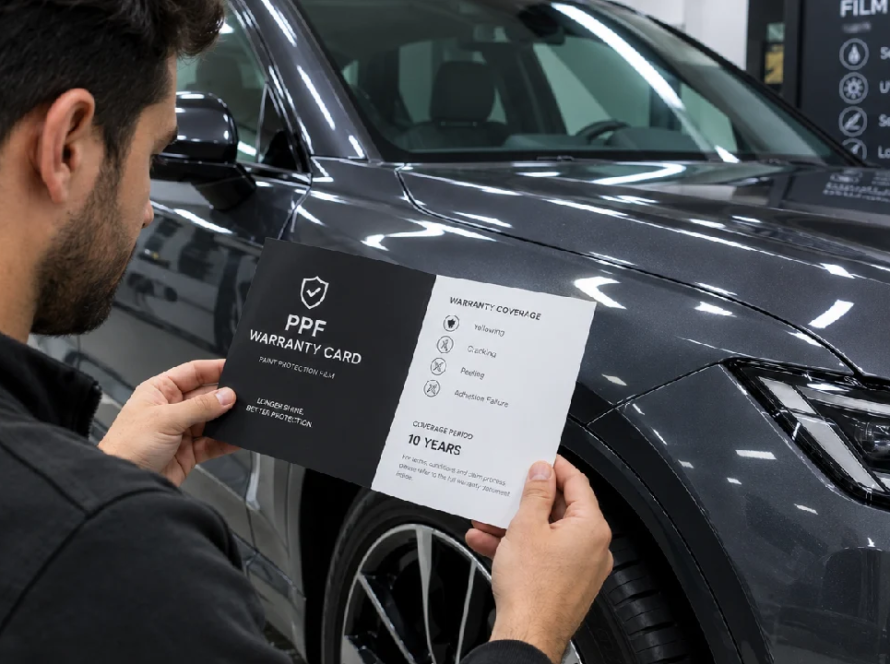
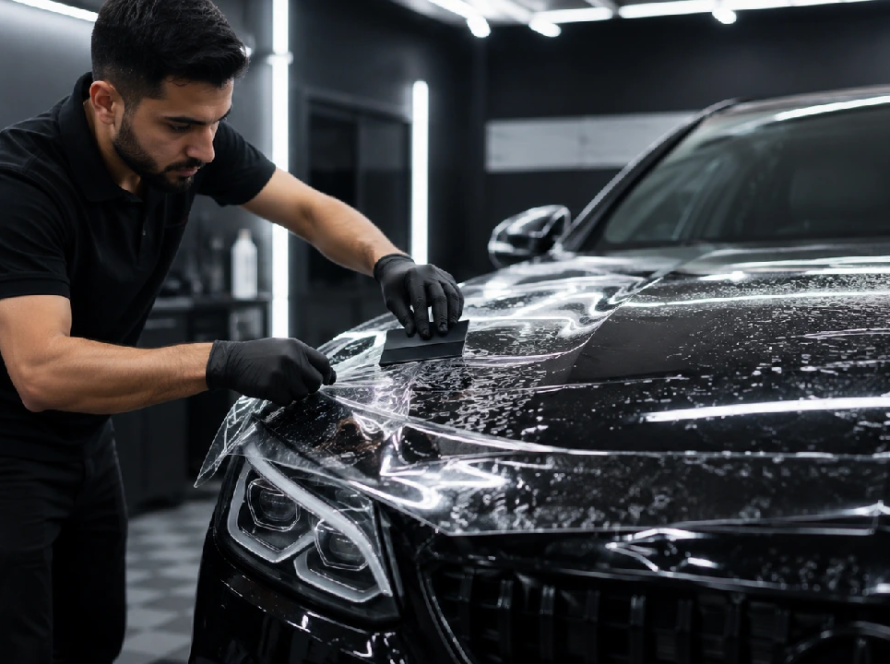
Well, repainting and PPF coating serve different purposes, but both give your car a nice new appearance. We normally say, “It’s better to apply PPF now than repainting later.” This means that when you buy a new car, it’s better to consider a PPF coating to protect its original paint from scratches, fading or stone chips. This will help in maintaining the original car paint, and you won’t have to repaint your car afterwards.
A repaint fixes damage that has already happened. Car PPF prevents impact damage before it happens. Knowing which one your car actually needs can save you money and protect it for years.
In this guide, we walk you through the real difference between the two, when each one makes sense and how to decide without guessing.
Table of Contents
- Quick Answer: Repaint vs PPF
- What Is Car Repainting?
- What Is PPF?
- Repaint vs PPF: What’s the Real Difference?
- Car Repaint Cost vs Car PPF Cost
- When PPF Is the Better Investment
- When Repainting Makes More Sense
- Can You Repaint Your Car With a Different Colour?
- Can You Install PPF After Repainting?
- Can PPF Replace Repainting?
- Common Mistakes Car Owners Make
- Choose Aegis Films for Valuable Car Paint Protection
- FAQs
Quick Answer: Repaint vs PPF
If you are short on time, here is the simple version. Repainting fixes paint that is already damaged. Car PPF coating protects paint that is still in good shape, so it never gets damaged in the first place.
| Situation | Better Choice |
|---|---|
| Faded or peeling factory paint | Repaint |
| Deep scratches down to bare metal | Repaint |
| Rust or a previous poor repaint | Repaint |
| Changing your car's colour | Repaint |
| New car with factory paint | PPF |
| Frequent highway driving | PPF |
| Protecting resale value | PPF |
| Preventing future stone chips | PPF |
Generally, the two are not competing options. They usually work together, just not always at the same time.
What Is Car Repainting?
Car repainting means stripping back your car’s existing paint and applying a fresh layer, either on one panel or across the whole vehicle. A panel repaint fixes a specific area, like a door or bumper, usually after collision repair or a deep scratch. A complete repaint covers the entire car.
Colour matching is the tricky part. Even a skilled painter needs the correct paint code and careful blending. Otherwise, a repainted panel can look slightly mismatched next to the surrounding factory paint.
Repaint quality also varies depending on where you go. OEM paint, applied at the factory under controlled conditions, is usually more even and durable than aftermarket paint sprayed in a standard body shop. That is why a panel repainted after an insurance repair can sometimes look a little different up close, even when the colour code matches on paper.
What Is PPF?
PPF stands for paint protection film. It is a clear, self-healing layer of TPU (thermoplastic polyurethane) that gets applied directly over your existing paint.
Instead of replacing your paint, PPF coating for car use protects what is already there. It sits between your factory paint and the outside world, absorbing:
- Stone chips
- Minor scratches and swirl marks
- UV damage and paint fading
- Bird droppings and tree sap
- Everyday road grime
Good quality film includes a self-healing top layer, so light scratches and swirl marks often disappear on their own with a bit of heat, either from sunlight or warm water. You can read more about how car paint protection film actually works and what it is made from.
Repaint vs PPF: What's the Real Difference?
| Factor | Repaint | PPF |
|---|---|---|
| Purpose | Fixes existing paint damage | Prevents future paint damage |
| Protection | None going forward | Ongoing, against chips and scratches |
| Appearance | Restores a fresh factory look | Preserves the current finish |
| Durability | Years, depends on paint quality | Several years, depends on film quality |
| Maintenance | Same as any painted panel | Hand wash, avoid abrasive brushes |
| Warranty | Usually covers the paintwork only | Usually covers yellowing and peeling |
| Resale value | Neutral if done well | Helps preserve original paint condition |
| Repair process | New paint applied and cured | Damaged film section replaced |
| Long-term value | Fixes the problem once | Reduces how often problems occur |
Car Repaint Cost vs Car PPF Cost
| Factor | Repaint | PPF |
|---|---|---|
| Initial cost | ₹25,000 to ₹40,000+ for a full repaint, depending on car segment and paint type | ₹61,750 to ₹2,80,000+ as full-body PPF cost, depending on the quality of the film chosen. |
| Long-term maintenance | Standard paint care | Hand wash, gentle products |
| Resale | It does reduce the car’s value | Helps protect original paint value |
| Expected lifespan | 3 to 12 years | 3 years to lifetime warranty with Aegis XE series |
| Value for money | Best for fixing existing damage | Best for preventing future damage |
Car repaint cost and PPF coating cost both have a wide range in India, so see these as a generic range rather than a quote. What actually affects your number:
- Vehicle size: More panels naturally cost more to cover, whether you are repainting or installing film.
- Paint or film quality: OEM-matched paint and premium film cost more upfront but usually hold up better over time.
- Number of panels: A single panel repaint or a partial PPF install costs less than a full car.
- Installer expertise: Skilled installers and painters generally charge more, but poor workmanship on either job often costs more to fix later.
For an accurate cost to repaint a car or a proper PPF coating cost, the only reliable way is to get your specific vehicle assessed.
When PPF Is the Better Investment
PPF coating for car protection makes the most sense when your paint is already in good condition and you simply want to keep it that way.
- New cars: Factory paint is at its best right after delivery, so this is usually the ideal time to apply PPF, before the first stone chip happens.
- Luxury and sports cars: Resale value and paint condition tend to matter more on higher-value vehicles.
- Dark coloured cars: Swirl marks and fine scratches show up faster on dark paint, and self-healing PPF handles this well.
- Frequent highway driving: More kilometres usually means more exposure to stone chips and road debris.
- Long-term ownership: If you are keeping the car for years, PPF spreads its cost over a much longer period than a single repaint would.
For example, a new SUV bought for daily highway commuting is generally a stronger PPF candidate than an older car that is rarely driven and already carries years of wear on its paint.
When Repainting Makes More Sense
Repainting is usually the right call when the paint itself is the problem, not just its appearance. This generally includes:
- Accident or collision damage
- Deep scratches that expose bare metal
- Rust forming under or around the paint
- Peeling, cracking or bubbling paint
- A previous poor quality repaint
- Wanting a different colour altogether
- An insurance repair after an accident
- A panel replacement that needs matching paint
One thing worth knowing: PPF should never go over damaged paint. Installing film on top of rust, peeling paint or unresolved damage just traps the problem underneath. Fix the paint first, then protect it.
Can You Repaint Your Car With a Different Colour?
Yes, you can repaint your car a different colour. It is one of the most common questions we get, and the short answer is straightforward, but a few things are worth knowing first.
- Cost increases: A full colour change usually costs more than a colour-matched repaint, since every panel needs paint, including hidden areas like the engine bay and door jambs.
- Paperwork: Depending on where you live, a colour change may need to be updated on your registration documents, so it is worth checking local rules before booking the job.
- Resale implications: An unusual colour can narrow your buyer pool later, even if the repaint itself is flawless.
If you are changing colour anyway, that is actually a good time to consider PPF, once the new paint has properly cured, since you are already protecting a fresh finish.
Can You Install PPF After Repainting?
Yes, and it is actually a common combination. Fresh paint benefits from protection early, before it picks up its first scratch or chip.
There is one important step first: curing time. Fresh paint needs time to cure fully, usually a few weeks depending on the paint type and conditions, before film gets applied. Installing PPF too early can trap solvents under the film and cause bubbling or poor adhesion.
A good installer will always check paint cure before booking your install, rather than just going by the calendar.
Can PPF Coating Replace Repainting?
No. PPF protects paint; it does not fix paint that is already damaged.
If your paint has rust, deep scratches down to bare metal, peeling or heavy fading, film will not correct any of that. It will just sit over the existing problem. In these cases, you generally need a repaint or paint correction first, then PPF afterwards if you want ongoing protection.
Common Mistakes Car Owners Make
- Installing PPF over damaged or unresolved paint issues
- Choosing cheap film just to save money upfront
- Ignoring installer experience and going with the lowest quote
- Waiting too long after a repaint before installing film
- Only protecting high-impact panels and skipping the rest
- Choosing a service based only on price, rather than checking best PPF brands and installer track record
Choose Aegis Films for Valuable Car Paint Protection
We help customers understand what their car actually needs, not what is easiest to sell. If your paint just needs protecting, we will recommend PPF. If it genuinely needs fixing first, we will tell you that too, before any film goes on.
Trust us when we say that the AEGIS Films range is the best car paint protection film range available for Indian cars, focused on protecting your factory paint for the long run.
If you are not sure whether your car needs a repaint, PPF coating near me, or both, get in touch with us for an honest recommendation based on your car’s actual condition.
FAQs
1. Can PPF hide scratches?
PPF can hide very light surface marks once applied, since it creates a smooth new layer over your paint. It will not hide scratches that are already deep or that have gone through the clear coat. For existing damage, you generally need paint correction or a repaint first, then PPF to protect the corrected finish going forward.
2. How long does PPF last?
Quality PPF coating normally lasts several years, often five to ten, depending on film quality and how well it is maintained. Self-healing film from reputable brands tends to hold up noticeably longer than cheaper alternatives. Regular hand washing and avoiding automatic car washes with rotating brushes both help extend its lifespan.
3. Does repaint reduce resale value?
Not usually, as long as it is done well and disclosed honestly. A clean, well-matched repaint after minor collision repair rarely puts buyers off. What actually hurts resale is poor colour matching, visible overspray, or a repaint history that is not disclosed, since buyers and inspectors can often spot these issues.
4. Can I remove PPF later?
Yes. Quality film is designed to come off cleanly without damaging the paint underneath, as long as it is removed by someone experienced. Cheap film, or film left on well past its lifespan, can be harder to remove cleanly and may leave adhesive residue behind.
5. Can ceramic coating replace PPF?
No. Ceramic coating adds gloss and makes washing easier, but it does not stop stone chips or physical scratches the way PPF ceramic coating combinations do. They solve different problems. Many owners use both, applying ceramic coating over PPF for extra gloss and easier maintenance, rather than choosing one over the other.
6. Should I repaint before installing PPF?
Only if your existing paint is damaged. If your factory paint or a previous repaint is in good condition, you can install PPF directly over it. If there is rust, peeling, deep scratches or a poor prior repaint, fix that first, then apply PPF once the new paint has properly cured.
7. Is PPF worth it on older cars?
It depends on the car’s condition and how long you plan to keep it. If the paint is still in reasonable shape and you are keeping the car for years, PPF can still be worthwhile. If the paint is already heavily faded or chipped, you will usually get more value from paint correction or a repaint first.