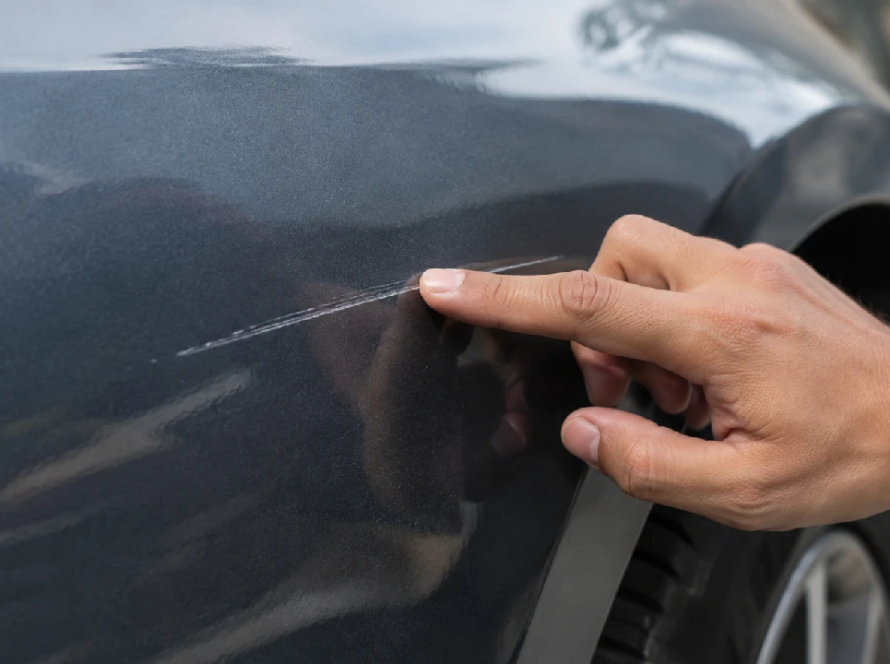
Toyota Fortuner owners are a unique breed of car enthusiasts.
Unlike many SUVs that are bought primarily for city commutes, the Fortuner often becomes a long-term companion. It is driven on highways, taken on family road trips, used for business travel and occasionally pushed through rough terrain. Some owners keep their Fortuner for seven to ten years or even longer. Others upgrade within a few years but still want to preserve its resale value.
That is precisely why paint protection has become such a popular topic among Fortuner owners in India. Today, many Fortuner owners are choosing paint protection film over traditional paint correction and repeated detailing sessions. However, with so many brands, installers, thickness claims, selecting the best paint protection film for Fortuner can quickly become confusing.
In this guide, we will break down everything you need to know about PPF for Fortuner. We will discuss how it works, which areas need protection, what features actually matter, how to compare brands, and how to choose the right film for Indian conditions.
Whether you own a Fortuner 4X2, Legender, GR-S, or 4X4 variant, this guide will help you make an informed decision.
Table of Contents
- What Is Car PPF and How Does It Work?
- Why Does a Toyota Fortuner Need Paint Protection Film?
- PPF vs Ceramic Coating vs Graphene Coating: Which is Better for Fortuner?
- Which Areas of a Fortuner Should Be Protected With PPF?
- What To Look For In A Best Paint Protection Film for Fortuner?
- Why Aegis Films Is One of the Best Paint Protection Films for Fortuner
- Conclusion
- Frequently Asked Questions
What Is Car PPF and How Does It Work?
Paint Protection Film, commonly called PPF, is a transparent polyurethane-based film applied over a vehicle’s painted surfaces.
Its primary purpose is to act as a sacrificial layer.
Instead of stone chips, scratches and contaminants directly impacting the paint, they interact with the film.
Modern PPF technology has evolved significantly over the last decade.
Today’s premium films are far more advanced than the early products introduced years ago.
Most high-quality PPFs are built using Thermoplastic Polyurethane (TPU).
TPU offers:
- Flexibility
- Impact resistance
- Optical clarity
- Stain resistance
- Self-healing capabilities
- UV stability
Understanding the Layers of Modern PPF
The adheAlthough different brands have unique constructions, most premium films contain multiple layers.
Top Coat
This is the outermost layer.
It provides:
- Gloss enhancement
- Hydrophobic performance
- Stain resistance
- Self-healing functionality
TPU Core Layer
This is the heart of the film.
It absorbs impacts and provides flexibility.
A high-quality TPU layer plays a major role in determining durability and longevity.
Adhesive Layer
Adhesive secures the film to the vehicle’s surface.
A quality adhesive should provide strong bonding while still allowing safe removal when required.
How Self-Healing Technology Works
One of the most impressive features of modern PPF is self-healing technology.
When light scratches appear on the surface, heat helps the top coat recover.
Heat sources can include:
- Sunlight
- Warm water
- Engine heat
- Controlled heat application
It is important to understand that self-healing does not repair deep cuts or major damage.
However, it can significantly reduce the appearance of light swirls and minor surface marks.
For Fortuner owners who frequently travel or wash their vehicles, this feature can help maintain a cleaner appearance for longer.
How PPF Protects a Fortuner in Real-World Conditions
Let’s move beyond technical specifications and look at practical scenarios.
Highway Journeys
- Imagine a road trip from Ahmedabad to Udaipur.
- At highway speeds, stones, gravel and debris constantly impact the front of the vehicle.
- PPF acts as a buffer between these impacts and the paint.
Mountain Roads
- Loose gravel is common in hill stations and mountain routes.
- These conditions increase the likelihood of paint chipping.
- Construction Zones
- Road construction often creates flying debris.
- This can cause repeated minor impacts on exposed paint surfaces.
Off-Road Adventures
- Many Fortuner owners enjoy exploring rough terrain.
- Bushes, branches and loose rocks can easily scratch exposed paint.
- PPF helps reduce the severity of this damage.
Why Does Toyota Fortuner Need Paint Protection Film?
A Toyota Fortuner is not typically a garage queen. Most owners use it extensively because that is exactly what it was built for.
A typical Fortuner may experience:
- Frequent highway driving
- Long-distance road trips
- Rural road conditions
- Construction zones
- Gravel roads
- Off-road trails
- City traffic
- Commercial parking lots
Each of these environments introduces paint hazards.
A small pebble thrown by a truck travelling at highway speed can chip the front bumper or bonnet. Tight parking spaces can result in door scratches. Tree sap can damage clear coat surfaces if left untreated. Hard water can leave stubborn mineral deposits.
Individually, these issues may seem minor. Together, they slowly deteriorate the vehicle’s finish.
Common Paint Damage Seen on Fortuners
Over the years, professional detailers and installers have noticed certain recurring damage patterns on Fortuners.
1) Front Bumper Stone Chips
The front bumper receives the highest impact from road debris.
Since the Fortuner often spends significant time on highways, small stones frequently strike the bumper at high velocity.
Without protection, these impacts can create visible chips in the paint.
2) Bonnet Damage
The leading edge of the bonnet is another high-risk area.
Repeated impacts gradually create dozens of tiny chips that become increasingly visible over time.
This is especially noticeable on darker paint colours.
3) ORVM Scratches
Side mirrors often collect scratches from narrow roads, parking manoeuvres and passing vehicles.
Because the mirrors protrude outward, they are particularly vulnerable.
4) Door Edge Damage
Door edges frequently come into contact with walls, pillars and neighbouring vehicles.
Many owners only realise this after seeing paint missing from sharp edges.
5) Rear Bumper Loading Marks
Fortuner owners often use the large boot space for luggage, equipment and travel gear.
Dragging heavy items across the rear bumper can leave visible scratches over time.
6) Swirl Marks and Wash Marks
Even owners who wash their cars regularly can accidentally create micro-scratches.
Improper washing techniques, dirty cloths and automatic car washes are among the biggest causes of swirl marks.
Is Repainting the Solution for these Damages?
A common misconception is that repainting solves everything. Technically, it does. However, repainting comes with several drawbacks.
First, quality repainting is not cheap.
Second, matching the original factory finish perfectly can be difficult.
Third, once a panel has been repainted, some buyers and dealers may view it differently during resale evaluations.
Original factory paint remains one of the strongest selling points for a used vehicle.
This is one of the biggest reasons why many Fortuner owners invest in PPF early rather than paying for paint repairs later.
PPF vs Ceramic Coating vs Graphene Coating : Which is Better for Fortuner?
This is one of the most searched questions among SUV owners. Let’s clear up a common misconception.
PPF and ceramic coating are not direct competitors.
They solve different problems.
| Feature | PPF | Ceramic Coating | Graphene Coating |
|---|---|---|---|
| Stone Chip Protection | Excellent | Minimal | Minimal |
| Scratch Resistance | High | Moderate | Moderate |
| Self-Healing | Yes (Premium Films) | No | No |
| Impact Absorption | Excellent | No | No |
| UV Protection | Excellent | Good | Good |
| Hydrophobic Effect | Excellent | Excellent | Excellent |
| Paint Preservation | Excellent | Moderate | Moderate |
| Lifespan | 5–10 Years | 2–5 Years | 2–5 Years |
If your primary goal is preserving the paint from physical damage, PPF remains the strongest option.
Which Areas of a Fortuner Should Be Protected With PPF?
Not every owner chooses full-body coverage.
The ideal coverage depends on driving habits, budget and ownership plans.
Full Body PPF
This provides protection across nearly every painted surface.
Benefits include:
- Maximum protection
- Uniform appearance
- Better resale preservation
- Reduced maintenance concerns
For owners planning long-term ownership, this is usually the preferred option.
Front Package PPF
A front package typically covers:
- Front bumper
- Full bonnet
- Front fenders
- Headlights
- ORVMs
Since these areas receive most impacts, this package provides strong protection at a lower investment.
High Impact Zone Protection
For budget-conscious owners, targeted protection can still be effective.
Common areas include:
- Door cups
- Door edges
- Rear bumper sill
- ORVMs
- Loading areas
What We Recommend for Most Fortuner Owners
For owners who frequently travel on highways or plan to keep the vehicle for many years, full-body protection offers the most comprehensive solution.
However, if budget is a major consideration, a front package combined with high-impact zones delivers the highest protection-to-cost ratio.
What To Look For In A Best Paint Protection Film for Fortuner?
Many buyers focus on thickness alone. This is a mistake. A good PPF is the result of multiple technologies working together.
1. TPU Quality
The TPU layer is arguably the most important part of the film.
Premium TPU typically provides:
- Better flexibility
- Improved durability
- Superior clarity
- Better stain resistance
A high-quality TPU film often performs better than a thicker film made with inferior materials.
2. Self-Healing Performance
Not all self-healing technologies perform equally.
Some films recover quickly.
Others require more heat.
Some only heal extremely light marks.
A premium film should consistently recover from everyday swirl marks and surface scratches.
3. Stain Resistance
Indian driving conditions can be tough on paint.
Bird droppings, tree sap and pollution can all create staining.
A quality PPF should resist these contaminants and simplify cleaning.
4. Hydrophobic Properties
Hydrophobic surfaces repel water.
This makes maintenance easier and reduces the likelihood of water spots.
For monsoon driving and regular washing, this feature is particularly useful.
5. Optical Clarity
A great PPF should be almost invisible.
The purpose is to protect the paint without altering its appearance.
Poor-quality films may reduce gloss, introduce haze or affect colour depth.
6. UV Protection
Strong sunlight can gradually affect automotive paint.
Premium films help reduce UV exposure and preserve colour consistency.
7. Adhesive Technology
An often-overlooked factor.
A quality adhesive should:
- Bond securely
- Resist lifting
- Allow professional removal
- Avoid paint damage during removal
8. Warranty Support
A warranty should never be the only deciding factor.
However, it does indicate the manufacturer’s confidence in the product.
Always review:
- Warranty duration
- Coverage conditions
- Installation requirements
- Claim process
A long warranty is valuable only when backed by reliable product performance and after-sales support.
Why Aegis Films Is One of the Best Paint Protection Films for Fortuner
The Indian PPF market has become increasingly competitive over the past few years.
However, one reason Aegis Films has gained attention among enthusiasts and installers is its focus on balancing premium protection with Indian driving conditions.
Built Around TPU Technology
Modern paint protection films depend heavily on the quality of their TPU layer.
Aegis Films offers TPU-based products designed to deliver:
- Impact resistance
- Flexibility
- Optical clarity
- Surface protection
This is especially important for vehicles like the Fortuner that regularly encounter highway debris and long-distance travel conditions.
Self-Healing Surface Technology
Minor swirl marks are inevitable during ownership.
Even careful washing techniques cannot completely eliminate them.
The self-healing top coat found in premium PPF products helps reduce the visibility of light surface marks when exposed to heat.
For Fortuner owners who frequently travel, this can help maintain a cleaner appearance over time.
Best for Indian Climate Conditions
Indian weather presents unique challenges.
Vehicle paint is exposed to:
- Intense UV radiation
- Extreme summer temperatures
- Monsoon moisture
- Air pollution
- Hard water contamination
A quality PPF must perform consistently throughout these conditions.
This is one area where product engineering becomes more important than marketing terminology.
High Optical Clarity
One of the biggest concerns among buyers is whether PPF will affect the vehicle’s appearance.
A high-quality film should be nearly invisible once installed.
The goal is to protect the paint while preserving its original depth, gloss and colour.
Hydrophobic Performance
Water repellency improves ownership convenience.
A hydrophobic surface helps reduce:
- Water retention
- Dirt accumulation
- Cleaning effort
- Water spotting
This becomes particularly useful during monsoon seasons and frequent washing cycles.
Why Aegis Films Makes Sense for Fortuner Owners
The Fortuner is not a vehicle that people buy for short-term ownership.
Most owners expect years of use.
That long-term ownership approach aligns perfectly with the purpose of PPF.
For Fortuner buyers looking for strong protection, premium appearance, self-healing capability and support tailored to Indian conditions, Aegis Films stands out as one of the strongest options currently available in the market.
Other PPF Brands Available in India
It is important to understand that several established brands also operate in the Indian market.
These include:
- XPEL
- STEK
- Llumar
- 3M
Each brand offers different product ranges, warranty structures and installation networks.
Rather than selecting a film purely based on brand recognition, focus on the actual specifications, installer expertise and support available in your city.
Conclusion
The Toyota Fortuner has earned its reputation as one of India’s most loved SUVs. It is built to cover long distances, handle tough roads and stay reliable for years. However, the same adventures that make the Fortuner enjoyable can also take a toll on its paint.
That is why investing in car PPF makes sense for many owners. It helps protect the original factory finish from stone chips, scratches, road debris and everyday wear while keeping the vehicle looking newer for longer.
When choosing the best paint protection film for Fortuner, avoid focusing only on price or thickness claims. Instead, look at the overall package, including TPU quality, self-healing performance, clarity, warranty support and installer expertise.
For owners who want premium protection backed by technology designed for Indian conditions, Aegis Films stands out as one of the best paint protection film in India options available today. Combined with professional installation, it can help preserve your Fortuner’s appearance, ownership experience and resale value for years to come.
Frequently Asked Questions
1. Is PPF worth it for a Toyota Fortuner?
Yes. A Fortuner is often driven on highways, long road trips and challenging roads where paint damage is common. PPF helps protect the original paint from stone chips, scratches and environmental contaminants.
2. Which is better for a Fortuner: PPF or ceramic coating?
If your goal is paint protection, PPF is the better option. Ceramic coating mainly improves gloss and ease of cleaning, while PPF provides physical protection against chips and scratches.
3. Does PPF protect against scratches?
Yes. Premium PPF can absorb minor impacts and help prevent light scratches from reaching the paint. Many films also feature self-healing technology that reduces the appearance of swirl marks.
4. Can PPF be removed later?
Yes. Professionally installed PPF can be removed without damaging the original factory paint when done correctly.
5. How long does PPF last on a Fortuner?
A high-quality PPF typically lasts between 5 and 10 years, depending on the film quality, driving conditions, maintenance and environmental exposure.
6. Will PPF turn yellow over time?
Premium modern TPU-based films are designed to resist yellowing. However, the quality of the film plays a significant role in long-term appearance.