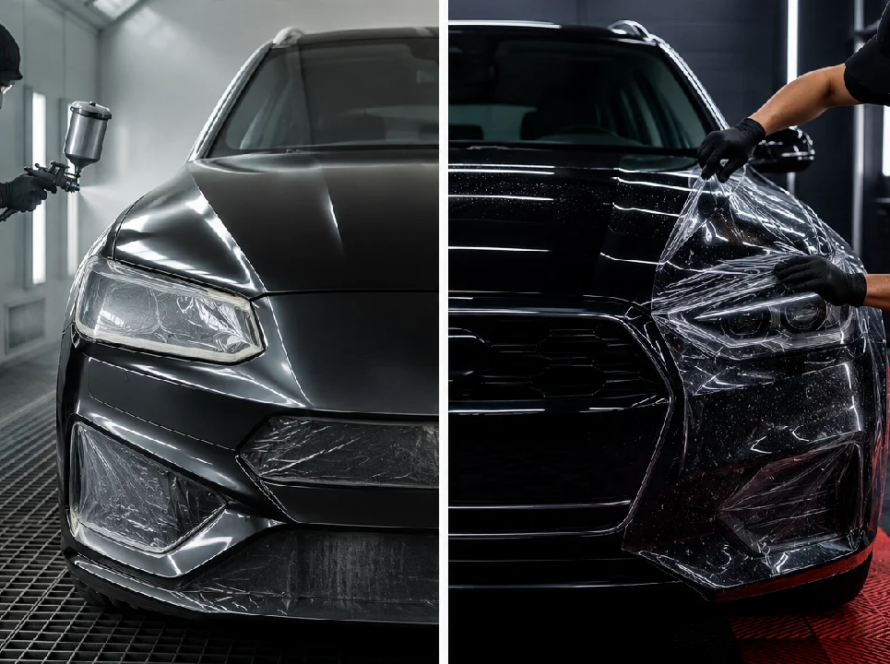
You want to protect your car’s paint with paint protection film (PPF), but a full-body installation may cost more than you planned to spend. You can protect every panel or start with the areas that take the most damage.
That is the decision behind full-body PPF vs partial PPF. Full-body coverage protects all the painted exterior panels, while partial coverage lets you choose specific areas such as the front bumper, bonnet and side mirrors.
The right choice depends on where your car faces the most damage, how much you want to spend and how much of the original paint you want to protect. If you are working with a budget, knowing the PPF cost for car panels such as the front bumper and bonnet helps you decide.
Table of Contents
- What Is the Difference Between Full Body PPF and Partial PPF?
- How Much Does Partial PPF Cost for a Car?
- Which Car Parts Should You Prioritise for Partial PPF?
- Is Full Body PPF Worth the Extra Cost?
- Does the Type of PPF Change the Cost?
- How to Choose the Right PPF Coverage for Your Budget
- Final Thoughts
- Frequently Asked Questions
What Is the Difference Between Full Body PPF and Partial PPF?
The main difference is how much of your car’s painted exterior you cover. Both options involve applying a PPF coating for car paint, so the real choice is about coverage.
- Full body PPF covers the painted exterior panels across the car, including the bonnet, bumpers, doors, fenders, roof and boot. It offers more consistent protection across the vehicle.
- Partial PPF covers selected panels or sections. You might protect the front bumper and bonnet first, for example, then leave the doors and roof unprotected for now.
Here is how the two options compare.
| Factor | Full Body PPF | Partial PPF |
|---|---|---|
| Coverage | All painted exterior panels included in the package | Selected panels or sections |
| Upfront cost | Higher | Lower |
| Stone chip protection | Across covered painted panels | Mainly on selected high-impact areas |
| Appearance | More consistent finish across the car | Film edges or differences between covered and uncovered areas may be visible |
| Best suited for | Owners wanting broad, consistent paint protection | Owners prioritising certain areas or working within a budget |
Neither option is automatically right for every car. Start by deciding which areas you want to protect and how much coverage your budget allows.
How Much Does Partial PPF Cost for a Car?
The PPF cost for car panels depends on the panels you choose, the film you select and the installation work involved. Protecting a bonnet and front bumper needs more material than protecting door edges or side mirrors.
To make the comparison practical, the estimates below use Aegis’s published film-material rates:
- Aegis Core: ₹325 per sq. ft.
- Aegis Eternal 300: ₹1,000 per sq. ft.
These are material rates, not installed panel prices. The estimates assume approximate film coverage areas for common car panels and exclude installation labour, cutting waste, paint preparation and other charges. Eternal 300 is a premium option, so the difference in material cost can be substantial.
Estimated PPF Cost by Car Panel
| Car panel | Approx. film area | Aegis Core | Aegis Eternal 300 |
|---|---|---|---|
| Front bumper | 15–25 sq. ft. | ₹4,875–₹8,125 | ₹15,000–₹25,000 |
| Bonnet | 15–25 sq. ft. | ₹4,875–₹8,125 | ₹15,000–₹25,000 |
| One front fender | 5–8 sq. ft. | ₹1,625–₹2,600 | ₹5,000–₹8,000 |
| Pair of side mirrors | 2–4 sq. ft. | ₹650–₹1,300 | ₹2,000–₹4,000 |
| One door | 10–15 sq. ft. | ₹3,250–₹4,875 | ₹10,000–₹15,000 |
| Roof | 15–25 sq. ft. | ₹4,875–₹8,125 | ₹15,000–₹25,000 |
| Rear bumper | 12–20 sq. ft. | ₹3,900–₹6,500 | ₹12,000–₹20,000 |
| Boot lid | 8–14 sq. ft. | ₹2,600–₹4,550 | ₹8,000–₹14,000 |
Note: These are illustrative material-cost calculations, not official Aegis panel prices or installation quotes. Actual panel area varies by car model, and installers may need additional film for cutting and fitting.
For example, if you want to protect only the front bumper and bonnet, the estimated film material comes to around ₹9,750–₹16,250 with Core or ₹30,000–₹50,000 with Eternal 300, before installation and other charges.
This is why you cannot calculate a partial PPF quote from the film rate alone. Ask for a written quote that separates material, installation and any preparation work.
Which Car Parts Should You Prioritise for Partial PPF?
If you are not ready for full-body car PPF, start with the panels most exposed to road debris and everyday contact.
- Front Bumper
- Bonnet
- Front Fenders
- Side Mirrors
- Door Edges and Door Panels
- Roof, Rear Bumper and Boot Lid
Is Full Body PPF Worth the Extra Cost?
Full-body PPF costs you around 60,000 Rs/- to 2,80,000Rs/- in India. because it uses more film and needs installation across more panels. Whether that extra spend makes sense depends on what you want to protect.
Full-body coverage may suit you if:
- You want protection across the car instead of just its front end.
- You plan to keep the vehicle for several years.
- You care about maintaining a consistent appearance across painted panels.
- You drive in varied conditions and do not want to leave large areas unprotected.
Partial coverage may suit you if:
- You want to start with the areas most exposed to stone chips.
- Your budget does not stretch to a full-body installation.
- You understand that uncovered panels remain exposed to scratches, chips and environmental damage.
One point is worth remembering: partial PPF reduces the area you protect, not the risks to the rest of the car. If an unprotected door gets scratched, the film on your bonnet will not prevent that damage.
You can also compare the cost of a partial installation today with the price of expanding coverage later. If you add PPF to more panels in the future, the installer may need to assess the existing paint and film edges before proceeding.
Does the Type of PPF Change the Cost?
Yes. The film’s finish type, material, and quality can change the PPF cost for car panels significantly, even when the coverage area stays the same.
Aegis publishes different paint protection film rates for Core and Eternal 300. Core costs less per square foot, while Eternal 300 sits at the premium end of the range. The right comparison is not the lowest price against the highest. Consider the product’s specifications, warranty terms and the type of protection you want.
Before you choose a PPF coating for car paint protection, check the current product information and ask what your quote includes. A price for film material alone is not comparable with a package that includes installation and preparation.
When you compare quotes, use the same car, the same panels and the same film. That gives you a clearer picture of what you pay for.
How to Choose the Right PPF Coverage for Your Budget
If you are still unsure, use this simple approach:
- List your priority panels: Start with the front bumper, bonnet, fenders and mirrors if road debris is your main concern.
- Decide how much of each panel to cover: A partial bonnet kit is not the same as full bonnet coverage.
- Choose the film tier: Compare the material cost and specifications of each PPF coating for car use before you decide.
- Request an itemised quote: Ask the installer to list the film, installation, preparation and any other charges separately.
- Compare the total with full-body coverage: If the difference is manageable, you can decide whether broader protection is worth the additional cost.
The aim is not to choose the cheapest package automatically. The aim is to understand exactly which areas you protect and what you pay for.
And Now, the Final Verdict
You do not necessarily have to choose between protecting your car properly and staying within your budget. Partial PPF lets you focus on selected panels, while full-body car PPF protects a much larger area and offers a more consistent finish.
Start by deciding which parts of your car need protection most. Then compare the estimated material cost with a complete installation quote so you understand the actual expense before you commit.
Explore Aegis Paint Protection Film to compare available films, then request a quote based on your car model and the exact panels you want covered.
Frequently Asked Questions
1. Is partial PPF enough for a new car?
Partial car PPF can be a sensible starting point if you prioritise high-impact areas and have a limited budget. However, uncovered panels remain exposed to damage. Choose coverage based on the areas you want to protect, not on the assumption that partial PPF protects the entire car.
2. Can I install partial PPF now and add more later?
Yes, you can discuss expanding coverage with your installer later. The condition of the paint, the existing film and the preparation needed may affect the additional cost.
3. Is full-body PPF always better than partial PPF?
Full-body PPF covers more painted surfaces, but it also costs more. Partial PPF can be appropriate when you want targeted protection. The better option depends on your budget, driving conditions and coverage priorities.
4. Why do partial PPF quotes differ between installers?
Quotes may differ because of film choice, panel coverage, vehicle shape, installation labour, cutting waste and paint preparation. Check whether the quote covers the whole panel or only a section, and compare the same coverage and product before you decide.