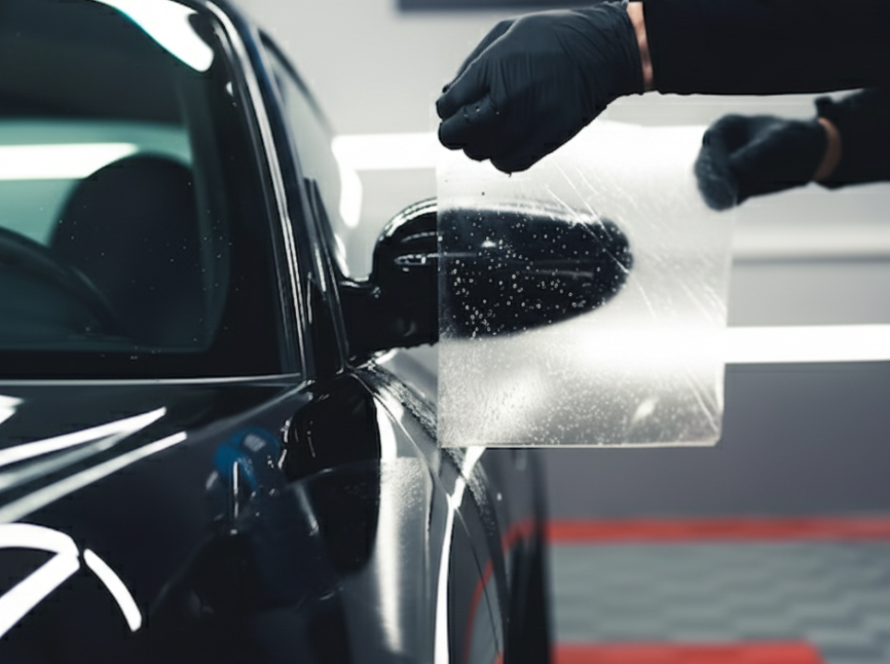
You have just taken delivery of an expensive new car and the paint looks flawless. Putting a film over it in the first week can feel strange, right?
But then why most car owners consider paint protection film within the first week of buying a car? The reason is pretty simple. Paint protection film is meant to protect original paint before the road gets a chance to mark it.
Seven days is not a rule. No law or film specification requires PPF coating within a week. The phrase is shorthand for protecting paint before the first real damage. Detailing studios, including CarzSpa, commonly recommend fitting PPF on a new car before it sees heavy road use, ideally in the first weeks. That is industry practice, not a technical requirement.
Quick Summary
- Paint protection film protects paint that is still in good condition. It does not repair chips or scratches that already exist.
- “Within the first week” is an industry habit, not a technical rule. The real principle is to install protection before damage happens.
- Early PPF coating suits owners who drive often on highways, park outdoors or plan to keep the car for years. Occasional city drivers can reasonably decide against it.
- Film quality, installer skill and suitability for your car matter more than the brand name alone.
Table of Contents
- Why Does Timing Matter with a New Car?
- What Can Happen to a New Car’s Paint in the First Few Drives?
- Why Some Luxury Car Owners Choose PPF Early
- Does Every New Luxury Car Need PPF Immediately?
- What PPF Does Not Do
- What Should You Check Before Installing PPF?
- What About Choosing the Best PPF Brand?
- Bringing It All Together For You
- Frequently Asked Questions
Why does timing matter with a new car?
PPF coating is preventative. It works best on untouched paint, because it sits over whatever is already there.
If a chip or scratch is already on the panel, the film goes over it. It does not fill it or erase it. Light surface marks can sometimes be polished out before the film goes on, but a chip that has reached the primer needs a paint repair, and that is a separate job. PPF coating is also not meant to hide existing damage such as deep scratches, dents or rust.
So the choice is not between a new car that is damaged and one that is safe. It is between protecting paint that is intact or trying to manage paint that has already changed.
What can happen to a new car's paint in the first few drives?
Most new cars do not pick up visible damage in a single drive. But real driving conditions bring a steady list of small risks from day one:
- Stone chips thrown up by trucks and fast traffic on highways
- Road debris and grit that hit the bonnet, bumper and mirrors
- Dust and contaminants that settle on the paint and get rubbed in during washing
- Bird droppings and insect residue that can mark the clear coat if they stay on too long
- Fine scratches and wash marks, often from early washes at a roadside or dealership
The useful point is how a film responds. With PPF, the stone hits the film instead of the paint. Without it, the paint takes the impact.
Why do some luxury car owners choose PPF early?
Not every luxury car owner does this, and no reliable figure says how many do. But the owners who choose PPF coating early usually share a few reasons:
- Factory finish matters to them: Original paint is applied in a controlled process, and many owners worry that a repainted panel never matches it perfectly.
- The finish can be harder to fix: Some premium finishes, such as matte, are harder to correct once they are marked.
- They plan to keep the car for years: A small chip on the bonnet is easier to ignore for one year than for seven.
- Highway driving is part of the routine: More km at speed means more exposure to stones.
- They have low tolerance for visible marks: For some owners, a single chip on a new bonnet is enough to bother them every day.
Many owners also treat delivery as the natural moment to decide, because the car is at its cleanest and most protectable.
Does every new luxury car need PPF immediately?
Yeah, practically, for those who do want to prevent scratches and unwanted marks.
→ It tends to suit you if you drive daily or often on highways, park outdoors, plan to keep the car for a long time or want the paint to stay as close to factory condition as possible.
→ Budget is a fair factor too. If full coverage is too much, protecting high-impact areas such as the front bumper, bonnet and mirrors is a common middle path.
Aegis has a detailed look at whether PPF is worth it for daily-use cars in India if you want to weigh the cost.
What are the limitations of PPF Coating?
PPF helps reduce certain kinds of damage such as stone chips, minor abrasions and surface contamination. It does not make a car scratch-proof or damage-proof. A hard impact, a deep scrape or a dent can still get through.
It is also not a substitute for car care. A car with PPF still needs regular and gentle washing, safe cleaning methods and regular inspection of the film edges and surface. The wrong products can harm the film itself, which is why this list of products never to use on a PPF-coated car is worth a read after installation.
What should you check before installing PPF?
Keep the checklist short:
- Inspect the paint first and note any existing marks in writing or photos
- Ask which panels the quote covers and where the film edges will sit
- Ask about the film itself, including its finish, clarity and self-healing behaviour
- Read the warranty terms, including what the warranty covers and what it excludes
- Ask how experienced the installer is on your car model
- Ask how the car is prepared and cleaned before the film goes on
- Inspect the finished work in good light for lifting edges, dust under the film and rough cuts
What about choosing the best PPF brand?
People often search for the best PPF brands hoping for a single name. A brand name is only one input. A good film badly installed will still fail early, and a well-installed film that does not suit your car or use will disappoint too.
So think in three parts: film quality, installation quality and suitability. Suitability means the finish, coverage and film type that match how you actually use the car. Our guide on what to check before choosing PPF goes deeper on specifications.
A note on terms. Many owners search for PPF coating, but PPF is a physical urethane film, not a liquid coating like ceramic coating. They are different products, and some owners apply ceramic coating over film for easier cleaning.
If you’re considering Aegis PPF, our films use a polycarbonate and TPU construction and are designed and tested for Indian driving conditions. Explore the Aegis PPF range to understand the available options and choose the film that best fits your car, driving conditions and protection needs. Get in touch for absolute clarity!
Bringing It All Together For You
Owners do not install PPF early because a new car is already damaged. They do it because they want to protect the factory finish before damage happens. If that matters to you and your driving puts the paint at risk, early installation is a sensible option. If it does not, waiting is also a valid choice. Either way, decide on purpose and not because of a seven-day rule.
Questions We Hear Often
1. Is it compulsory to install PPF within a week of buying a new car?
No, there is no legal or technical requirement to install paint protection film (PPF) within seven days of buying a new car. However, installing PPF early can help protect the factory paint before it is exposed to stone chips, road debris, minor scratches and other everyday damage. If the paint is already in good condition, installing PPF sooner can also reduce the need for paint correction before installation.
2. Can I install PPF on a car that already has scratches?
Yes, you can install PPF on a car with existing scratches, but the film will not remove or hide all paint damage. Light scratches and swirl marks can often be corrected through paint correction before PPF installation, while deep scratches, chips or exposed paint may require repair. Ideally, the paint should be properly inspected and prepared before the film is applied.
3. Does PPF make a car scratch-proof?
No, PPF does not make a car completely scratch-proof. A quality paint protection film can help protect the paint from minor scratches, light abrasions, stone chips and everyday road debris. However, severe impacts or sharp objects can still damage the film and, in some cases, the paint underneath. Proper washing and maintenance are also important for keeping both the PPF and the car’s finish in good condition.
4. Is PPF the same as ceramic coating?
No. PPF and ceramic coating are different types of car paint protection. PPF is a physical polyurethane film that provides a protective barrier against stone chips, scratches and road debris, while ceramic coating is a liquid coating designed mainly to add hydrophobic properties, gloss and easier maintenance. They can also be used together when a car owner wants both physical paint protection and a hydrophobic surface.